

11 Tax-Friendly Countries For American Retirees, Ranked Worst To Best

For some American retirees, the world isn't merely "their oyster." International travel brings with it the chance to permanently settle abroad. The right locale can turn tourists into full-time expats who eventually settle on their dream retirement destination. While international retirement may be the ultimate goal for some, there is a caveat that can't be overlooked: taxes.
Even though you're retired, you may still be subject to federal taxes on your Social Security benefits, IRA withdrawals, capital gains, and more. Not only are there federal taxes to be aware of, but depending on where in the United States you lived, you could be subject to state and municipal-level taxation. You might expect that leaving the U.S. could free you from some of these expenses, but tax obligations don't necessarily go away when you move abroad. Luckily, some countries are very tax-friendly for U.S. retirees.
These countries generally set up their tax systems in ways that help Americans avoid hefty taxation, especially both abroad and in the States — a circumstance known as "double taxation." Conveniently, the U.S. already has pre-existing tax treaties with many foreign countries that could help prevent the risk of getting taxed twice, some of which even include Social Security benefit exemptions. For retirees considering tax-friendly countries, here's our list of options, ranked worst to best.
11. Italy

Retiring to romantic Italy is an option that many Americans dream of. The country is keen to draw in foreign pensioners, and some of its tax policies are especially accommodating to retired Americans. Per the Italian Citizenship Assistance (ICA), this is achieved in part by offering a 7% flat tax rate to qualifying foreign tax residents, including pensioners, for up to 10 years. To qualify, a retiree would need to become a tax resident of a qualifying Italian municipality. The ICA notes that a 2026 rule change allows municipalities with fewer than 30,000 residents to qualify; previously, the limit was fewer than 20,000 residents.
Retirees who choose Italy and submit to the taxation terms will be glad to know that there is a tax treaty with the United States; the agreement is crucial for avoiding double taxation. That said, it's understandable if some retired expats aren't sold on the vision of a life in Italy. Italian bureaucracy is often blamed for slowing down the process of becoming a citizen. According to the blog Bespoke Italian Citizenship, Americans often run into roadblocks including non-negotiable in-person government appointments and a massive language barrier.
If you do manage to cut through the red tape, you should be sure that you can manage the local cost of living. International Living, for instance, estimates the cost of living in Italy at $2,317 per month per person. As for long-term residency, Italy lacks a specialized retirement visa; you must complete an Elective Residence Visa application if you wish to live there permanently.
10. Greece

Similar to Italy, Greece offers a lovely Mediterranean lifestyle and, per International Living estimates, a significantly lower living cost than U.S.-based retirement. For instance, the publication managed to create a sample budget of less than $1,200 per month for a single person. The monthly cost of living estimate worked out to about $1,945 for a couple. Spending less than $2,000 per month is certainly appealing, especially for retired Americans living on a fixed income.
As for taxation, Greece and the United States have an agreement in place that helps American expats. First, there's no risk of double taxation on income, including private pensions and Social Security benefits. You may also qualify for a Foreign Tax Credit (FTC). Lastly, Greece has a withholding tax (WHT), but the treaty agreement allows caps on capital gains of up to 15%. American retirees who successfully transfer their tax residence to Greece may be eligible for a 7% alternative tax regime for up to 15 years.
Though Greece doesn't currently have a visa specifically aimed at foreign pensioners, American retirees can apply for long-term residency through the Financially Independent Person (FIP) visa. As a non-EU citizen, retired Americans can qualify with an annual income of €42,000 or about $47,987. It's crucial to factor in application fees and different financial requirements for married couples and applicants with additional dependents.
9. Cyprus

Cyprus can work well for retired American expats seeking a tax-friendly home abroad. What's important is understanding certain tax-related caveats if you plan to live here long term. Cyprus does have a pre-existing tax agreement with the United States.
According to Cyprus Tax Life, as a foreigner you get the choice of being taxed under one of two regimes. First, you may opt to pay a 5% flat tax on your foreign pension. Alternatively, you may choose to be taxed at the normal progressive rate. This second option works for retirees with a moderate income because the first €22,000, or roughly $25,136, is tax-free.
As Cyprus lacks a retirement-specific pathway to citizenship, retirees can instead opt for the Category F visa, sometimes referred to as the "pink slip visa." As Wise reports, this visa offers long-term residency to non-EU nationals with suitable passive income. Wise notes a minimum yearly income requirement of €9,568.17 (around $11,000). That said, Wise determined Cyprus's monthly cost of living to be about $1,854 per month, which works out to $22,248 per year. For comparison, Chase Bank found American households spent an average of $6,545 per month in 2024. As a retiree, you may definitely enjoy a slower paced, more affordable lifestyle in Cyprus. As long as you stay up to date on your tax obligations, this scenic island nation could prove a solid choice for retirees.
8. Mexico

Neighboring Mexico may work for American retirees who like the idea of living abroad, while also remaining relatively close to the United States. There's a binding tax treaty between the two countries for the purpose of combating tax evasion while also protecting both Mexicans and Americans from double taxation. For American retirees, Mexico is a potentially tax-friendly destination for a couple of reasons.
First, thanks to the bilateral tax agreement with the United States, American retirees' Social Security benefits won't be taxed by the Mexican government. In general, Mexico doesn't tax foreign income, and the tax treaty generally means your income is taxed by only one country — typically the country where it's earned. Second, retirees who are only spending passive American income might not owe any taxes in Mexico. Even so, it's generally a good idea to check with a local tax expert. If you find yourself at risk of double taxation, you could qualify for a Foreign Tax Credit or the Foreign Earned Income Exclusion (FEIE).
Taxes aside, Mexico is generally a more affordable country than the United States. Wise estimated that the overall cost of living for an American is roughly $1,362 per month. Meanwhile, International Living calculated a sample budget of about $1,537 for a single person; for a couple, it determined Mexico costs about $2,298 per month. While there's no retirement visa, retired expats can live in Mexico long-term by applying for either a Temporary Resident or a Permanent Resident visa.
7. The Philippines

The Philippines works as a very tax-friendly destination for American retired expats. Getting taxed twice isn't much of a concern thanks to the tax agreement between the Philippines and the United States. Another perk for living there is that, per SmartAsset, the country generally does not tax foreign-sourced income, including retirement income. There is an exception; if your pension or other income is remitted through a Philippine business or employer, you could still be on the hook for taxation. But generally speaking, if you're just living off your retirement income, you shouldn't expect to pay taxes beyond VAT-related taxes.
Aside from being great from a tax perspective, the Philippines is very affordable for most U.S. retirees. According to Wise, monthly Philippine expenses average around $879 per person. Meanwhile, Livingcost.org estimates it's possible to afford life here on as little as $608 per month. Considering the average Social Security benefit check is about $2,071 as of January 2026, this suggests the country is highly affordable for many retired Americans. Still, the Philippines has its own idea of affordability, and you'll need to qualify financially if you wish to apply for long-term residency.
The Philippines offers a retirement visa known as the Special Resident Retiree's Visa (SRRV), managed by the Philippine Retirement Authority (PRA). It's aimed at qualifying foreign nationals and former Filipino citizens. As American retirees are generally 60 or older, most applicants won't have to worry about paying the maximum visa deposit. Instead, you should plan to have around $15,000. If you're an older non-pensioner, the amount is $30,000. The PRA also states applicants must receive at least $800 monthly in passive income, or $1,000 per month if applying with dependents.
6. Belize
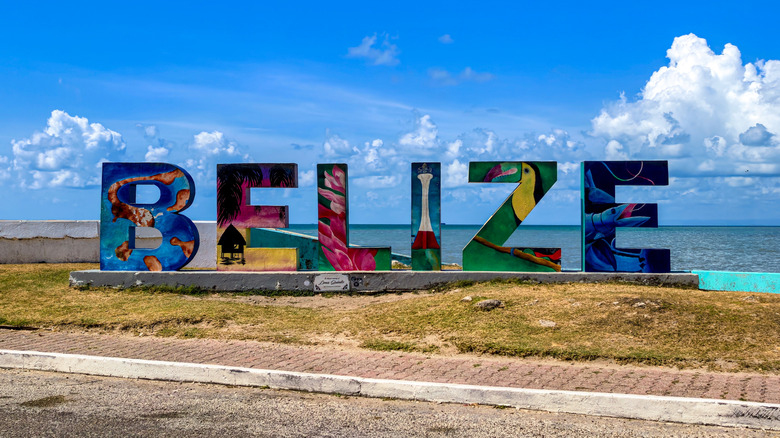
This tropical Central American nation has long been a popular tourist spot for retirees seeking to escape cold winter months. Yet it also works as a tax-friendly option for retired Americans wanting to make a warm-weather country their home. Some might worry that because there's no bilateral tax agreement between Belize and the U.S., it might not work. However, retirees need not worry.
First, Belize operates under a territorial tax system, so foreign income generally isn't taxed. Second, if you live in Belize and earn less than $26,000 BZD, or almost $13,000 USD, per year locally, you won't be subject to local income taxes, either. Be aware that if you decide to permanently reside in Belize as part of the Qualified Retirement Program (QRP), you're afforded a special status, with the expectation that you not conduct or profit from any form of business in Belize as a retiree. That said, money earned abroad from cash dividends, rental properties, remote work side hustles, etc. shouldn't be an issue. If you do decide to become a permanent Belizean resident through QRP, note that you must receive monthly retirement income totaling at least $2,000 to qualify.
Be aware that depending on where you live in Belize, you might need more than the government minimum. International Living, for instance, put together a sample budget for an individual and found their monthly living costs exceeded $2,300; for a couple, the budget was around $3,000.
5. Malaysia

It is crucial to note that Malaysia doesn't have a tax treaty with the United States as of the publication of this article. That means there is not a pre-existing agreement between the two countries that would prevent double taxation. Even so, there are mechanisms American retirees can take advantage of that keep this country an ideal and tax-friendly destination.
First, if you're a retiree who qualifies as a tax resident in Malaysia and pays taxes there, you can claim the Foreign Tax Credit (FTC) and Foreign Earned Income Exclusion (FEIE) to help avoid double taxation. More importantly, Malaysia currently does not tax foreign-sourced income; that includes your Social Security benefits, pensions, or 401(k)/IRA withdrawals from abroad. It's possible this could change in the future. Per PwC, Malaysia initially moved in 2022 to begin taxing foreign income. However, it later decided to exempt foreign-sourced income through 2036. The exception is foreign income earned through Malaysian businesses and employers. For at least the next decade, American retirees who exclusively live on their retirement income won't have to worry about being taxed by Malaysia.
If you're interested in becoming a long-term, permanent resident of Malaysia, your best chance is the Malaysia My Second Home (MM2H) visa. American retirees must make a fixed deposit (FD) of at least $32,000 in a qualifying Malaysian financial institution. You must also pay a one-time fee of RM 1,000, or roughly the equivalent of $245 USD.
4. Paraguay

Paraguay is a very tax-friendly option for retired American expats. The South American nation operates under a territorial tax system. As such, retirees wouldn't have to worry about the Paraguayan government taxing their retirement income. For those retirees who happen to earn taxable income in Paraguay, it's crucial to note there's no tax treaty between the United States and Paraguay. Though as long as you're not actively earning income in Paraguay, you shouldn't be at risk for double taxation. Retirees who exclusively live off their retirement income are generally able to do so without worrying about Paraguayan taxes.
Another reason to love it here is that it is another country that is very affordable relative to the American cost of living. Wise estimates Paraguay's per-person cost of living to be $935 monthly. Livingcost.org, meanwhile, estimates the cost of living at $751 per month per person. It's so affordable that, while housing may make up at least half (53%) of your expenses, Wise also determined that the average Paraguayan apartment rents for $426 per mont.
If you do desire to retire to Paraguay, the country does offer a long-stay pathway through the Independent Means Visa. This two-year temporary-residency visa is ideal because it doesn't require a deposit; there's also no minimum amount of time to live there in order to qualify. That said, be aware that maintaining the visa means you can't remain outside Paraguay for more than 12 consecutive months. You'll need to show passive earnings of at least $1,300 per month.
3. Costa Rica

Costa Rica is another great Central American retirement destination for retirees worried about hefty taxes. It's true that there's no formal tax agreement between the Costa Rican government and the U.S. However, for American retirees, this likely won't be a problem. Per sources like Kiplinger and Taxes for Expats, Costa Rica does not tax foreign retirement income. Thanks to Costa Rica's territorial tax structure, you shouldn't have to worry about income of any kind earned outside of the country. If you do earn income in a way where double taxation could be a concern, check to see if you qualify for the Foreign Tax Credit.
Costa Rica is relatively affordable compared to U.S. cost of living standards. Wise finds monthly expenses here average around $2,097. Meanwhile, International Living proposed an individual could afford to live there on a budget ranging from $1,600 to $2,200 per month.
If you opt to settle down in Costa Rica, the country does offer a "Pensionado" or pensioner's visa. It's a residency permit that you need to renew every two years, as long as you continue to qualify. After three years you may apply for permanent residency. You'll need to be able to verify a qualifying foreign pension source of at least $1,000 per month. Be aware that if you go this route, you must contribute between 9% and 10% of your declared monthly income to Costa Rica's Social Security Fund.
2. Panama
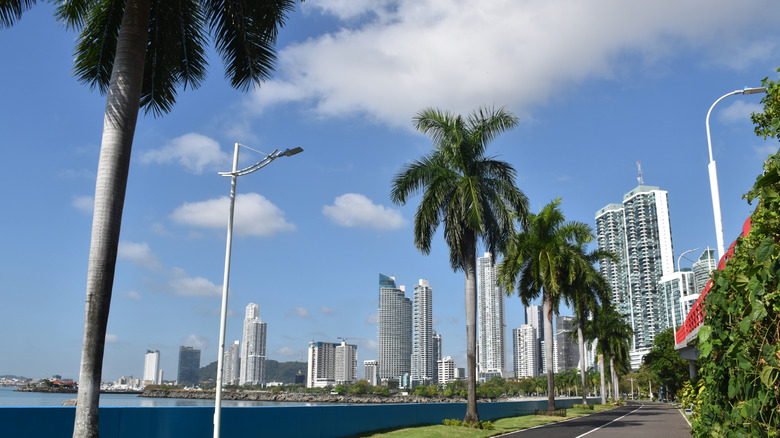
There are a couple of reasons why Panama is a very tax-friendly destination for retired Americans. First, there are no wealth, inheritance, estate, or gift taxes here. Second, U.S. expats living entirely off of their retirement income will appreciate Panama's territorial tax system, which allows their foreign income to avoid local taxation. The key is to ensure your retirement income and any other investment income originates entirely abroad.
Like many Central and South American countries, Panama does offer a retirement visa or pensionado for qualifying retirees. According to the Panamanian Embassy, applicants must submit all relevant and required paperwork through a local (Panama) lawyer. It also states that monthly income must be at least $1,000; this total increases by $250 for every dependent. Remitly reports that if you invest in Panama real estate worth at least $100,000, your monthly income requirement drops to $750.
That said, be aware that as of 2026, Wise estimates Panama's monthly cost of living to be $2,180. Meanwhile, International Living's sample budget suggests you'll need at least $1,724 to afford to live there.
1. Cayman Islands
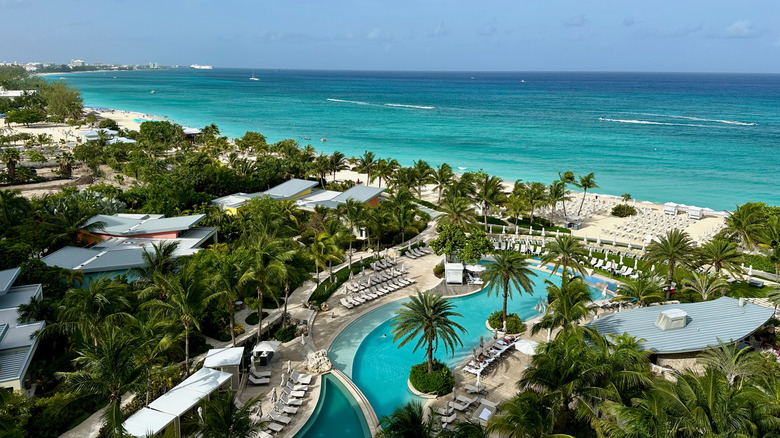
The Cayman Islands could be considered among, if not the most tax-friendly countries for American retirees in the world. According to Sotheby's International Realty, the country is tax neutral; that means it doesn't tax residents' personal or corporate income. The Cayman Islands also does not collect taxes on inheritance, property, or capital gains. As such, you won't have to worry about getting taxed here on any income you earn, whether in the Cayman Islands or abroad, so your retirement income is completely safe.
If you're a wealthier retiree with a lot of assets and considerable wealth, the Cayman Islands will make a lot of sense, though life here is expensive enough to put it outside of the budget of some retired expats. Per Wise, the Cayman Islands' average monthly living costs are $5,217. Livingcost.org, meanwhile, estimates the cost of living at $3,795 per month per person. Overall, it's a pricier place to live, but if you have the wealth and a desire to live as tax-free as possible, then this is an excellent option.
While there's no retirement visa, you can apply for the Cayman Islands Residency Certificate of Independent Means. To qualify, you must be able to demonstrate annual income exceeding CI$120,000 (approximately $144,391 USD). If applying to live in Little Cayman, the amount reportedly drops to $75,000 CI (or $90,224).