

The 7 Worst Real Estate Investment Mistakes (And 4 Tips For Beginners)

Investors looking for something new to build up their portfolio to even greater heights often consider the real estate market a natural landing spot. Assets like real estate investment trusts do offer a stock market alternative to direct investment in the real estate space, but for comprehensive value, few options beat the real thing. Investing in real estate is exciting, and it can be immensely lucrative and rewarding. The average rental property in the U.S. goes for $2,000 per month, according to Zillow. That's almost exactly the same as the average Social Security check, which the Social Security Administration reports is $2,071 as of January 2026. Buying into the rental marketplace can therefore generate plenty of additional capital as a side stream of income in the present and potentially set you up for a more comfortable retirement down the road, too.
But there are plenty of pitfalls to work around when considering a real estate property to purchase. Everything from the financing options to the approach you take to maintaining and repairing the home matters, and the smallest details can derail the best-laid plans. Fortunately, avoiding these mistakes isn't complicated, but it does take diligence and an analytical eye. These investment mistakes are costly, but with a few important frameworks helping to guide your journey, they can be overcome with relative ease. With the right approach, beginner real estate investors may even be able to avoid some of these obstacles altogether.
Waiving the home inspection to snag a 'deal' price
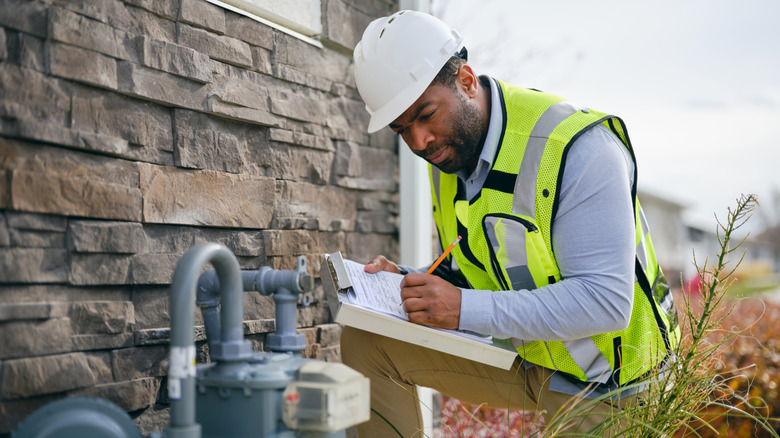
Real estate investors might be tempted to move quickly when they find a great price. This can include cutting corners on some essential pieces of the puzzle, but one thing that should never be off the table is the home inspection. There's always a reason for deal pricing on an expensive asset like a home. This might be totally personal to the seller, such as if they urgently need to move ahead of an impending start date at a new job or are contending with family or health concerns. However, it's impossible to rule out the reality that a home priced incredibly low may be inherently flawed. If you can't see it right away, a home inspection will illuminate the trouble in most circumstances.
Choosing to move quickly on an undervalued property can be a huge mistake because you'll be taking on the full weight of responsibility when it comes to solving these kinds of frustrating issues. A home inspection might indicate termite damage or other costly pest control problems, foundation issues, or even something like an HVAC system that's poised for failure. All of these can be brutally expensive, and knowing the problem exists in advance allows you to negotiate further or walk away from the property altogether in search of something more aligned with your portfolio needs. A deal price is no longer a great bargain if you have to pump money into the property after a surprise discovery.
Working without a cash buffer to handle surprises

Speaking of surprises, it's always crucial to set aside a portion of the rent checks you receive from real estate investments. This creates a cash buffer that allows you to handle repairs, appliance replacements, and more without dipping into your personal funds and potentially going underwater on your own commitments in the process. REI Hub recommends holding back around 10% of your profits every month to construct something akin to an emergency fund earmarked for that specific property. With this approach, you'll want to keep saving until you hit $5,000 per property you own, or save three to six months' worth of the property's rental price.
Every home, apartment, or residential dwelling will require at least a basic level of routine maintenance. This might include lawn care, intermittent painting services, and things like pest control or electrical and plumbing repairs. If you have to go into your own personal budget to handle a surprise expense — and it's crucial to keep in mind that you're obligated to tackle these issues in a timely manner regardless of your circumstances — you may put yourself in a financially risky situation. Cash-strapped landlords may ultimately come up against the same kinds of hard choices that create the grounds for foreclosure in a homeowner's primary residence. If the worst comes to pass, you won't necessarily lose your own home, but a foreclosure could take away your investment and the cash-earning potential that it delivers.
Accepting bad financing terms

In many real estate situations, buyers will invest with the help of leverage accessed through a mortgage loan. In the stock market, investors buy bite-sized shares of companies. These can be simple penny stocks, priced at a couple dollars per share or less, or high-value, never-split assets like Berkshire Hathaway shares valued at over $700,000. This is far from the norm in the real estate arena. The median home value for sold properties, according to the Federal Reserve Bank of St. Louis, stands at $403,200 as of Q1 2026. This is far outside the reach of a typical novice investor looking to enter a new part of the commodity marketplace driven solely by cash purchasing power.
Utilizing a mortgage loan to get yourself in the door is the standard, but the higher your interest rate, the less profit you'll derive from the property as you make monthly repayments to service the debt. A 1% increase in your rate can result in $60 to $70 more in monthly mortgage costs for every $100,000 borrowed on a fixed-rate loan, according to Rocket Mortgage. This is a cost that won't go away with any relative speed, so investing only after you've carefully considered the totality of your potential income and expense load is crucial. Buying with an interest rate that's too high can ultimately make a property an untenable asset to maintain.
Letting your emotions lead you into overpaying

A common mistake for any investor involves letting your emotions drive your decisions. No investment choice can be made in a complete vacuum, and the baggage you bring into the process always plays a role in analyzing the viability of an asset. Allowing emotion to interfere with your analytical judgment is one of the most consequential investment traps you can fall into.
This can be particularly risky in the real estate space. The issue can come about in many different formats, making it a potentially dangerous mistake for a variety of reasons. For one thing, many investors looking to enter into real estate may initially sell the idea to themselves as a way to buy vacation property that they can rent during the time they're not using it. This can introduce a whole mess of issues relating to the management of the property, including the reality that the owner will possibly look to vacation during peak earnings season.
A home you fall in love with can easily sway you into paying more than you really should for the property, as well. This can leave you house poor and cash strapped while shopping for your primary residence, but it's borderline dangerous when considering investment tools. A rental property is a means to drive profit. Overpaying for an asset can lead to the necessity to overcharge on rent or skimp on repairs, while leaving you in need of an unattainable earnings figure that only ends up draining your finances rather than enriching them.
Buying in a faraway market

You don't have to buy property in your local area to be successful. In fact, exploring the wider market that exists beyond home territory can reveal plenty of solid opportunities that could be great earners on your balance sheet. However, buying outside of your functional mobility range introduces some problems that beginner real estate investors will likely find insurmountable. Chief among these troubles is the reality that you aren't likely familiar with the marketplace beyond your local sphere of influence. It can be difficult to gauge fair market value or understand operating costs in a place that's alien to your own living situation. This is particularly true for homes in faraway markets that experience different seasonal norms. For instance, if you live in Texas, North Carolina, or New York, buying a property in Southern California or Florida can introduce a wide variety of different strains on your time, money, and energy than you're accustomed to managing in your own lifestyle.
There's also the matter of practicality to consider. You will inevitably be needed on site at some point during your ownership of the property, and the farther you have to travel to attend a meeting or deal with an issue in person, the more expensive it will become to manage that requirement. These troubles come on top of the almost definitive necessity to hire a property manager to work through day-to-day tasks that you can't reasonably attend to as an out-of-towner, inflating your costs in the process.
Failing to research local laws and regulations

Entering into the real estate market without fully understanding what you can do as a landlord, as well as the rights your tenant possesses in the local area, is risky to say the least. You're bound to run into some major growing pains, as a fundamental misunderstanding of the boundary line here will likely lead to disagreements in which both sides think they are in the right. It's not reasonable to allow your tenant to walk all over you, but at the same time, you cannot trample on basic rights to things like privacy, timely repairs, or more nuanced regulations surrounding subjects like renewals, security deposits, and evictions.
It's crucially important to enter into this part of the investment marketplace with a clear picture of what you are obligated to provide and how your tenant must behave while occupying your property so that there is no confusion or disconnect about the agreement. Failing to make these provisions in your real estate approach before bringing a tenant into the home has the potential to create several nightmare scenarios: For one, you could end up dealing with a rogue renter. However, you also run the risk of positioning yourself as a terrible landlord that will have trouble keeping tenants in the home long term, which could in turn inflate your costs.
Working with shady contractors

Many landlords will look to perform routine maintenance on their own. This can be a great way to connect with your tenant, cut down on operating costs, and gain an important sense of satisfaction by doing the job yourself. But there may come a time when the problem at hand goes beyond your level of capability, requiring the help of a contractor or specialist to complete the job correctly.
Whether you're performing renovations on the property between tenants or handling complex repair needs, you'll want to ensure that you're working with reputable technicians. It's easy to fall for the sales pitch from a poor-quality contractor or one that's actively trying to scam you. Overpaying for poor work or inflated costs for something like unused materials that suspiciously never make an appearance can potentially be investment-busting, setting your financial balance back significantly. It's therefore a good idea to at least brush up on the knowledge portion of these kinds of tasks so that you are informed about what is generally required to handle the job at hand. You'll also want to ask for references or look for online reviews of any contractor you're considering working with. Once you do find a good operator, it's a great idea to build a long-term relationship so that you consistently rely on their expertise for future projects.
Keep focused on cash flow over value appreciation

Moving on to our real estate investment tips, long-term growth is always going to play a role in any investment decision you make. However, one of the most important pieces of advice that any new real estate investor can take on board is the notion that short-term cash flow can be far more valuable than long-term appreciation. Unless you're buying a property for a hyper-specific reason that supports some sort of long-term vision within a vast portfolio, the key aim of many real estate investment decisions involves producing short-term value. Most real estate investors will either be looking to quickly flip a property for a one-time profit, or create stable cash flow in the form of rent checks in the present that ideally carries on long into the future.
This point of focus is particularly important for investors who will be using financing products to gain ownership. Every month you aren't creating a profit is a month that you're paying out of pocket to own the asset. The potential for a value increase at some point in the distant future is a nice added bonus, but getting on the property ladder as an investor requires you to generate ongoing surplus value in the short term if you hope to break even or continue growing toward greater things. This is a make-or-break component in the transaction that can't be ignored.
Get mortgage preapproval ahead of your property search
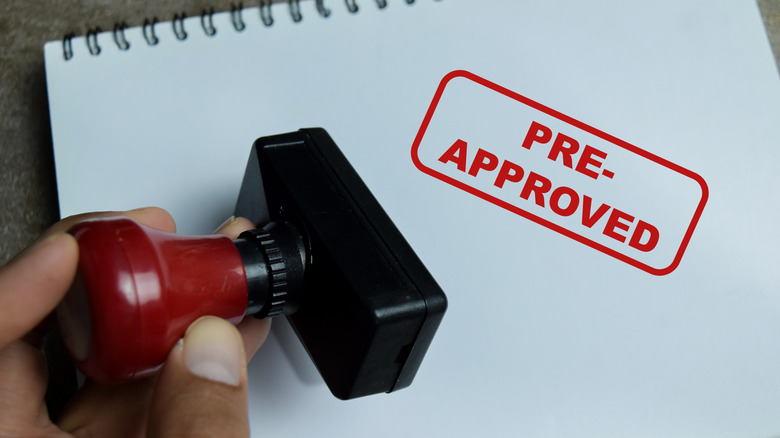
Seeking mortgage pre-approval is a valuable step in the process of buying any home, as it can be a crucial feature of a successful property search and allows you to lock in your budget range and address real estate agents as a serious prospective buyer. The same can be said for someone shopping as an investor, but the value goes even deeper here.
Homeowners can sometimes justify a slightly more expensive purchase than they would like to carry if it gives them a lifestyle enhancement with outsized value. More space or a property that allows for a much shorter commute to work can provide valuable upgrades to an owner's daily life. However, you won't enjoy perks like these if you're buying a property with the intention of renting it out. The intangibles are a little less important, and so the feature that moves the needle lies in balancing the math.
Knowing exactly what you can spend on a property and how much it will cost you heading into the future allows you to make informed decisions about the properties you're considering. If you can make fairly educated guesses about what your base homeownership costs will be by establishing your mortgage options ahead of time, you can make smarter decisions regarding what you can realistically charge for target properties. Naturally, pre-approval also evades potential issues over actually getting the funds you need to purchase an investment when you get to the offer stage.
Price in maintenance costs, even when doing the work yourself
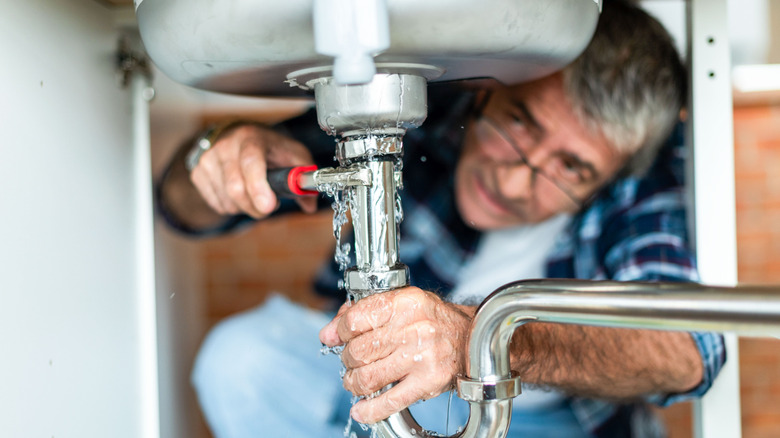
Performing your own routine maintenance on investment properties is a perfectly good way to reduce ownership costs. For instance, if you mow the lawn at your rental property every week because you bought the home next door, you might consider your lawn care costs to be zero since you're already out with the mower and aren't paying anyone else to do it for you. A stickler for the numbers might write in a few bucks to account for gas and other material needs, but it's easy to just write this off as the cost of doing business. However, avoiding this trap is a critical mental framework.
Many investors buy properties with the intention of keeping them for the rest of their lives, building stable sources of retirement income in the process. This is where considering your own efforts to be "zero cost" can run the balance sheet aground. You may eventually move away from the area or find yourself unable to continue performing the job yourself. At this stage, you'll have to hire someone to handle maintenance. If you've already priced in the cost of this job, it won't change the balance of the home's cash flow. Lawn care services average about $300 per month, according to This Old House, and a great many other maintenance and repair services sit within the same realm. Adding one or more of these into the picture after failing to price them in previously can significantly skew the profits you generate from your investment.
Consider leveraging the 'two years out of five' rule

Real estate investors might buy a new property to move into and then rent their old home to offset the cost of the new mortgage. This can be a valuable approach, but there's a tax rule to keep in mind if you are going this route — or even if you plan on buying a second property without the intention of living in it personally. Known as the 'two years out of five' rule, this tax policy states that if you have lived in a home for two years out of the last five and then sell it, you can avoid paying $250,000 — or double that figure for married couples — of the sale's capital gains taxes. For investors who have long-term plans to churn through one or more properties they own, this potential deduction could prove extremely valuable.
Selling your primary residence tends to benefit from this feature automatically, but you can also take advantage of the tax savings by moving into a rental property you own for two years before listing it if you're thinking of making a change to your portfolio. There are also no restrictions on how many times you can take advantage of this rule's value, provided you've complied with the two-year timeline with each new sale.