

The Most Costly Budgeting Mistakes That Drain Your Savings
Budgeting isn't just about saving money in the moment; it's about empowering you to make decisions that will have a long-term financial impact for yourself or your family. While some budgeting mistakes seem small in the moment, they can lead to a severe drain on your savings and put you at risk for serious hardship down the road.
Consider that, per Bankrate's 2026 Annual Emergency Savings Report, only 47% of Americans reported having enough cash on hand to cover a $1,000 emergency. That same report found that 58% of respondents had either roughly the same amount of emergency savings or less than they did a year ago. A likely takeaway is that Americans are struggling to maintain their savings, let alone build more for the future.
If increasing your savings is a primary financial goal, there are several costly budgeting mistakes you must avoid making. Read on to learn what they are, how they drain your savings, and a few alternate approaches to stay on track with your budgeting.
Constantly borrowing from savings without putting money back

Sometimes budgeting mistakes will force you to dip into savings. It's a common and understandable issue. However, one of the quickest ways to drain your savings is by failing to replenish it with the sum you borrowed over time. What began as an extra, accidental $20 for one week can become $200 after 10 weeks. Within just a year, borrowing $20 a week without repayment is enough to deplete a $1,000 emergency savings account.
The good news is that, just as quickly as you can drain an account with a bad budget, you can rebuild it with a better one. First, make sure that you are monitoring your budget and spending exactly as planned. That way, you reduce the risk of being over budget, and therefore, removing money from your savings accounts. Should you find yourself needing to borrow from your savings, Bankrate recommends treating it like a temporary loan. In the example of the borrowed $20, you'd want to make sure that you plan a specific time or pay period to put it back.
Sometimes you might need to borrow a larger amount. In that case, create a kind of payment plan; for $200, plan to pay the money back in increments, $20 per week, $50 per month, etc. until the savings account gets rebuilt. If you can't replenish your savings immediately after borrowing from it, don't be discouraged. Every small repayment will help.
Never budgeting for fun expenses

Too often, budgeting is treated as solely about discipline and deprivation. Anything outside of absolute necessities and bills gets treated as frivolous spending. While there are some people who can keep to this approach, too often, it's setting you up for failure. When there's no liquidity for fun, you may find yourself repeatedly dipping into savings to cover those impulse shops. Before you know it, your savings get drained, and you're absolutely demoralized.
Whether it's your favorite snack, a new purse, or a date night getaway, it's always a good idea to keep fun in the budget. Some argue that failing to do so will lead to frustration with budgeting. Moreover, adding fun spending to the budget may contribute to financial stability. After all, if you already accounted for something you really want to purchase, you won't go over budget when nabbing it as an impulse buy.
If you're not sure how much to save for a fun splurge, some experts say 5 to 10% of your income is generally a safe starting point. Meanwhile, "Money With Katie" blogger Katie Gatti Tassin recommends a "big four," or four fun must-haves and budgeting 10% to 25% to cover them, scaling up as you earn more. In this case, it's not so much about the money itself as knowing exactly what you enjoy and how much it costs, so you have the right amount of wiggle room to save for and enjoy those fun expenses.
Automating bills without checking your account balances
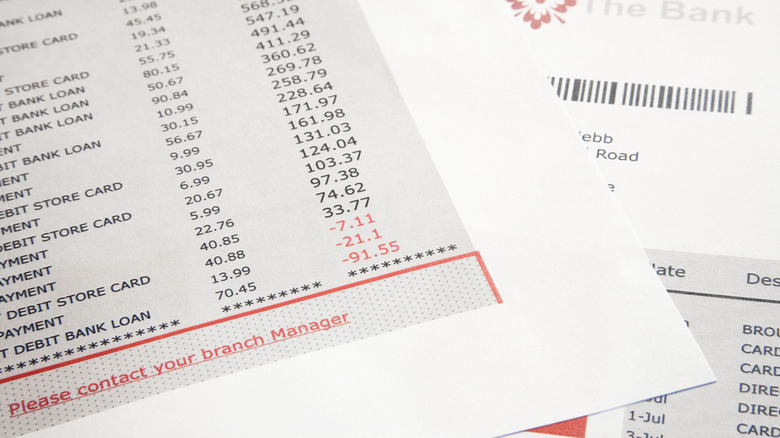
The option to handle monthly bills through automatic payments, at first glance, is highly convenient. Money automatically gets taken out to cover recurring things like subscriptions and utilities without any deliberate action from you. This can be a great way of making sure you never fall behind on payments — but it isn't without its problems.
Auto-pay can be problematic if you fail to regularly check your account balances or factor in rising prices. For instance, if you budget for services like Netflix or YouTube TV based to their old prices, you run the risk of a negative balance should the new service price bump your account into overdraft. You may then find yourself borrowing from savings to make up the difference.
According to a 2025 report from PYMNTS, about 60% of Americans choose to not use auto-pay. While top-earners often have no problem using this feature, a growing number of people are living paycheck-to-paycheck. With money tight, PYMNTS found that more Americans are prioritizing cash flow and the ability to pay a lower percentage of what is owed in total, rather than risk not having enough money overall. Consider automating only your cheapest bills and directly handling all others in order to protect both your savings and your cash flow.
Not setting aside money to cover quarterly or annual expenses
For Americans living paycheck-to-paycheck, it can be hard to plan for less regular, but still very important, bills. For instance, while some homeowners pay monthly HOA fees or homeowners insurance premiums, others choose to make quarterly or yearly payments. In those cases. The same might be true for a tax obligation that you don't think about until April every year. Since your primary budgeting focus is likely on the immediate future, it's not uncommon to forget to set aside money for quarterly or yearly payments. However, life is unpredictable, and you could find yourself laid off or subject to an expensive emergency that then makes these future payment obligations impossible.
Instead of waiting to budget money for infrequent but still predictable bills, it's a good idea to factor them into your monthly budget. If you don't want to or simply can't set aside the entire amount at once, treat it like any other bill. For instance, according to a 2026 report from LendingTree, millions of Americans now pay over $6,000 annually in HOA fees. If paying this bill on an annual basis, factor in that you need to set aside around $500 per month to ensure you'll have the full amount when the payment is due.
Budgeting according to gross income, not take-home pay
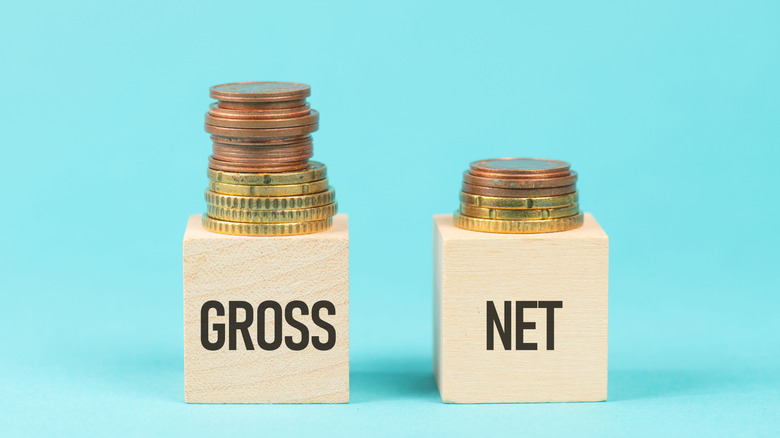
This one might not seem immediately obvious, as some experts actually do encourage budgeting according to your gross earnings. As Bankrate reports, financial experts frequently suggest saving between 15% and 20% of your gross monthly income. However, depending on how your budget works, it may make more sense to allocate money according to your take-home pay. The National Foundation for Credit Counseling (NFCC) instead suggests that when setting up a household budget, it's better to refer to your net pay rather than gross earnings.
According to the NFCC, this approach matters for a couple of reasons. First, your net income refers to the money you'll immediately have on hand to pay bills and cover day-to-day expenses. Second, there could be a significant difference between your gross earnings and actual take-home pay, depending on where you live. For instance, if you earned $50,000 in 2024 and lived in Alaska, GOBankingRates estimates that your net income would have been $50,000. However, if you lived in Maine that year, your take-home pay would have been closer to $33,000.
If you make the mistake of relying on gross income to cover expenses while your net earnings are drastically different, it could turn into a situation where you are repeatedly using savings or credit to bridge the gap. Obviously, if there is little difference between your gross and net income, it won't change much but, for everyone else, the safer option is to look at net income when budgeting.
Failing to consider inflation or rising living costs
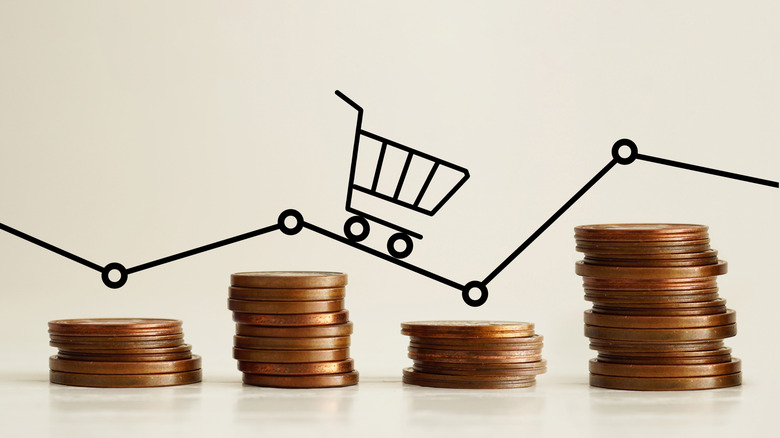
Between yearly inflation, ongoing tariffs affecting consumers, shortages, and even unexpected setbacks, changes in spending needs are inevitable for most Americans. For instance, according to the Bureau of Labor Statistics (BLS), food prices increased 2.4% between January 2025 and January 2026, while prices increased 6.3% for electricity and 9.8% for natural gas. With this in mind, not paying attention to what bills are likely to increase in your budget means you run the risk of frequently going over that budget.
Because no one can predict the future, it isn't always obvious what bills will go over budget. However, in times of sudden inflation, UW Credit Union recommends breaking your spending down into three primary categories: needs, values, and wants. From there, try to cut out the items that are the least necessary and won't be missed. By doing this, you just might create enough liquidity to cover rising costs in certain spending categories without needing to dip into savings or debt.
Mistaking potential income for confirmed earnings

A startlingly easy budgeting pitfall is the habit of counting potential earnings alongside confirmed income. For example, a salaried full-time employee for a company has more reasonable expectations that they'll get paid the same amount of money each month. However, contract, gig, or freelance workers who aren't considered employees might see their monthly income vary month to month or even week by week. Another reason to avoid counting potential income as confirmed earnings is that it doesn't allow you much leeway in the event those earnings fall through, as could be the case with suddenly getting laid off or losing a client contract.
If you have an irregular income, it can be especially difficult to create an accurate budget, which might lead to repeatedly borrowing from, or even draining, your savings. To avoid this, there are some key steps you can take to budget for likely earnings. For starters, review your earnings over the previous several months and establish a baseline income according to your lowest earning month. This will allow you to budget as conservatively as possible. It is significantly less stressful to plan for bills based on income you know will hit your bank account, rather than hoping for income that might not materialize.
Paying down debt or covering expenses too aggressively

You might believe that the most important thing you can do is pay down as much debt or cover as many expenses as possible. The more aggressively you pay, the more quickly you can clear debts and take control of your financial destiny, right? However, by putting almost all of your focus on paying down debts, you are likely not leaving enough extra to pay for essentials like groceries or gas for your vehicle. Plus, you could be in trouble in the event of a sudden emergency and find yourself having to dip into savings. That said, an overly aggressive approach to paying down debt might means that there are little to no funds actually available in your savings.
To avoid budgeting in such an extreme manner, a good rule of thumb is to refer to the 50/30/20 rule. This means spending 50% of your income on necessities, 30% on wants, and 20% on debts and savings. For example, a $5,000 monthly income would break down to $2,500 for things like monthly bills and groceries, $1,500 for things like dining out and entertainment, and $1,000 towards building savings and/or debt repayment.
Not treating credit card spending as part of your immediate expenses
It can be easy to swipe your credit card and then forget about it, especially considering you might not even see the statement balance for another month. However, failing to see credit card charges as part of your monthly expenses can lead to long-term debt as you try to pay off past purchases alongside high interest rates. A good place to start is to treat your credit card like a debit card, and ensure the balance never exceeds your available income. This largely requires tracking and including credit card expenses in your actual monthly budget.
While using a credit card for purchases can help you maintain cash flow — and even take advantage of little-known credit card perks and rewards — the key is to not mentally separate what you spend on your credit card from your income. This can help make sure your credit card bill doesn't require you to rely on savings.
Budgeting based on ideal habits, not real spending patterns

You may have created the ideal budget, one that even allows you to add to your savings, but it won't work if it doesn't align with how you actually spend your money. If you budget $100 a week for lunch but routinely spend $150, you are not likely to suddenly spend less. With that in mind, rather than trying to immediately subtract $50 overnight, it could help to slowly work your way down over time. For instance budgeting for $140 one week, then $130, and so on until you hit your goal.
In a similar vein, your ideal budget might not factor in lifestyle and income changes. For instance, people often succumb to a phenomenon known as lifestyle creep. A significant salary increase might leave you wanting to upgrade your lifestyle — a bigger home, nicer car, or even luxury purchases — rather than prioritizing something like savings. However, you might quickly find yourself outside of your budget again, despite the increased income, if you don't factor in these lifestyle changes. Ultimately, building a realistic budget requires you to be honest with yourself about your money.