

Baby Boomers Have Nearly 7 Times The Emergency Savings Millennials Do

While exactly how much you should have in your emergency fund can, and will, depend on your specific financial circumstances, most experts agree that you should aim to save roughly three to six months worth of expenses. Unfortunately, this is not always feasible for many Americans. In fact, according to a June 2025 report from Empower, 32% of those surveyed didn't have a designated emergency savings fund at all –- with 29% reporting that they would not be able to cover an unexpected expense over $400. While this situation is troubling enough, the circumstances get even more dire when broken down by generation.
Per Empower's report, millennials reported the lowest median emergency savings of all generations with a balance of just $300. This contrasted sharply with baby boomers, who boasted the highest median balance of $2,000. While Gen Z, with a median balance of $400, and Gen X, with a median balance of $500, had slightly more savings than millennials, they were still unlikely to meet the three to six month savings benchmark recommended for emergency funds.
While there is a general lack of emergency savings across all generations, it is worth noting that many millennials have additional financial burdens that can at least partially account for the generation's discrepancy in emergency savings when compared to baby boomers. One burden, in particular, is that millennials have the largest share of total student loan debt and, as of Q2 2025, had an average student loan debt balance of $32,911 according to the Education Data Initiative.
The biggest barriers to emergency savings
Beyond things like student loan debt, you might find yourself wondering about the expenses that keep people, across all generations, from building an emergency savings fund. However, there isn't an easy singular category to place the blame. In fact, the general increase in cost of living seems to be the most overwhelming perpetrator for most Americans. In fact, per Empower's report, 63% of those surveyed reported that rising costs of living were largely behind their difficulty in building or maintaining an emergency savings fund. This isn't hard to believe, especially considering just how much Americans already pay for things like gas and how much more they are paying for staple food items.
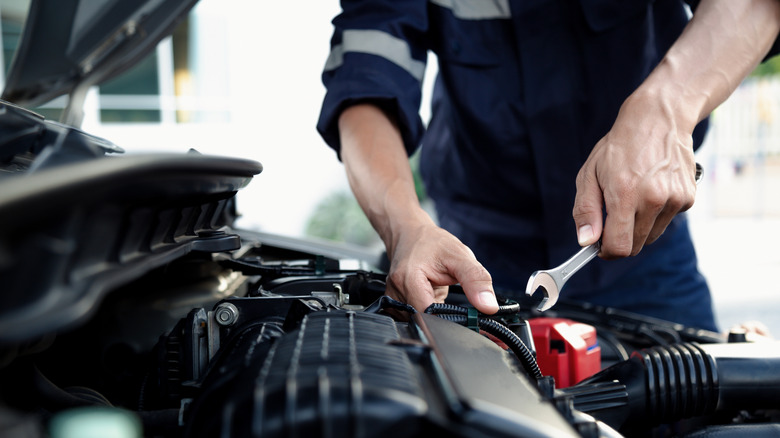
However, on top of increasing everyday expenses, certain financial events can, and do, have serious financial implications for those trying to save. Per Empower, 26% of those surveyed reported that car repairs were among the unplanned financial events that had impacted their finances in the year prior, while another 24% reported medical bills as the same. Home repairs made up another 19% of unplanned financial events, while job loss or income reduction made up another 14%. These events can easily wipe out an existing savings fund that might have taken years to build, or can quickly push those without a fund to begin with into debt.