

A Popular Burger Restaurant Faces Uncertainty At 49 Locations After Franchisee Bankruptcy
In April 2026, several subsidiaries of California-based Friendly Franchisees Corporation (FFC) filed for Chapter 11 bankruptcy protection, with a number of brick-and-mortar restaurants likely to feel the effects. FFC owns 65 Carl's Jr. locations in California — and the owner, Harshad Dharod, intends to sell off the vast majority of them as he undergoes the bankruptcy process. While 10 are slated to be closed, the fate of the others remains unknown.
With the court-supervised aid of a liquidation firm, FFC intends to sell 49 of its Carl's Jr. stores. Per the LA Times, the firm reported it is already in touch with potential buyers to take over these restaurants. However, confirmed sales have yet to materialize, as of late June 2026. Since Carl's Jr. has 610 locations in California — which isn't even close to the chains with the most U.S. locations — this leaves both the staff and patrons of roughly 8% of the state's Carl's Jr. locations stuck in limbo.
With that said, the liquidation firm reported it was common for current employees of franchise locations to keep their jobs when stores change ownership. Similarly, Carl's Jr. representatives have made it clear that these location sales, and closures, are isolated to FFC's holdings specifically. So, while there may be a lot of fast food chains slowly disappearing throughout the U.S., Carl's Jr. as a whole doesn't appear to be crashing down just yet.
Why FFC is parting ways with so many Carl's Jr. locations
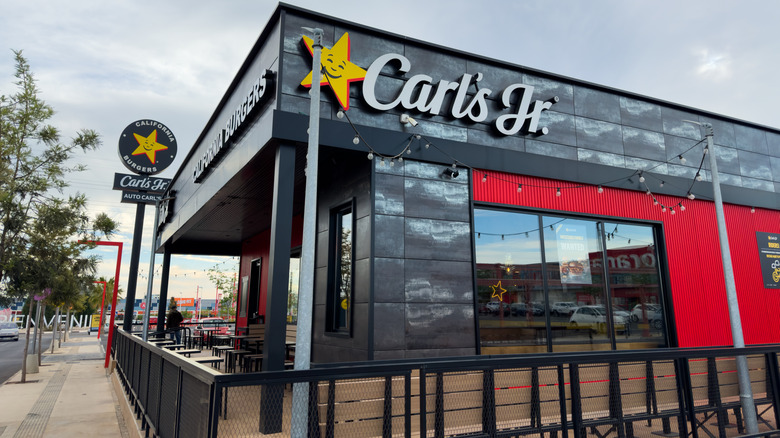
Reportedly, each of the FFC subsidiaries that filed for bankruptcy held less than $50,000 in assets and liabilities when they underwent Chapter 11 proceedings. Dharos cited California's $20 minimum wage for fast-food workers — which went into effect in April 2024 — as a driving force behind his financial struggles, claiming that these added payroll costs inhibited the financial viability of his restaurant locations. However, per the LA Times, there's a staff of roughly 1,000 people across all FFC-owned Carl's Jr. locations, and the franchisee's attempts to cut operational costs in response to increased overhead created hazardous working conditions for many of these employees.
It's also worth mentioning that it's not just Carl's Jr. locations feeling the heat: Jack in the Box closed a ton of locations in 2025, and a Circana study found that Carl's Jr. customers' spending dropped 4% nationwide that year (via Restaurant Dive). Likewise, customers have caught on to the fact that prices have risen significantly at Carl's Jr. and among many of its competitors in recent years, which could mean that other popular burger joints, and their franchisees, could wind up in similarly positions as FFC before long.