

What A $3,000 Car Budget Could Buy In The '60s Versus 2026
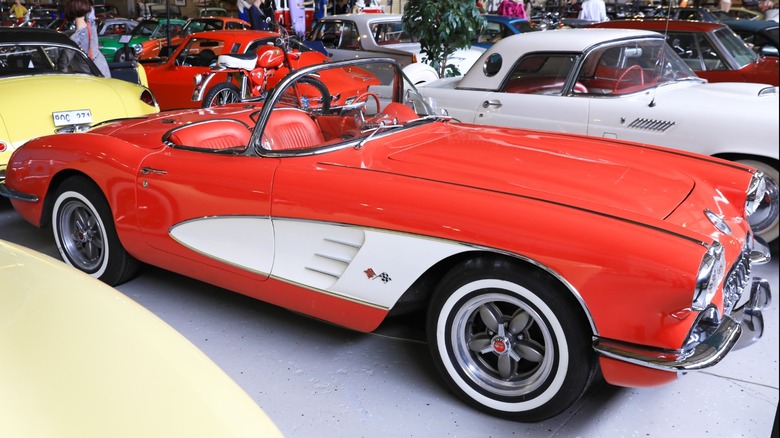
Since the 1960s, the price of cars has been on a steady rise. In the year 1960, the cost of a typical new car was around $2,000. However, according to Edmunds, the average transaction price (ATP) of new cars from January to May 2026 hovered around $48,000 to $49,000. That means, without adjusting for inflation, the price of new cars has risen roughly 5% every year for 66 years.
With a $3,000 budget, you could have gotten quite a number of brand-new cars in the 1960s. That budget could cover basic compact cars like the 1960 Ford Falcon ($1,912), mainstream family sedans like the 1960 Chevrolet Bel Air ($2,545) or Impala ($2,697). Even some of the decade's more exciting nameplates had variants in that price range, including the 1965 Ford Mustang ($2,427) and 1967 Chevrolet Camaro ($2,572). Depending on the year and options, $3,000 could also put buyers close to early muscle cars like the 1964 Pontiac GTO ($2,799) or 1968 Plymouth Road Runner ($2,896). However, luxury cars and heavily optioned performance models were already beyond that threshold, and some live on as classic cars worth a fortune in the contemporary market.
Unfortunately, you won't find any mainstream new cars on the 2026 market for $3,000 in the U.S. In fact, you'll be hard-pressed to find one among the cheap reliable used cars under $10,000. But with that $3,000 budget, you can still find very old, very high-mileage, damaged, or salvage-title cars. On Cars.com, for instance, its under-$3,000 Toyota Corolla listings include multiple early 2000s examples with over 200,000 miles on the odometer, as of this writing.
New cars remain more expensive after adjusting for inflation
You might think that $3,000 in the 1960s would translate to something around what the average car costs in 2026. However, it's the equivalent of roughly $28,000 to $34,000 in May 2026 dollars, per the U.S. Bureau of Labor Statistics' Consumer Price Index Inflation Calculator. That comes out to between $14,000 to $21,000 less than the ATP for new cars in January 2026. In fact, $3,000 in January 1969 was equal to about $28,000 57 years later, a figure much closer to the $27,046 Edmunds reports was the average transaction price for used cars in May 2026.
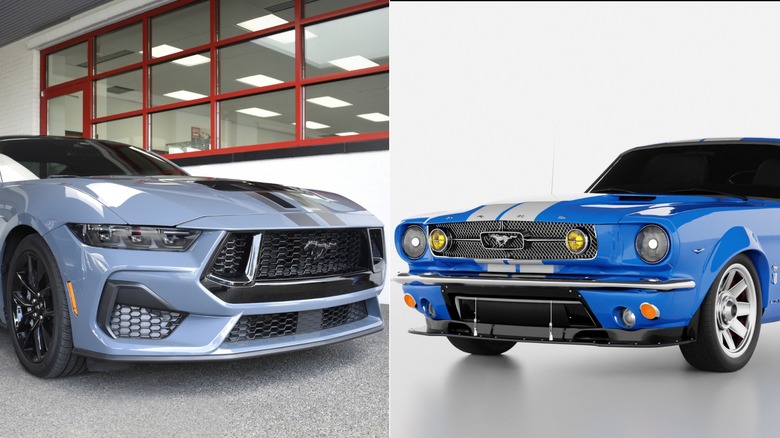
There are multiple reasons why cars seem to be more expensive. First off, brands are raising prices. Take the 1965 Ford Mustang two-door hardtop as an example: New, it cost about $26,000 in May 2026 dollars, but the starting MSRP for a 2026 Mustang is $30,333 — a roughly 17% jump for a model that still occupies a broadly similar position in the market to what it did in the '60s. Some of it could be chalked up to the fact that cars have far more stringent safety and efficiency demands in 2026 than they did in the 1960s, but it's hard to differentiate what changes are related to regulations or production costs and what's the result of pricing strategy.
But secondly, there are simply a lot more expensive options for cars than there were in the 1960s. You can get several reliable cars in 2026 for under $30,000, but many Americans are nudged by automakers to buy larger and pricier options that could be further skewing the scale.