

11 Free Or Affordable Hobbies Perfect For Retirees

We may receive a commission on purchases made from links.
Retirees face some unique challenges to their social and mental stability. After leaving the workforce, many people struggle with newfound gaps in their schedule. The same freedom they yearned for throughout the time and energy demands of their working life can feel like a vacuum after turning the page on that busy chapter of life. If you've saved enough to retire comfortably (which will be different for everyone), there's no financial need to continue working in a diminished capacity, but your retirement lifestyle may still benefit from some conservative spending habits. Going all in on splurge purchases early in your retirement, like planning a blowout foreign vacation or investing in a high-spec RV to start touring the country can backfire in spectacular ways later on.
Retirees crave social interaction, even if they don't realize it. Even as it delivers enhanced freedom, retirement can trigger depression and other mental health crises as those early in the transition struggle to make sense of their new identity , stripped of the decades spent in their careers. Grieving this loss can extend out for a long time, and losing touch with friends and colleagues only adds to the internal struggle. This is where leaning into hobbies can be immensely valuable. Not only will you occupy your time with something you enjoy, but you may also find new avenues to establish fresh social connections that help make this bridge more manageable. This is where affordable or even free hobbies can make a significant impact, providing that stimulus while remaining light on the new budget you're trying to protect.
1. Running and other fitness pursuits

According to Statista data, running is one of the most popular options for global fitness. Roughly 50 million Americans count themselves as either "runners" or "joggers," and the consumer marketplace has responded to this immense volume of prospective customers. Many competitive runners and even casual enthusiasts looking to get the best out of their performance utilize a sometimes-expensive shoe rotation and accessory gear to maximize their workouts. But none of this is actually necessary to get out and jog. You don't need an expensive watch or multiple pairs of carbon plated-shoes to get out and exercise. A good pair of supportive running shoes can be found for under $100, and deals can be found throughout the year as brands phase in new models featuring what are usually minor updates.
Running or regular gym sessions to keep your body active can be a huge positive momentum creator for your physical and mental health. Studies have even shown that seniors who exercise can anticipate a generalized reduction in routine health care costs. In 2024, a study published in the journal "Circulation" (via the American Medical Association) found that meeting recommended activity guidelines (150 to 300 minutes of weekly moderate exercise, 75 to 150 minutes of vigorous exercise, or an equivalent combination) resulted in up to a 31% decrease in all-cause mortality. Similarly, in 2021, The New York Times reported that people who start exercising in middle age and continue into retirement can save as much as $1,874 annually on health care expenses once they leave the workforce. The financial and longevity benefits are big selling points, and the potent mental boost that physical activity provides rounds out an overwhelmingly positive hobby that can realistically take any form you prefer.
2. Writing

A theme will quickly emerge as a key throughline within these hobbies. A hobby is an activity that a person likes to do. You don't have to be good at it to get enjoyment out of the action. If you want to start writing, you don't have to emulate the writing style of classic titans of literature to enjoy putting pen to paper. Rather, all you need to do is think and write. Getting started is the hardest part of writing anything, and seeing this task through can help you unlock new pathways of evaluating and expressing ideas. Many people start writing as part of a journaling project for their own edification. You might also consider poetry as an entry point. Poems can be as short as you wish, providing a quick and approachable option to jot down your thoughts about something you've encountered during the day.
Many people who write in their free time do intend to share their ideas with the wider world. And this can even be a unique source of new passive income. Those who get particularly drawn into the practice of writing might find that they have an interesting perspective on a topic that others want to read about. Instead of journaling for yourself, you might consider launching a blog or even looking for freelance work opportunities to draw in a new stream of income. This can give you a creative outlet that keeps your mind fresh and inspired while also strengthening your retirement budget in the process.
3. Gardening

Anyone with a yard can start gardening. The hobby can be as simple as carving out a small growing patch and sowing a few seeds. Vegetable gardens are a favorite, with options like peppers and tomatoes getting particular attention. Gardeners will quickly note that growing your own vegetables offers a unique approach to stocking the fridge or pantry, and the produce you grow can come from a truly massive catalog of niche varieties with an unmatched freshness. Avid home growers will tell you that tomatoes, in particular, are to-die-for when grown at home.
Fruits are another one that can be incredibly rewarding. Strawberries, for instance, average $2.49 for a pint container as of mid-May 2026, according to the Federal Reserve Bank of St. Louis. Conversely, you'd need around 35 strawberry plants in a dedicated growing space to comfortably feed a family of five. Planting even a fraction of that figure will provide many years of berries though since these plants produce runners at the end of the season and multiply voraciously if you let them. Choosing a few high-value crops can make a huge difference in your grocery bill. SeedMoney found in 2009 that their growing season during the housing market recession saved them roughly $2,150 in grocery costs, with a revisit to this valuation in 2025 with an equivalent savings of around $2,830.
On top of the financial value gardening offers, there's a raft of physical and mental benefits, too. Gardening gets you out into nature and the physical demands of the task have been linked, specifically in older people, to better sleep, healthier diets, and higher levels of life satisfaction.
4. Reading

It's free in most circumstances to get a library card in your local area. You also have the option to pay for a card in some prominent urban communities if you don't live there, granting access to other perks in the process. For instance, New Yorkers can get a free library card at the New York Public Library, and those who don't live, work, or study in the city can fill out an online application for a Visitor Card to place temporary holds while visiting NYC. New Yorkers also gain free access to museums scattered around town through Culture Pass, providing additional value in the process.
Flexing your library card makes reading a free hobby that can consume as much time as you wish. There's no limit to the amount of reading you can do, unlocking countless fictional worlds or bringing new academic research, learning opportunities, or critical analyses to your fingertips. For readers who want to build a collection though, plenty of inexpensive options are also available. Amazon is naturally a good starting place, especially given the outlet's origins as an online bookseller. However, there are lots of tricks and tactics Amazon uses to make you spend more. If the used (or new) prices here don't feel generous enough, with Book Riot reporting the average mass market paperback price at $18.57 in 2025, utilizing a site like Book Scouter can help you compare prices across online retailers quickly. For retirees, reading can help keep the mind sharp, delay the onset of dementia and Alzheimer's, reduce anxiety, and improve sleep.
5. Drawing or painting

Getting into something like drawing will often only require you to repurpose some equipment you already have at home. Drawing for pleasure can be as easy as grabbing a pen or pencil and some computer paper to start sketching. In this area of the hobby, access is virtually unlimited, and the costs are incredibly low. A ream of standard Amazon Basics Multipurpose Copy Printer Paper (500 sheets) is listed at the eCommerce giant for $6.97, and a 14-piece set of Markart Professional Drawing Sketch Pencils is listed for $5.59 (with a 72-piece color set also available for $12.99). The barrier to entry is incredibly small here, and all it really takes is a desire to begin sketching things that speak to you.
Painting can be a bit more expensive, but the entry costs to start practicing this artistic expression are still minimal. Art classes at community centers tend to cost an average of $15 to $30, and supplies can be found for less than $100 all-in, including a canvas or two to get started. Drawing or painting can be a great opportunity to explore deep thoughts, and many people who foster this hobby take their activity on the go. In places all over the world, you'll see people sitting over a majestic view painting or sketching the landscape in front of them. This adds yet another dimension to the hobby and gives you a reason to head out in search of places that inspire you.
6. Volunteering in your community

Older Americans have historically been found to be more generous with their time and money than others. Making donations (and volunteering) is something you'll typically spend more money on in retirement, but it's a worthwhile expense for many since these actions have been proven to enhance your mental health, according to research published in Frontiers in Psychology in 2019 (via the National Library of Medicine). This is a crucially important feature of a retirement lived well. Retired people naturally have more time to give than people working every day, alongside plenty of things they no longer need.
Volunteering is free, unlike the value transfer that takes place when making a donation. It also occupies some of your time, making this an activity that can be physically or mentally rewarding for the doer. If you find yourself stuck at home with nothing to do, getting out to volunteer at a charity you care about in your local community can deliver a net positive outcome for everyone involved. The researchers from the 2019 study also highlighted a finding that volunteering can promote overall wellness that may ultimately reduce the incidence of routine doctors' visits. As a result, volunteering your time can reduce your medical expenses on top of spending time working on a project you care about while interacting with likeminded people.
7. Yoga

This is another health-focused hobby, meaning it can be a great way to mix an enjoyable activity with efforts to stay in shape. Yoga helps you connect better with your body, controlling breathing and movement to strengthen your muscles, concentration, and more. It's also an exercise activity that can be as easy or difficult as you desire. This isn't a high-impact option like lifting weights, playing sports, or even running regularly can be. Yoga is all about moving into a position and holding yourself steady. The meditation aspect of yoga can be a powerful way to improve your mental health, with some perhaps surprising financial benefits peppered into the effort.
A typical yoga class will run you somewhere between $15 and $25 as a walk-in. You may be able to leverage a senior discount or get a rate reduction by paying for multiple classes together, though. Gear is also affordable, with an Amazon Basics Extra Thick Exercise Yoga Mat with Carrying Strap retailing for as little as $16.90. On the flip side, the mindfulness that comes into the picture when working through breathing and strength exercises while calmly meditating can produce a lasting mental shift that carries on even after you leave the studio. This can help you assess choices, including budgetary ones, more fully before pulling the trigger.
8. Take advantage of lifelong learning courses at your local campus

College education isn't just for young, paying students. Older people can return to the world of education without any of the hang-ups that make going to college so stressful. College campuses across the country deliver free or inexpensive educational opportunities through lifelong learning course offerings. The Osher Lifelong Learning Institute has partnered with 125 colleges and universities in the United States to offer inexpensive learning opportunities for people looking to bring something new to their day. You'll pay a membership fee, which varies depending on the nearby institution you attend, and can take a wide range of noncredited courses simply for the learning opportunity.
Many colleges also allow seniors to audit classes or enroll in various non-traditional settings to sit in on courses for free. You'll often have to wait for the standard add/drop procedure to play out, but many courses across a campus's catalog remain open for seniors to join without the stress of assignments or grades. Engaging in a new subject like this can help prevent cognitive decline, and it allows for a unique way to engage with others and learn something you've been interested in for free.
9. Bird watching
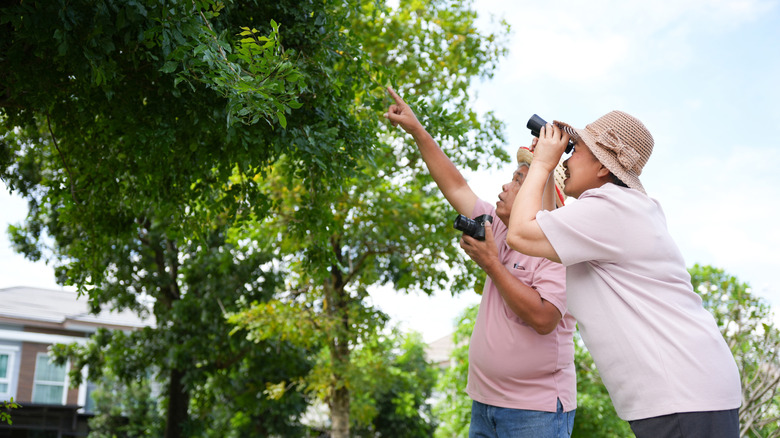
Bird watching is growing in popularity. The activity can be free, considering the astounding prevalence of interesting birds in virtually every community. If you are going to get serious about bird watching, though, a pair of binoculars is essential, with good options sitting in the $100 to $200 price range to support this endeavor. Bird watching involves time spent with your thoughts, allowing for some important moments of clarity. Alongside these extended periods of waiting and watching, you'll traverse through all sorts of environments in your local area or beyond it. This makes the hobby something of a cross between a hiking excursion and a treasure hunt, flexing both your mind and body in the process.
You might also consider a few books on the subject. These often include gorgeous images of bird species, giving you a glimpse of the majesty you'll be chasing out in the wild with some added details about their habits and habitats. Books come in a range of pricing groups, but you shouldn't expect to pay any more than about $50 for a typical title. Birding also comes with the natural desire to adventure beyond your hometown. Going on trips to get out in nature and seek out unique birds can help act as the shove you need to get out there and enjoy more of life. Obviously, these trips are also priced across a range of budgets with those choosing to rough it and camp paying just a few dollars per day on supplies at the extreme low end of the spectrum.
10. Fishing
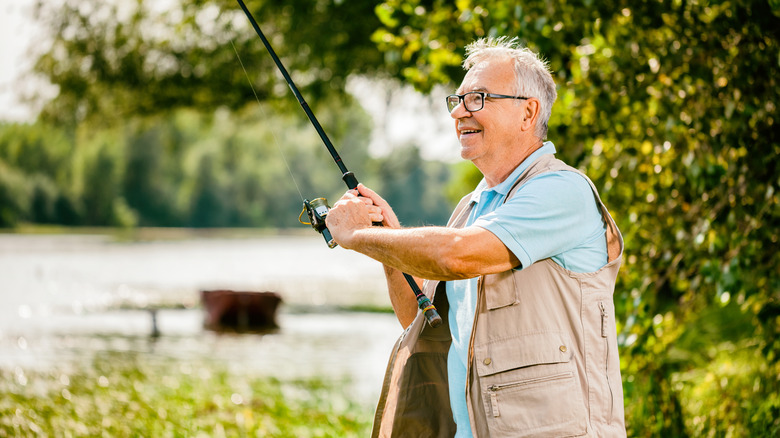
If you live near the coast or along a waterway of really any sort, fishing is a possibility without a heap of effort. Buying some basic fishing gear can run you around $50 for a bare bones setup, and even a more involved shopping trip to get what you need will only rise to about $200 to go from couch to pond or river. Fishing is an activity that puts you out in nature for extended periods of time. As such, it can be a great way to relax and let your mind explore your innermost thoughts or strategize about future plans or hopes. In general, if you're in a flowing waterway in the United States, you can fish without worrying about land boundaries, but it's always a good idea to read up on local rules, including the potential need for a fishing permit in your area. Similarly, you'll need to make sure you're not fishing for species that are out of season or catching and keeping fish that are too small.
But fishing is a hobby that just about anyone can take up, and the activity won't require much physical exertion unless you've hooked a particularly large and strong fish. This is a hobby that's all about relaxing and letting time stand still, if just momentarily. It's incredibly calming for most who take part, and the barrier to entry is extremely low, although having access to a boat can help make it even more enjoyable at times.
11. Photography
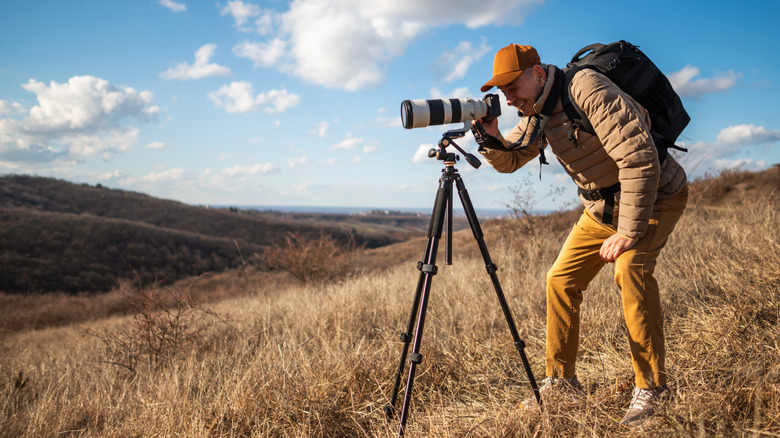
Photography can easily become an expensive hobby, but that's only the case if you make it that way. Taking photographs can be as simple as whipping out your smartphone and snapping a few shots of something that makes you feel a certain way. Capturing important or scenic moments through the lens doesn't have to be complicated, but it certainly can become far more detailed for those fully engaged in the art form.
Buying a high-end camera might easily run you upwards of $1,000, but a good rig alongside some essential support tools like a bag, tripod, and other accessories can often be found for as little as about $700 all-in without feeling like you've skimped on the equipment. You'll also want to take some classes or invest in a book or two to learn the ins and outs of your new camera. An online lesson can run you as little as $50, and you might pay about $125 for an in-person workshop over half a day.
It's also worth considering whether you plan on shooting images for your own pleasure or perhaps as a means to eventually add a side gig to your retirement lifestyle. There's always the stock photo arena to consider, but photographers also book sessions with people seeking to capture memories of happy days throughout the year. A hobbyist can eventually become a paid practitioner if they choose to continue building their skills and upgrading their equipment, potentially bringing a new source of added income into their budget.