

The Car Millennials Said They'd Never Buy Is Making A Major Comeback

If you lived through — or grew up in — the 1990s then you're likely familiar with the minivan. Perhaps even a little too familiar. After the mid-1980s introductions of both the Chrysler Plymouth Voyager and the Dodge Caravan, this bulky-but-efficient car style became a staple in many family households — even becoming synonymous with suburban soccer moms. In fact, according to The Atlantic, minivans peaked in the year 2000 with over 1.3 million sold, at which point this popularity waned significantly, with sales dropping 80% by 2023. However, in 2026, minivans are picking up speed again, this time due to the same people who grew up riding in them: millennials.
While once maligned as their mom's car, millennials now make up an impressive amount of minivan buyers. Even though there are plenty of things that millennials refuse to buy, evidently the minivan is no longer one of them. Born between 1981 and 1996, the youngest millennials turn 30 in 2026 and are turning to practical consumer purchases. As reported by CarEdge, U.S. dealerships saw 395,352 minivan sales in 2025. Although this is nowhere near the car's heyday in prior decades, it's a notable 20% increase over 2024 figures. As for individual minivan models, the Kia Carnival, Toyota Sienna, Honda Odyssey, and Chrysler Pacifica are the most popular, and best-selling, minivans on the market.
Versatility and pricing make the minivan appealing
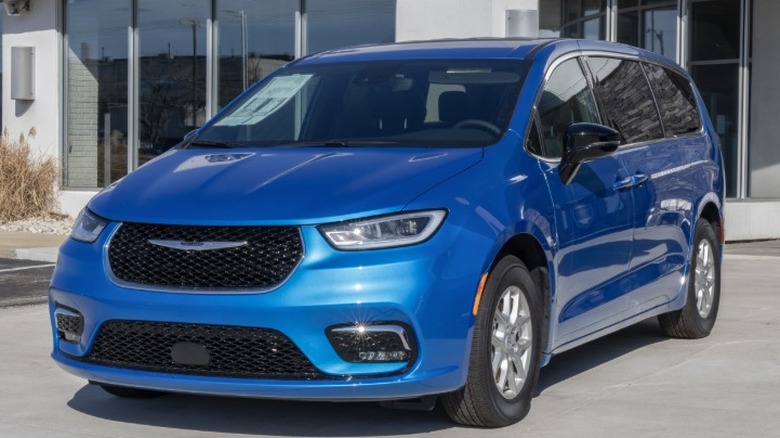
According to The Autopian, millennials are one of the key demographics driving the boom in minivans, with minivans offering versatility for a myriad of different lifestyles. Whereas the SUV took over with young families during the 2010s (and they're still among the most reliable vehicles with long-term value), the average minivan today has about 50% more cargo space and is cheaper. Which is the other significant factor involved in the minivan's renaissance: pricing.
Per Edmunds, starting MSRPs for new minivans in 2026 generally fall between $37,000 and $45,000, whereas buyers can expect to add anywhere from $10,000 to $20,000 more for a new SUV. Gas mileage is better too, with minivans getting almost twice the mpg of many large SUVs. While this might not sound like a big deal, it can mean thousands of dollars in extra savings every year considering how much the average American spend on gas. On top of this, various minivan automakers are also offering financing incentives like 0% APR and cash bonuses for new buyers.
Whether or not the minivan's popularity lasts throughout the rest of the 2020s remains to be seen. However, considering that millennials have struggled to get ahead financially, the cost-effective nature of the minivan is likely to continue fueling its resurgence.