

The 10 Most Expensive 2026 SUV Models You Should Avoid
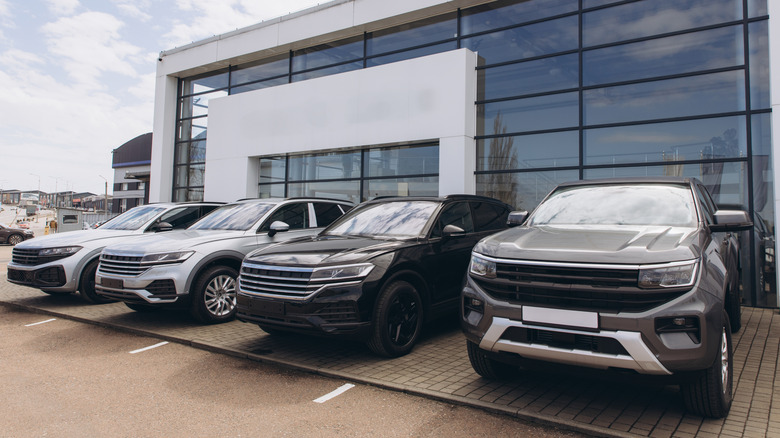
Over the past few years, sports utility vehicles (SUVs) have become increasingly popular among Americans. In the past, sedans were a favorite in the United States, but automakers gradually phased out these models in favor of crossovers and small, medium, and full-size SUVs. These models strike a balance between the functionality of sedans and the performance and size of trucks. Over time, the average fuel economy of SUVs has improved dramatically. The popularity of these vehicles creates a positive feedback loop wherein producers offer a broader range of options to meet consumer demand, resulting in a greater variety than sedans.
While it depends on the model, SUVs commonly weigh more heavily in a financial sense. For example, Kelley Blue Book estimates that the average new vehicle in 2026 sells for about $49,353. Meanwhile, the mid-size SUV category reached an average price of $50,148. Of course, this disparity is even greater between the market average and full-size SUVs. In addition to upfront costs, SUVs tend to incur higher maintenance expenses as their size increases. For reference, RepairPal estimates that compact models have an average annual maintenance cost of $521. This jumps up to $573 for mid-size SUVs and $784 for full-size SUVs.
To help consumers navigate this increasingly populated vehicle segment with ease, Money Digest has highlighted the most expensive SUV models in 2026. We looked at TrueCar figures to demonstrate the disparity between each nameplate's top manufacturer's suggested retail price (MSRP) and its real-world sales price. Furthermore, we pulled CarEdge information regarding five-year ownership costs, which break down expenses for depreciation, insurance, fuel, interest, and maintenance. By combining the average sales price with these long-term ownership costs, potential owners get an assessment of the total five-year costs. Here are the 10 most expensive 2026 SUV models you should avoid.
1. Land Rover Defender
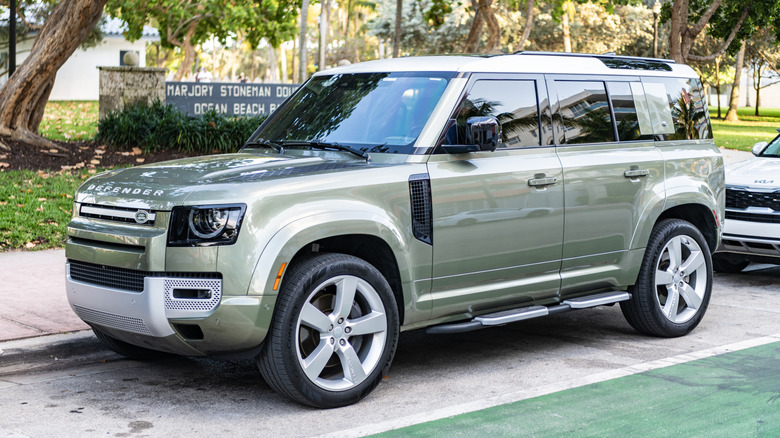
The Land Rover Defender starts the list of the most expensive 2026 SUV models consumers should avoid, sporting a top MSRP of $170,650. If this lofty valuation seems unreasonable, you're on the right track. The average sales price for this SUV is closer to $64,021, according to TrueCar. Before you start considering the Defender, you should factor in the long-term costs.
CarEdge estimates that the average owner spends around $105,702 within the first five years of driving. This luxury SUV's gradual loss of value is the single-largest cost, with the vehicle depreciating by $45,351 over this period. A far below-average fuel economy drives up the Defender's five-year gas burden to $23,100. With high-end vehicles tending to cost more for coverage, this premium nameplate's half-decade insurance cost of $16,715 shouldn't be too surprising. Consumers who take out a loan to afford this vehicle experience another $14,771 of cost. In comparison, maintenance is actually seemingly affordable at $5,765. When you combine the 2026 Land Rover Defender's average sales price and five-year additional costs, the total investment reaches $169,723. Despite being the least egregious example of the market's costliest SUVs, the Defender is still one of the vehicles that will instantly drain your retirement savings, or any savings for that matter.
FuelEconomy.gov predicts that the 2026 Land Rover Defender has a fuel efficiency of 19 miles per gallon combined. For reference, the average new car in the U.S. achieves 28 miles per gallon. Over five years, this means owners spend $7,500 more on fuel than the market average. It's crucial to note that these calculations are based on an annual average mileage of 15,000 and include gas prices as of May 2025.
2. Mercedes-Benz EQS SUV
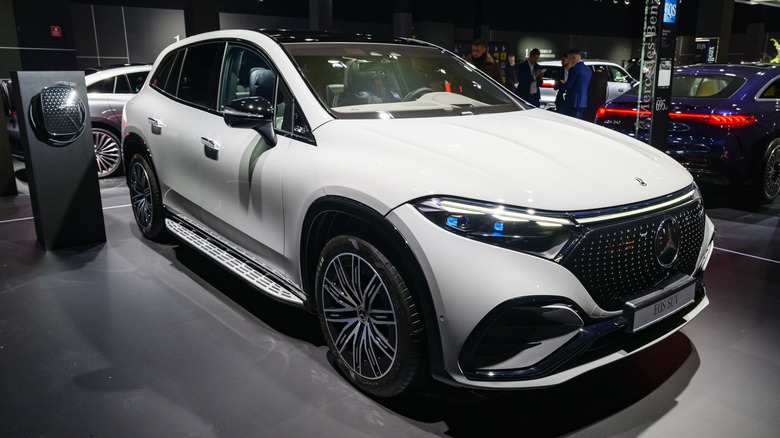
The 2026 Mercedes-Benz EQS exhibits an MSRP ceiling of $181,350. Tellingly, this SUV tends to sell for roughly $85,540, nearly six figures lower than this high-level pricing suggestion, as reported by TrueCar. Additionally, EQS owners are looking at sizable long-term ownership costs.
CarEdge indicates that drivers of this nameplate usually pay out $117,424 within the initial five years. If you're wondering how quickly your car depreciates after buying, the EQS is a sobering example, dropping $56,381 of its initial sales price over half a decade. Insurance is the runner-up expense, costing drivers $36,630 within this period. Unless you have enough funds to buy the EQS outright, this purchase will incur about $18,787 of interest over five years. Fuel costs are comparatively moderate when considering the class type, running up an energy bill of $2,890. General maintenance isn't too far behind, racking up a bill of $2,736. Looking at the average sales price and these ownership rates, the 2026 Mercedes-Benz EQS comes with an all-in five-year cost of $202,964, placing it among the most expensive all-new SUVs.
This fully electric SUV exhibits a combined fuel economy of 79 miles per gallon equivalent, sporting 312 miles of range on a single charge. For context, the fuel efficiency of electric vehicles is often converted to be comparable with the mile-per-gallon ratings of standard internal combustion engines. This saves drivers $6,000 over five years, assuming 15,000 annual miles and based on May 2026 gas prices, according to FuelEconomy.gov. Even when considering these fuel savings, the 2026 Mercedes-Benz EQS would still end up costing you way more than the average vehicle.
3. Land Rover Range Rover Sport
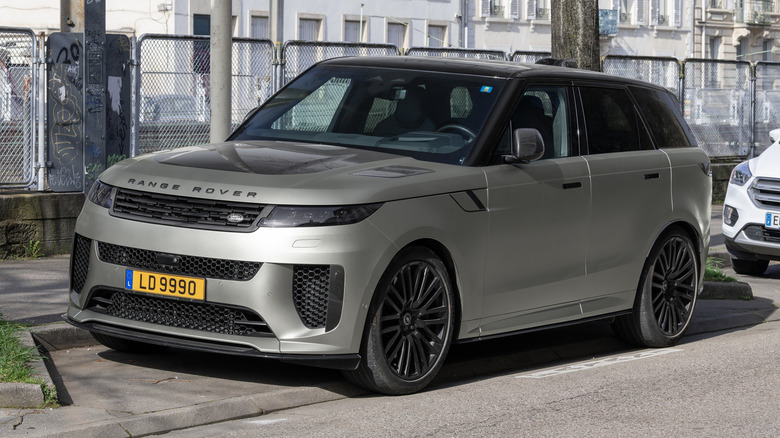
The Land Rover Range Rover Sport is a mouthful to say and a pocketful of cash to buy. The top MSRP is $171,350, according to TrueCar, yet the average sales price is closer to $79,277. Still, this places the 2026 Range Rover Sport far beyond the typical new SUV price.
If that sticker shock wasn't enough to make you reconsider this nameplate, the five-year ownership costs of $141,424 may have you looking for more affordable SUVs. Per CarEdge, Range Rover Sport owners lose $82,329 of their upfront investment through mere depreciation. This high-end SUV proves that premium vehicles tend to come with higher insurance costs, with coverage priced at $22,270 for five years. If you're thinking twice about buying a new car, the Range Rover Sport's average interest cost of $20,212 could shed some light on the financial weight of this decision. Over half a decade, this vehicle runs up a fuel cost of $10,500. Usually, owners spend about $6,113 to keep the Range Rover Sport running optimally. In total, consumers would need to cough up $220,701, combining initial and prolonged costs, to acquire the 2026 Land Rover Range Rover Sport.
FuelEconomy.gov estimates that the 2026 Range Rover Sport only gets around 19 miles per gallon combined, despite having a hybrid engine. When stacked against the new-market benchmark, this fuel-sucking SUV costs drivers $7,500 more over five years in gas costs. With this hungry SUV, you'll definitely need to employ various tricks to save you money when buying gas.
4. Mercedes-Benz GLS
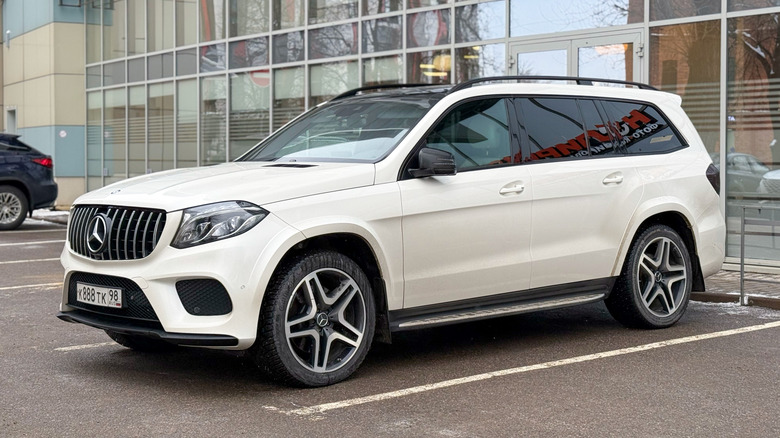
Another of the most exorbitantly priced new SUVs that the average consumer should avoid is the Mercedes-Benz GLS. This luxuriously designed and well-equipped nameplate has a top-level MSRP of $181,350, as reported by TrueCar. Even though the typical selling price is around $86,583, a difference of nearly $100,000, consumers would still be overpaying significantly compared to the average new SUV. When you drive the GLS off the lot, your overall costs are only starting to take off.
By year five, CarEdge indicates that the total ownership expenses reach a stunning $156,783. As appears to be the routine for first-rate vehicles, the GLS's primary ownership expense comes from precipitous loss of value, with its half-decade depreciation topping out at $86,280. The next costliest line item is the interest rate paid on a loan to cover the extortionate price of this SUV. Over half a decade, this debt costs $28,038. Insurance for this sizable nameplate reaches $21,125. At this rate, the GLS is certainly not one of the cheapest new cars to insure. Far from a fuel-friendly model, the GLS consumes $15,400 worth of fuel within this time frame. General repairs and maintenance tack on an additional $5,940. Adding up the 2026 Mercedes-Benz GLS's average price tag and standard ownership fees results in a total five-year financial commitment of $243,366.
According to FuelEconomy.gov, this SUV has a serious fuel efficiency issue, struggling to get 17 miles per gallon combined. This leaves drivers paying $9,500 in fuel prices over that of the new-car average, when calculating with May 2026 gas prices and 15,000 annual miles.
5. Audi RS Q8
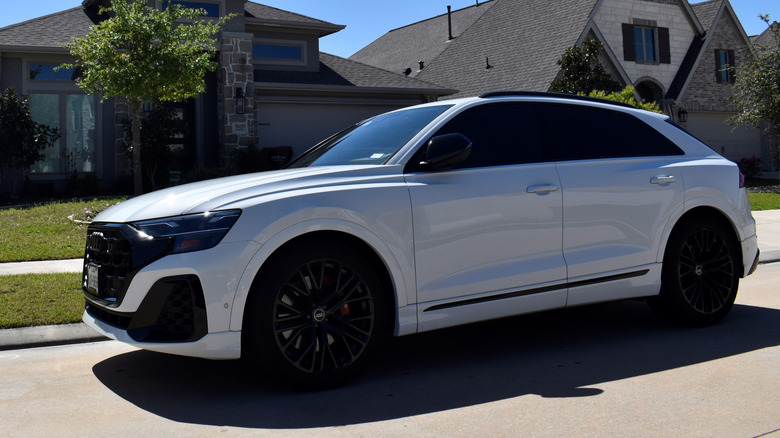
Audi does produce some more mainstream SUVs and other models with relative affordability, but the RS Q8 is among the brand's costliest nameplates. According to TrueCar, this top-of-the-line SUV's MSRP tops out at a remarkable $139,595. The on-the-ground sales price doesn't fall far from this highest-end cost, with the typical model selling for about $137,731, only a few thousand dollars difference. A fan of the brand, but don't want to suffer the sticker shock? Audi still has some luxury cars that are actually worth your money.
Beyond the mere price tag, drivers of the RS Q8 will incur about $107,783 of long-term ownership expenses, spread out among various categories, according to CarEdge. Immediately after driving off the lot, this SUV begins to lose value rapidly, reaching $47,023 of depreciation by the fifth year. Those buyers taking out a loan to finance this expensive Audi face another $21,465 in interest. Insurance is right on the heels, costing $19,960 to cover the large RS Q8. The inferior fuel economy results in a half-decade fuel cost of $14,440. Owners tend to spend the least on maintenance and repairs, with these costs settling at $4,895. By adding up the average sales price and the routine expenses associated with the 2026 Audi RS Q8, buyers are looking at an all-in cost of $245,514 over five years.
Tragically, this is one of the most egregious gas-guzzling SUVs, struggling to maintain 16 miles per gallon combined in its newest version, per FuelEconomy.gov. Over five years, the 2026 RS Q8 uses up $10,750 more of fuel than the typical new car, as calculated by Spring 2026 gas prices.
6. Cadillac Escalade IQ
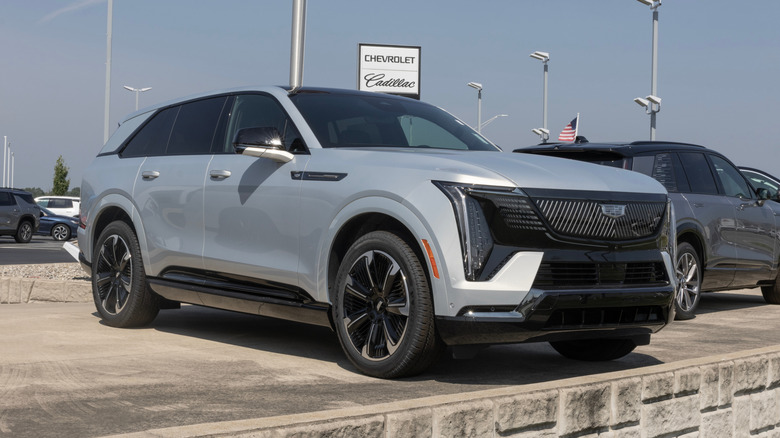
The Cadillac Escalade IQ is one of two versions of this luxury brand's most popular SUV nameplate to be featured on this list of the most expensive 2026 models. TrueCar reports that the highest MSRP for the 2026 Escalade IQ is a cash-crunching $154,100. While other vehicles end up selling for much lower, this SUV's average price tag is much closer to the top retail price, usually going for about $125,719. Believe it or not, these upfront costs are actually eclipsed by long-term ownership costs within five years of purchase.
According to CarEdge, the Escalade IQ runs up a half-decade bill of $130,594. Almost two-thirds of these costs are comprised of mere depreciation, with this high-end SUV driving off $81,069 of its initial sales price over this period. It's common to take out a loan to finance this pricey SUV, which adds another $22,294 in interest. Drivers of the Escalade IQ usually get an annual quote resulting in a half-decade insurance cost of $18,340. Routine upkeep costs drivers around $4,976. In contrast to many other models on this list, fuel is the lowest prolonged ownership cost of the Escalade IQ, only charging drivers $3,915. When factoring in this vehicle's typical sales price and long-term expenses, the 2026 Cadillac Escalade IQ runs up an all-in cost of $256,313 within five years alone.
FuelEconomy.gov doesn't publish information for the all-new Cadillac Escalade IQ, but Car and Driver positions this EV's fuel efficiency at 59 miles per gallon equivalent.
7. BMW X6 M
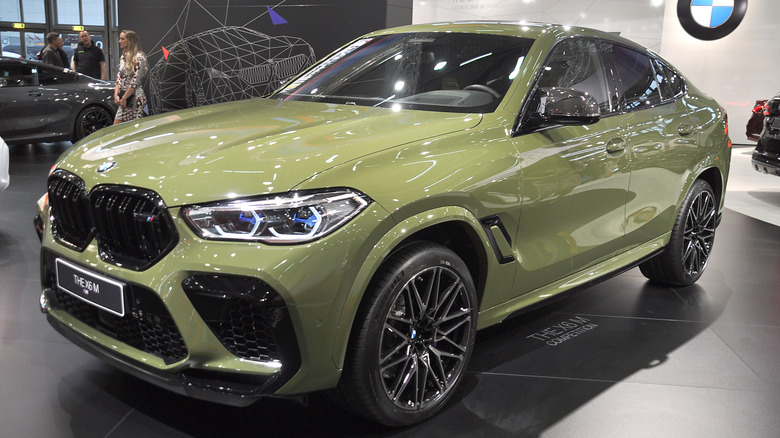
It's no coincidence that a handful of luxury automakers are represented among the most expensive new SUVs on the market. In fact, the BMW X6 M is the first model of two from the German manufacturer to make it into the top four of the priciest models of the class. TrueCar places the top MSRP of the 2026 X6 M at $137,550. Unlike some models, which sell far below the retail suggestion, this SUV's normal price is slightly above even the highest MSRP, usually going for $138,117. That's a markup of about 0.4%. Nearly neck and neck with this price tag are the X6 M's prolonged ownership costs.
CarEdge estimates that the average owner puts $121,930 into this SUV over five years. In keeping with the class theme, this nameplate's largest outlay comes from depreciation, which unloads about $59,614 of the vehicle's original value. This SUV's inflated price tag results in a half-decade interest total of $20,806 for buyers who take out a loan. Car insurance follows closely behind, setting drivers back another $19,475. Five-year fuel costs for this model total $15,400. General upkeep is the cheapest prolonged expense at roughly $6,635. These five-year ownership expenses and the average sales price bring the 2026 BMW X6 M's complete five-year costs to a mind-boggling $260,047.
This nameplate has the unfortunate distinction of being the least fuel-efficient SUV on this list, with an abysmal 15 miles per gallon, per FuelEconomy.gov. With 15,000 miles of annual driving and May 2026 gas prices, owners are overspending $12,250 in fuel over five years, when measured against the new-car standard.
8. Mercedes-Benz Electric G-Class
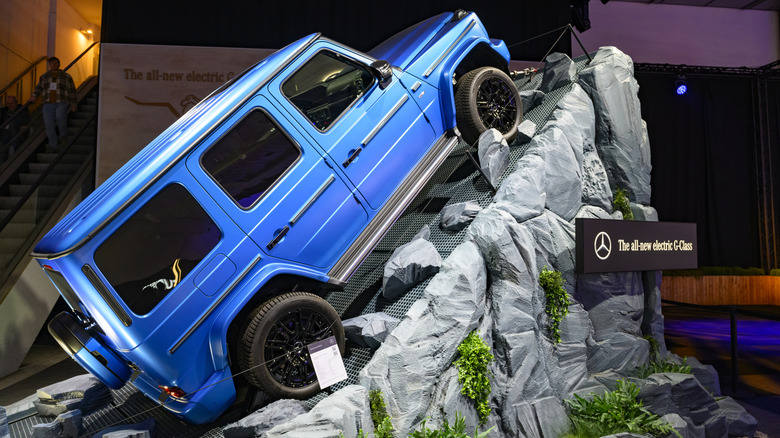
The 2026 Mercedes-Benz Electric G-Class is the fully electric version of one of the luxury brand's most upscale SUVs. TrueCar estimates that the top MSRP for this EV reaches $162,650. The actual sales price isn't far behind, with consumers spending an average of $144,614. Regrettably, this top-notch nameplate's cost to own over half a decade competes with its initial sales price.
CarEdge suggests that the typical Electric G-Class owner spends about $136,383 over a five-year period. More than half of these expenses are accounted for by rapid depreciation. Within half a decade, this SUV loses $78,137 of its initial purchase price. Insurance and interest costs are nearly identical when driving the Electric G-Class, standing at $25,430 and $25,392, respectively. This SUV's completely electric engine helps drivers avoid rising gas prices, with a reasonable five-year energy bill of $3,725, an appealing stat for states with the absolute highest gas prices. Finally, drivers usually spend $3,699 in routine servicing to ensure this premier vehicle is operating optimally. Through the combination of normal sales prices and average five-year ownership costs, owners of the 2026 Mercedes-Benz Electric G-Class are looking at an all-in cost of $280,997.
FuelEconomy.gov indicates that this all-electric SUV gets 62 miles per gallon equivalent with a range of 239 miles. Overall, this helps drivers minimize their gas costs by $4,750 over half a decade, when driving 15,000 miles annually, compared to the average new vehicle.
9. Cadillac Escalade-V
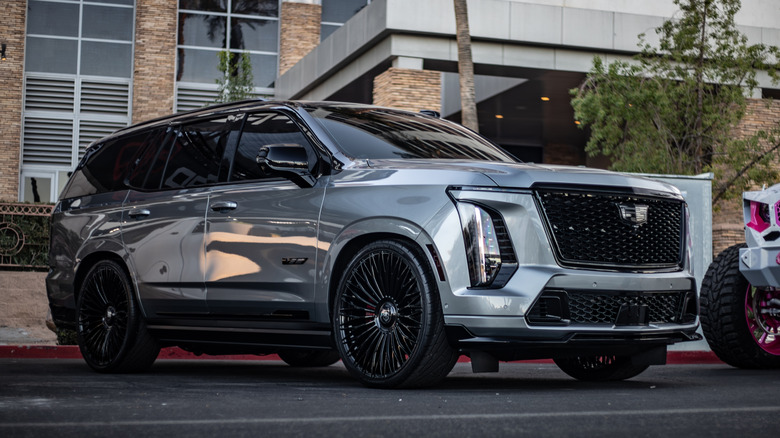
The Cadillac Escalade-V is an overpowered and frankly overpriced version of the more mainstream Escalade, with a top MSRP of $173,895, according to TrueCar. Still, this colossal three-row, seven-seater SUV tends to sell over this rate, with a starting market price of $179,414, indicating a willingness for eager buyers to overpay. This slight markup is roughly 3.2% above MSRP. These elevated costs don't stop with the sticker price, either.
Within the first five years of driving the Cadillac Escalade-V, the typical owner sees an outflow of a whopping $130,212, as calculated by CarEdge. Once again, depreciation eats up the lion's share of these add-on costs. This full-size SUV loses around $72,366 of its original value over half a decade. In the same time frame, insurance dumps another $19,860 worth of investment. If you're leasing instead of buying outright, interest on this hefty loan tacks on another $19,593. The Escalade-V is far from the vehicles with the best gas mileage, consuming roughly $13,590 of fuel over five years. Maintenance costs are decently low, especially considering the vehicle's price and size, settling at $4,803. Altogether, the 2026 Cadillac Escalade-V is yours for $309,626, considering the average sales price and these prolonged ownership expenses.
FuelEconomy.gov indicates that this brand-new SUV achieves a wallet-pinching 13 miles per gallon combined, far below the market standard. This means owners face a fuel premium of $15,750 over the national benchmark when looking at gas prices as of May 2026.
10. BMW XM
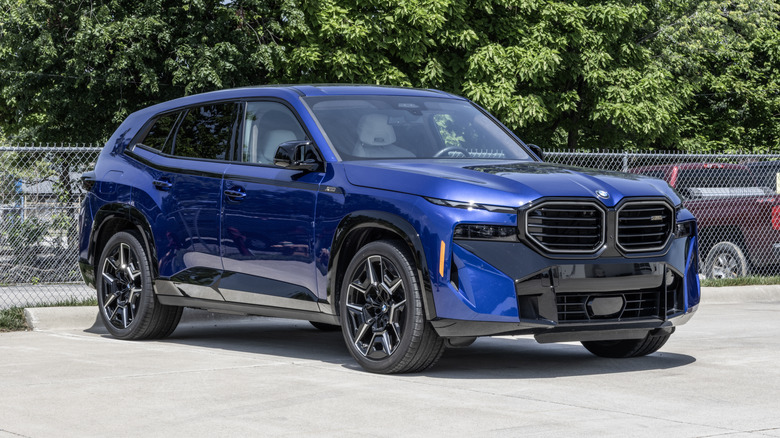
The 2026 BMW XM tops the list as the most expensive SUV model in 2026 that you should avoid. This premium model clocks in with a top MSRP of $161,150, according to TrueCar. However, the market average cost drops to $150,550. Where the BMW XM departs from many SUVs is with a five-year ownership cost that eclipses even the highest MSRP listing.
CarEdge estimates that the BMW XM costs an eye-watering $185,801 within the initial half-decade of driving. Depreciation accounts for over half of these total costs, with the SUV losing $99,710 of its initial sales price over this period. Insurance is also high, hitting around $34,530. Given the BMW XM's sticker shock, many buyers may choose to finance, which would add another $ 27,967 of interest to the pile. This hungry SUV gobbles up $16,500 of fuel over five years. Maintenance is the least expensive ownership line item, but still stretches to $7,094. By looking at the average market price and these long-term accompanying costs, the 2026 BMW XM has a total five-year cost of $336,351.
FuelEconomy.gov places the 2026 BMW XM's fuel economy at 47 miles per gallon equivalent combined for the electrical portion of the engine and a meager 14 miles per gallon combined for the gasoline component. Assuming an annual mileage of 15,000 miles, owners would spend about $4,250 more over five years than the new-car average.