

10 Items You Should Never Buy At Walmart
We may receive a commission on purchases made from links.
Walmart is a massive worldwide brand with loyal customers across multiple continents. Thanks to slogans like "Everyday low prices" or "Save money. Live better," these shoppers are prepped to always expect savings. However, what many might not realize is that Walmart isn't always the best place to buy certain items. In fact, you could be spending more money at the retail giant than you realize.
According to data released by the United States Department of Agriculture, American grocery prices rose by about 23.6% between 2020 and 2024. In January 2025, NPR published details about their Walmart shopping experiment. The news source tracked 96 grocery items over a six-year period to see how prices rose or fell at a specific Walmart superstore. While some items did get cheaper, most things cost more, with some items becoming over 40% more expensive. Some Walmart shoppers are even taking to the internet to complain that they're not seeing the savings they did in years past. For instance, one Reddit user shared their own purchasing experiment with the r/aldi subreddit, claiming that had they shopped at Walmart and not Aldi for their groceries, they would have spent 60% more!
Many of us grew up with Walmart and shop there as a habit. Even so, with expenses rising, it's important to employ money-saving grocery shopping strategies whenever you can. Sometimes that means finding the best bargains elsewhere. Here are some things you probably never buy at Walmart if you're dedicated to finding the best price.
1. Eggs
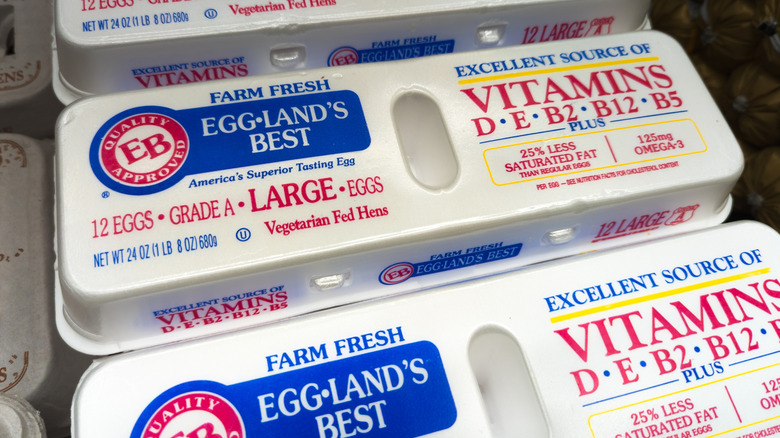
In NPR's Walmart shopping experiment, eggs represented the most startling price jump. Per their findings, Eggland's Best dozen eggs became 46.4% more expensive. That means that the eggs you purchased in 2019 would likely cost almost twice as much when purchased today. The rising cost of eggs has been a huge matter of debate, even becoming a matter of political contention. This is one food staple that many American shoppers treat as essential because of its versatility; you can enjoy eggs as they are or as a major ingredient in a host of recipes. As such, having to pay more for eggs represents a massive annoyance to many U.S. households.
When comparing egg prices, you may be tempted to go for Walmart's Great Value 12-count eggs, which we priced at $1.67. However, we found Aldi to be a very cheap alternative, where depending on your location, you might pay as little as $1.20. Prices can change based on various circumstances, whether it's a sudden surge in demand or an unfortunate disease outbreak that impacts chicken production. Inflation is, unfortunately, another factor that routinely affects egg costs.
That said, there's a very good chance you are overspending on eggs if you buy them from Walmart versus a rival retail chain or a local grocery store. You should never assume that getting your eggs from Walmart automatically represents the best deal. Don't be afraid to shop around, because you could save quite a bit of money by doing so.
2. Reading glasses

According to Vision Council estimates, approximately 34.5 million people in the United States rely on reading glasses. Whether making sense of the small text printed in their favorite novels or clearly reading product labels while shopping, reading glasses are indispensable to many people. In fact, research suggests upwards of 89% of Americans aged 45 and older will rely on reading glasses due to conditions like presbyopia.
The good news is that many types of reading glasses are available without a prescription through various retailers, including Walmart. While prescription reading glasses may be necessary for specific vision issues, requiring an in person eye exam and customized lenses, non-prescription glasses are designed to meet the needs of a wide range of people. They also tend to be very affordable. While you might consider a pair of $5.97 Equate reading glasses at Walmart to be cheap, we found you could actually do much better elsewhere.
For instance, Amazon sells reading glasses, with many options costing $5 or less. You can also find a pair at Dollar Tree, where they're typically priced at about $1.50 each. As you can see, you should never get reading glasses from Walmart if your goal is to save money, whether shopping online or in person, you're bound to find them for a much lower price at a different store.
3. Cereal
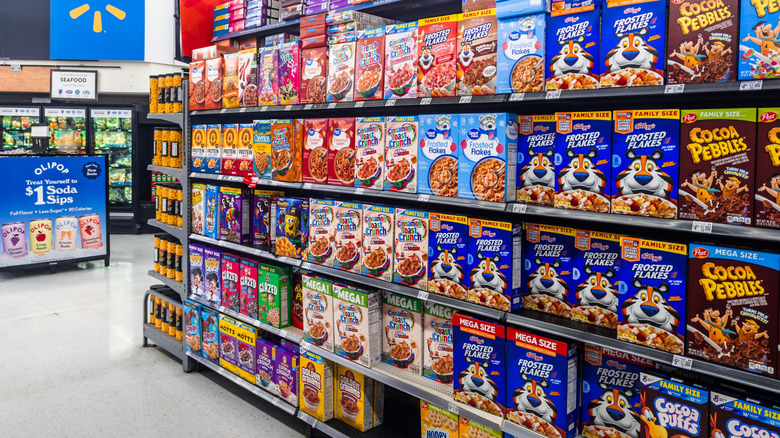
Much has changed when it comes to morning routines, but especially how Americans approach the concept of breakfast. As boomers recall, breakfast was traditionally a time in which families gathered around the table to talk about plans for the day, finish up homework, but to especially enjoy a satisfying meal together. For many, this meant pouring a bowl of delicious breakfast cereal with milk and taking the time to enjoy it before starting the day. Yet today, that's no longer really the case. A Circana study reveals that Americans prefer meals that can be made and enjoyed in 15 minutes or less.
Convenience may be a major driving factor behind why cereal boxes don't fly off the Walmart shelves at the speed they once did, however, it's far from the only factor. Some reluctance is due to shrinkflation, or the concept of boxes getting smaller even as cereal prices rise. With cereal prices increasing alongside perceived inconvenience, some Americans have simply opted out of buying this food altogether. Some, but not all.
If you can't start (or end) your day without a bowl of cereal, you may be fine with stopping by Walmart and purchasing a box of Great Value cereal. We found that off-brand options cost between $1.87 and $2.98. While that might seem like a good bargain, when we switched to Dollar Tree, we found that a range of options could be found for a little cheaper, starting at around $1.50. Likewise, we found that there were comparably priced cereal options available over at Aldi. As cereal prices rise, you may very quickly find that Walmart is never your only option for saving, and it could be the worst retailer to rely on for a deal.
4. Fruit snacks
Whether shopping for your family or just wanting a conveniently packed tasty treat for yourself, fruit snacks carry loads of appeal to American shoppers of all ages. Unlike cereal, the demand for fruit snacks has only continued to increase, with Future Market Insights projecting demand will increase significantly in the United States, reaching a market valuation of $4.7 billion by 2030. As Americans become increasingly health-conscious, Future Market Insights also predicts that organic fruit snacks will make up around 34.2% of the market share.
Still, as demand for these delicious and fun sweet treats expands, we can predict that prices will likely go up. Even if you appreciate the variety of options found at Walmart, you may find that you never get the best deals when you shop there. For instance, the cheapest box of fruit snacks advertised on Walmart's website was a 10-count box of Great Value Fruit Smiles for $2.47. If you want a little more bang for your buck, you will save money by choosing Dollar Tree. We spotted $1.50 boxes of 6-count and 8-count fruit snacks. Buying two boxes means that you will get 12 to 16 packs of fruit snacks while only spending an additional $0.53.
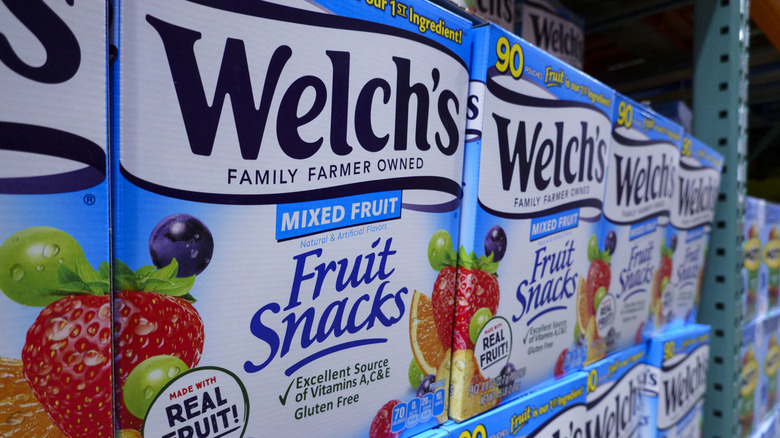
If you prefer bulk buying snacks for your family, then Costco is an even better option. We found a 90-count box of Welch's fruit snacks selling for $15.77, which works out to about $0.18 per package of snacks. That works out to about $0.07 cheaper per fruit snack than what it would cost to buy the equivalent amount from Walmart.
5. Light bulbs
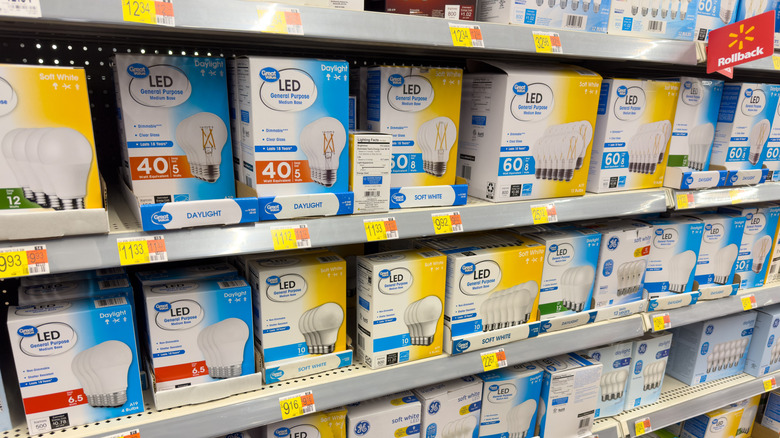
Light bulbs are one of those household purchases that seem like a no-brainer, right up until you realize that the type of bulb you buy can actually have a significant impact on your monthly utility bills. Incandescent light bulbs, on average, consume about 60 watts of electricity compared to LED light bulbs, which reportedly use about 10 watts. The U.S. Department of Energy is phasing out incandescent light bulbs, which means you won't be able to buy this type of bulb in the United States for too much longer. It also means that you'll have more efficient options to choose from.
Regardless of the size, shape, and wattage of the light bulbs you plan to buy, we found more budget-friendly options than Walmart. When we priced light bulbs there, the most budget-friendly option cost $3.33. You may be able to find cheaper alternatives at Dollar Tree, where items start at $1.50. We also found comparably priced bulb options when browsing Amazon. If you want a variety of light bulb options, your best bet may be to go with Amazon. Likewise, you could choose a dollar store like Dollar Tree and spend less per bulb than you would at Walmart. Whatever the case, you may want to skip Walmart if you're looking for the most wallet-friendly options for light bulbs.
6. Flour
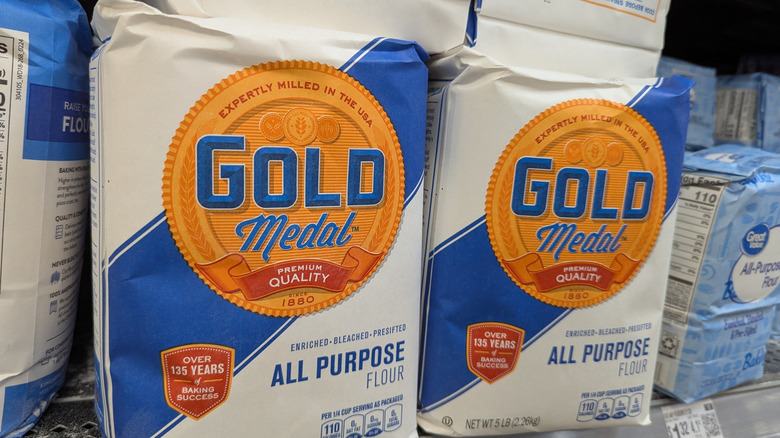
Flour is an essential food staple of households across America. For instance, Statista reports that Americans consume about 130.6 pounds of wheat flour per capita annually. Though there's been a slight dip in demand per Statista data, Americans are still urgently adding packs of wheat and other types of flour to their shopping carts. While white all-purpose flour is especially popular due to the many ways it can be used in recipes, the price per pound has spiked significantly since 2020. The U.S. Bureau of Labor Statistics estimates the per-pound price rose from $0.46 to $0.56 within the last five years.
While that might not seem like much at first glance, this means shoppers may have gone from being able to reliably spend less than $1 for a couple pounds of flour to being lucky to find anything nearly as cheap, especially at their local Walmart store. And yet, if you know where to look, you may be able to avoid overspending on flour while getting more than enough to use for future recipes.
Aldi currently sells 5-pound bags of all-purpose flour for $2.15. Meanwhile, the same amount of flour would cost $2.38 at Walmart. This is just one example of why comparison shopping is always a good idea; the money you save by buying staples like flour where they're cheapest will quickly add up over time.
7. Seasonal berries
It's sometimes very easy to take seasonal fruit for granted. As the name implies, this type of fruit is typically available during specific times of the year, though it goes a bit deeper. Some fruits cannot thrive outside of a certain amount of warmth, sunlight, or soil conditions. Blueberries, for example, cannot thrive if exposed to direct sunlight or excessive heat for too long. Therefore, it can be challenging to meet shoppers' demands for their favorite berries outside of the ideal season. With that challenge, predictably comes higher prices when seeking seasonal berries during non-peak season.
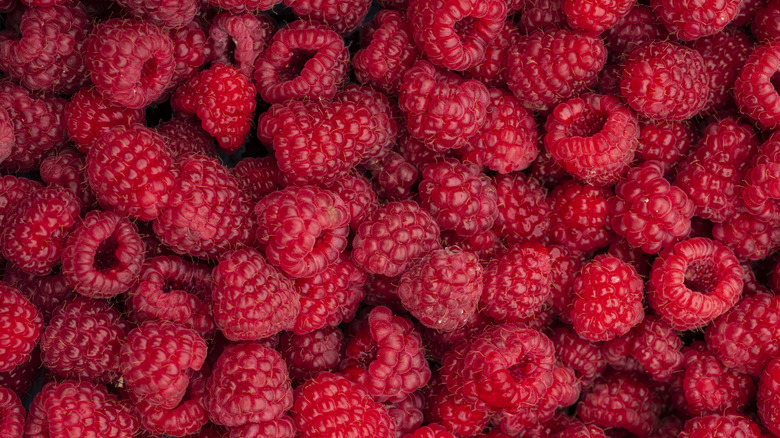
Whether in season or not, you may have gotten used to relying on Walmart to find your favorite berries and other fruits. However, what you may not realize is that some of your favorite seasonal fruits are actually cheaper elsewhere. For example, Walmart sells 12-ounce containers of raspberries that cost $5.64 when purchased online. If bought at Costco, this same container would cost $4.53. This represents potential savings of at least $1.
While you may be tempted to stick to grocery stores, it may also be worth it to hit up your local farmer's market. Many shoppers get skittish about shopping here, but as CNBC notes, rising food costs mean that farmer's market produce isn't quite as expensive as you might think. And it's entirely possible that by cutting the "middle man" you may find that you'd prefer to get fresh produce this way.
8. Spices
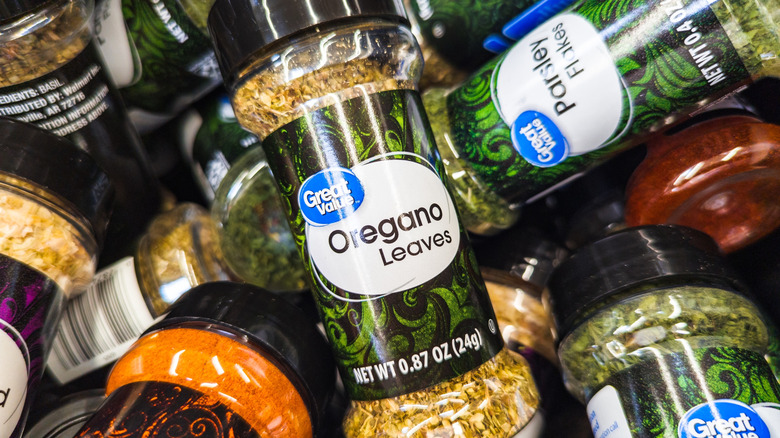
It's true that generic spices tend to be inexpensive overall, however quality can dictate price. As America's Test Kitchen revealed, they paid $0.12 for an ounce of imitation vanilla extract; by comparison, real extract cost as much as $6.19 per ounce. If you are someone who never worries as much about these sorts of details, you're likely fine with stocking up on generic spice options at the grocery store. That said, you may not be saving as much on your purchase as you might think.
At Walmart, it's possible to get various spices for as low as $1.08. And yet, if you were to shop at Dollar General for spices, you can find options for as low as $1 each. If you're someone who prefers to bulk buy your spices, getting them from Costco instead of Walmart might represent long-term savings. Here, you can invest in large containers of spice that typically work out to having spent less than $1 per ounce. A 10-ounce container of Kirkland Signature red pepper flakes at Costco, for instance, costs $4.53. That works out to a little over $0.45 per ounce. It's another situation where shopping around can help you find the best option for your particular budget or future plans instead of just sticking to Walmart.
9. Phones covers
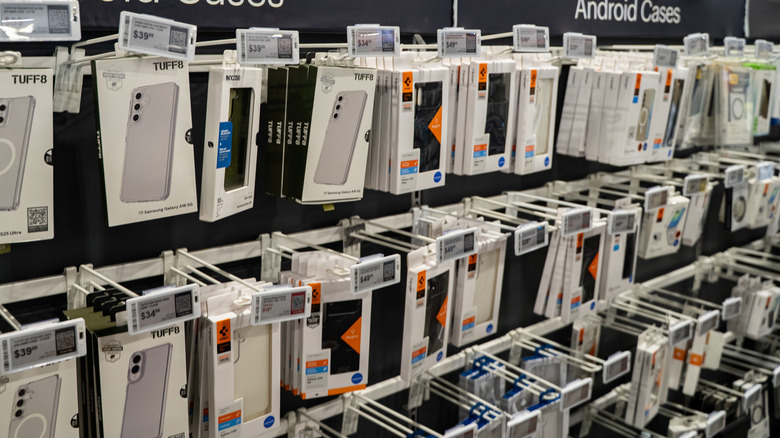
According to Statista estimates, there are close to 7.6 billion smartphones as of 2026. As impressive as that number is on its own, it also represents another potential reality: billions of shattered screens and damaged phones. In 2024, Allstate Protection Plans shared survey results concerning how many Americans damage their phones and the associated costs. Over the course of the previous year, 78 million people across the United States damaged their phones. Together, they paid out an estimated $8.3 billion on repairs.
While some might opt for phone insurance to cover the costs of repair, many have turned to phone covers as a simple and generally very affordable solution. When combined with a screen protector, this seems like the easiest way to keep a smartphone safe from damage. It also represents an opportunity to choose a cool cover that speaks to your unique personality. Walmart offers more than a thousand different phone covers, with some available for less than $9. If you're looking for a bargain, this might seem like a good deal. However, you're actually missing out.
Not only can you find cheap phone cases through Amazon, some for less than $8, but we found that there are at least 80,000 different phone case options from which to choose. This means not only are you more likely to spend less than at Walmart, but you're more likely to find a unique and fun case that fits your exact smartphone model.
10. Sugar
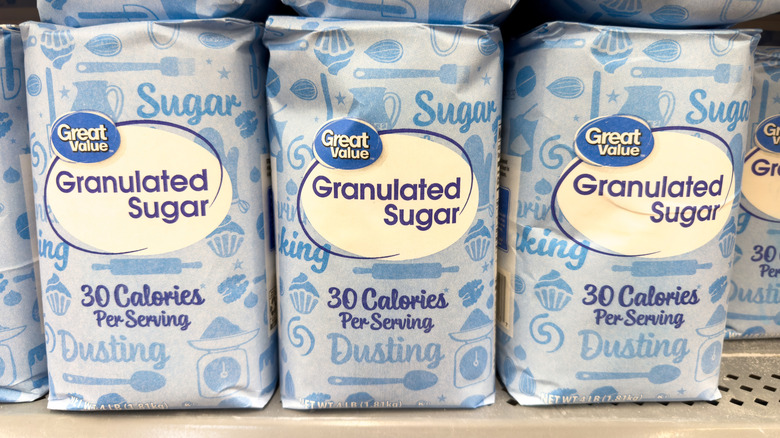
U.S. shoppers have a serious sweet tooth. According to the Department of Agriculture estimates, the average American consumes 34 teaspoons of sugar daily. Meanwhile, Talker Research survey data suggests people across the United States eat a whopping 80 pounds of sugar each year. Even as the debate wages on regarding how much sugar is too much for the average person, it isn't enough to keep bags, boxes, and canisters of sugar out of shopping carts.
If you're shopping for sugar, but looking to save, then you should probably never buy from Walmart. There, a 4-pound bag of Great Value Granulated Sugar currently costs $3.12. We found that you could do better at Aldi, where a 4-pound bag costs $3.09. Meanwhile, a 10-pound bag of sugar at Costco costs $8.50, which works out to $0.85 per pound, which isn't too bad for those who want to stock up on sugar as part of a bulk buy.
If you're genuinely looking to cut back on sugar, you could opt for a small box over a hefty bag. Luckily, 1-pound boxes of Domino sugar are available at Dollar Tree for $1.50. It's a little cheaper than the 20-ounce Great Value canister sold at Walmart, which is technically priced at $1.70 per pound.