

The 10 Biggest Complaints From Early Retirees

Early retirement is a goal for most Americans. The Pew Charitable Trusts found in 2018 that Hispanic Americans were the most likely to "want to work past 65," but this group responded positively to that question only 50% of the time. In all other breakdowns, including gender and income level, the numbers skewed notably lower. According to an Empower survey from 2025, Americans tend to think the right age for retirement is 58. Importantly, this is four years before a worker is eligible to begin taking Social Security benefits and a full seven years ahead of access to Medicare. Retiring at 58 falls definitively in the camp of "early retirement," but even the average retiree hangs up their boots a bit earlier than is perhaps expected. Boston College's Center for Retirement Research found in 2025 that the average retirement age for men is 64 and for women it's 62.
Early retirement of any sort comes with a set of enhanced challenges. The financial balance is a little different, right off the bat. Retiring even one year "early" means adding a year of extra funding requirements to your savings portfolio while taking away a full year of contributions from your salaried earnings. But making the math work to support your needs isn't the only complaint that early retirees tend to experience. For many early retirees, starting the retirement savings journey early can make this part of the equation fairly routine. But some other hurdles rise up to meet an early retiree along the way, including health concerns, tax obligations, and portfolio balancing considerations.
1. Losing out on full growth potential thanks to advisor fees

Working with a financial advisor can be immensely powerful as you progress toward retirement. A 2025 Northwestern Mutual report found this to be undeniably valuable, with the single decision to employ an advisor ultimately doubling average retirement savings balances. This is crucially important for savers who may not have the wherewithal themselves to actively manage their savings portfolio. Some savers will need the comforting guidance of a professional, bringing them a partner to help stay on track and an investment pro that can make managing the investment effortless.
But those looking to retire early will likely want to engage with the market personally. The average financial advisor will charge a fee structure based on the value of your portfolio, with expenses ranging from 0.5% to 1.5%, typically. That's an outgoing expense that can gum up the works of your efforts to leave the workforce earlier than expected. If you're going to make the math work in your favor, you need every dollar of your portfolio working for you, and expenses cut into that efficiency. It may be beneficial to start your savings efforts with guided support, but making the move to a DIY model as early as possible will effectively take the training wheels off and allow you to keep that annual fee in your principal balance, supporting additional growth over the long term. Moreover, it's almost non-negotiable once you reach retirement age. Retiring early and continuing to pay for this service creates an additional, likely expensive, drain on your savings balance that can derail your plans for a lengthy retirement.
2. Debts minimizing lifestyle freedom

Early retirement requires a faster savings pace, but it also creates other financial stressors that can't always be helped. For one thing, many buyers utilize a standard 30-year mortgage when buying a home. The average first-time buyer today is somewhere in their 30s, with National Mortgage Professional offering a median age of roughly 32 in 2024. Self offers a 2023 average age of 35 and the National Association of Realtors found the "typical age of first-time buyers" in 2025 to be 40. Even at the low end, a 30-year mortgage results in an on-time payoff at around the age of 62. An early retirement will demand investment prioritization, virtually guaranteeing that you bring the final years of mortgage repayments into your post-working budget.
Other debts may also linger on your balance sheet. Western & Southern Financial Group reported in 2025 that credit card debt is the most common type of repayment obligation among those 50 and older, while 63% of households over 65 carry debt, up from 38% in the 1980s. More surprisingly, while the average consumer credit card balance among all users is a little under $8,000 as of late 2025 (via LendingTree), Federal Reserve data indicates that the median balance for retirees is still at $2,500 with total debt for the typical retiree rising to $32,050 (via Investopedia). Servicing these repayment demands can eat away at the amount of cash you have available to fund the things you actually want to experience in retirement, creating a negative spiral that impacts your financial stability, mental health, and more.
3. Paying out-of-pocket for health care needs before Medicare kicks in

Medicare coverage begins at 65. The health care tool provides a raft of benefits to older Americans, including a range of free services and screenings designed to offer preventative care and early identification of illnesses and diseases that become far more devastating the longer it takes to begin treatment. But 65 is a long way off for many early retirees, which leaves a gap in coverage that needs to be filled in one way or another. Some early retirements take place in a person's 60s, leading to a decision over whether to simply go without insurance coverage for a few years and risk paying out-of-pocket for treatment if the need arises. Some people who have been in good health throughout their adult life will opt for this approach, but that doesn't make it any less risky. Out-of-pocket costs can be immense, especially for things like hospital visits after routine accidents. Mira Health reports that an emergency room visit averaged roughly $2,715 in 2025. Getting treatment for a broken bone without health insurance can rise to over $10,000 in more invasive instances. There's also a major discrepancy based on where you live. Maryland residents pay an average uninsured ER bill of $682 (in 2024), while Floridians can expect an average financial hit of $3,394, the highest in the country.
Most Americans get their insurance through employer-sponsored programs, keeping costs a bit lower. The sticker shock of an individual plan can be jarring, coming in at hundreds each month for medium-level coverage. But opting to go without can be even more painful on your finances and limit or elongate wait times for treatment options, too.
4. Surprise tax penalties for early distributions

If you retire before 59½, you'll be slightly hamstrung when it comes to accessing some of your funding sources. Namely, you can't access IRA or 401(k) accounts without an added 10% penalty being applied to the distribution. Later on, you'll have to deal with required minimum distributions (RMDs) from your 401(k), which can add penalty expenses if you fail to take money out of the account. But in early retirement, finding creative workarounds to support your cash flow needs without running into extra costs is the primary objective, and it can be challenging. It's easy to remember rules like the Roth IRA's five-year requirement, but other restrictions might fly under the radar. It's unfortunately fairly easy to make the incorrect assumption that a retirement account is designed to support retirement finances and simply start drawing money from the portfolio without remembering the age component.
Retirees who do take distributions before they hit this all-important age threshold can be stunned by the tax bill they have to navigate come spring the following year. A Roth IRA, for instance, offers tax-free withdrawals once you reach eligibility, but distributions are taxable if you haven't arrived at the appropriate age. This means a retiree might start drawing down a Roth account thinking they're in the clear, only to find that they have to pay a 10% penalty on top of a tax assessment that treats funds that ultimately will be tax-free as regular investment income!
5. Getting less from Social Security than expected or hoped for
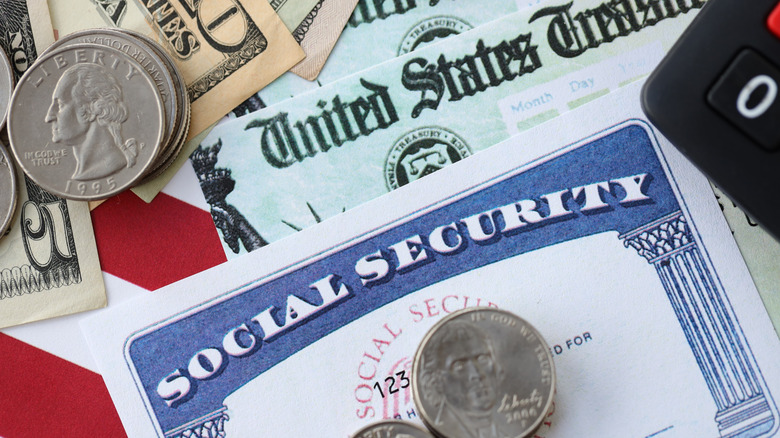
Social Security replaces, at most, roughly 40% of your pre-retirement income, according to the Social Security Administration. The program was designed specifically to offer a defense against the threat of poverty in older age, and therefore the lower your income level was throughout your working life, the closer to this replacement ceiling you'll ultimately get with your benefits. However, there's a lot more to the Social Security picture than just a simple check deposited into your account every month. SSA reports that in January 2026, the average benefit was $2,071, and more importantly, the Senior Citizens League reported in 2025 that nearly 22 million seniors live on Social Security alone. While this is a recipe for financial hardship in your golden years, the sheer volume of retirees who approach retirement in this way makes the importance of Social Security all more impactful.
Claiming benefits early will permanently reduce your payout figure. Claiming at 62 results in a 70% benefit amount, for instance. It's also important to keep in mind that benefit values are calculated based on your 35 highest earning years. Retiring early can curtail your time at the top end of the earnings spectrum along the trajectory of your career, meaning your benefit amount will be hamstrung by some of your younger, perhaps less lucrative annual salary years on top of an urge to start receiving benefits early. All this can lead to a far smaller check value from the federal retirement program than a retiree might be prepared to bring into their budget.
6. Having to stretch retirement funds

The threat of running out of money in retirement is a real issue for anyone who plans to hang up their work boots one day. Avoiding this disastrous outcome is therefore top of mind for every saver eyeing up their exit from the workforce. But early retirees have more to consider than most. By retiring early, you minimize the length of time you have available to save for these years of relaxation, making every dollar you can save count even more. On the flip side, early retirees will need their money to stretch further in retirement, too. Even one additional year out of the workforce is a year you don't have at your disposal when it comes to saving and you will need to fund from your accounts.
Many early retirees worry about stretching their money far enough to cover the lifestyle they want to lead. Early retirees are the most vulnerable to this double-edged sword, and therefore are more likely to complain about the effects of a minimized budget (either temporarily or long term) when the realities of paying for an extended retirement come into focus. The acuteness of this situation becomes even more dramatic given other research about retirement lengths. A Wharton study from 2020 found that 57% of participants (aged 50 and over) "regretted not saving more." One of the researchers, Olivia Mitchell, noted on a Wharton radio show that their "hypothesis was that people might be undersaving for retirement because they really don't understand how likely they are to live a long time in retirement." As usual, this problem of scale impacts early retirees more dramatically than others, compounding the problem.
7. Difficulty finding new work if the need arises

Many retirees have chosen to "unretire" in recent years. Prior to the pandemic years, the rate of returning to the workforce was a little under 3% (via Boston College's Center for Retirement Research). More recently, that figure has crept up to 7% according to 2026 reporting by AARP. However, it's worth noting that Pensions Age reports that the unretirement rate in the U.K. is 16%. Regardless of location, the need (or desire, according to 14% of AARP's survey participants) to return to the workforce is more common than it might initially seem. A skilled worker with decades of experience might anticipate a smooth transition back into the working life, or at least a relatively simple hiring process, but the reality is often far bleaker.
The American Psychological Association reports that 93% of older adults experience some form of ageism, and this includes age-based discrimination during the interview and hiring process. Older returners to work face an uphill battle to claim jobs, and that even before considering the potential impact of their absence from the office lifestyle that may come with knowledge gaps related to new workflows, technologies, or processes even within their areas of expertise. Many older jobseekers ultimately have to settle for work that they don't find fulfilling or offers part-time employment rather than a typical position within their former professional arena.
8. Wishing they had prioritized their health

Health care costs make up a significant bulk of the funding needs retirees face, and that demand is only growing with time. Data from the 2018 University of Michigan Health and Retirement Study (with analysis via CNBC Select) indicates that 12% of median retiree incomes were spent on health care expenses, with 25% of Social Security benefits leveraged for these costs. The median retiree had an annual cost of $4,311 on medical expenses that year. In 2022, Boston College's data pointed to a median spend in this category rising to $5,444.
Transamerica's Center for Retirement Studies found that 73% of retirees "are concerned about their health in older age." A survey by OnePoll for ClearMatch Medicare in 2023 also found that 81% of seniors "admit their health could be better," and almost one-third of seniors also believe "they would visit their doctor less frequently if they had taken better care of themselves." Almost 70% of Americans 65 and older "wish they'd taken their health more seriously when they were younger," while 86% of seniors have changed their approach to health and take it more seriously now than previously (via the New York Post).
Early retirees have an even more pressing reason to prioritize their health. Retiring early means potentially leaving a gap in coverage when workplace insurance dries up. Medicare doesn't kick in until you turn 65, meaning out-of-pocket or non-coverage are the primary avenues to bridge the gap. Maintaining good health leading up to early retirement is therefore a key aspect of making the financials of this crucial change balance out.
9. Having to diligently watch the stock market to account for downturns

Early retirees are particularly dependent on the stock market's continued positivity. All retirees will need to keep an eye on the market's overall performance to gauge their financial balancing efforts, and tools like the bucket strategy can help minimize the need to cash in on assets that may be underperforming in the short term. Early retirees have a different and far more symbiotic relationship with the stock market than others, though. Early retirees need their funding to stretch just a bit further, meaning they require a slightly higher exposure rate to growth assets than others will want to entertain. The market's continued growth allows their portfolio balance to rise at an elevated level, making the extra years of distributions the funding source will need to accommodate just a bit easier to handle. A higher growth rate allows for the portion of the principal balance that isn't being actively diminished to maintain its status as an accumulation tool.
However, when the market enters correction territory (or worse), the best course of action is to invest more or enter a holding pattern. This isn't always possible for retirees since these funds are typically a key component of their routine budgeting calculations. Early retirees risk rapidly diminishing value as a result of their longer retirement length and early exit from the workforce, making stock market research a central element in any early retiree's financial strategy. Even so, many will think their days of diligent portfolio management are behind them once they enter the drawdown phase. But for an early retiree, the micromanagement is only just beginning.
10. Regretting their early exit

Early retirement is a dream for plenty of Americans, but surprisingly, 60% of retirees say they left the workforce sooner than they expected (via Transamerica's Center for Retirement Studies). A notable subset of retirees actually wish they had delayed their retirement, too. Even pushing back your exit from the workforce by a year or two can create significant benefits. And this still yields an early retirement in many cases when considering the current average age for workers.
Experts suggest saving at least 15% of your annual income for retirement, and on an average U.S. wage of $67,920 (via Bureau of Labor Statistics) that results in an added savings volume of just over $10,000 per year. Add in the lack of drawdown requirements for each year you add to the working end of your transitional phase at the end of your career years and the positive financial swing becomes significant (a net positive change of roughly $70,000 per year given the average household expenditure for those 65 and over of around $60,000, per Federal Reserve Bank of St. Louis).
Beyond the base financial data, retirees frequently report higher incidence of depression and other mental health issues, which can create new monetary costs and cast a dark shadow over your early retirement years. Financial Samurai reports that many retirees will experience an identity crisis of indeterminate length upon retirement, driven in large part by the separation from work that happens once you retire. Staying in the workforce for just a bit longer and starting the process of winding down your interconnectivity to colleagues and your workplace identity can therefore be hugely beneficial for a host of reasons.