

9 Ways To Save Social Security, Ranked From Worst To Best

Estimates and study findings vary on the exact timeline, but the Social Security program as we know it is fast approaching a state of peril: Without a coherent plan to save Social Security, the program's trust fund will become insolvent sometime between 2032 and 2035. This doesn't mean that Social Security will run out, so to speak, but it does come with a certainty that existing benefit amounts will be slashed and future recipients will get less than they bargained for while paying into the social safety net throughout their working life. If the trust fund runs dry, recipients will be paid their benefits from the fresh, incoming capital taken from paychecks to fund the program — known as Federal Insurance Contributions Act (FICA) taxes — alone. There will be no overflow to support the entirety of payment obligations, and so benefits will be reduced by roughly 20% across the board.
According to the Social Security Administration's data, the trust fund has operated at a net loss every year since 2021 and the outgoing expenses are essentially guaranteed to continue rising annually due to cost-of-living adjustments and other factors. This suggests that the program is headed directly toward a cliff, but there are proposals and other ideas out there that could change the narrative and give this crucial federal project more breathing room. These nine options are possible avenues of attack for the federal government ahead of this looming crisis, ranked from worst for Americans to best.
Worst for all: Cut benefits and raise taxes

Dynamic action is necessary to improve the longevity of Social Security's trust fund. But as is the case in personal savings management, there are really two main options to improve this balance: Reducing outgoing expenses limits the amount of money removed from the fund's coffers, while increasing income for the fund adds a higher volume of fresh capital and speeds up accumulation in an effort to grow — or at least limit the burn rate of — the principal balance. The worst case scenario for Americans is a plan that calls for changes to both ends of the trust fund's interaction with consumers. Cutting benefits might come in the form of a direct rate cut, such as a percentage-based reduction in payment figures for all beneficiaries or a mandated freeze to cost-of-living-adjustments to limit outgoing payments for a time. However, it could also be framed as a change to the full retirement age, which could further reduce payment figures to new recipients who opt for early retirement.
Increasing revenue will almost certainly come in the form of new taxes, such as taxes on benefits or an increase to FICA rates. Changing both delivers a double-dip on current workers because they will pay more in taxes now and receive less in Social Security benefits later, but it impacts virtually all Americans negatively. Unfortunately, that doesn't mean it can't happen, as a bipartisan effort is likely necessary and some form of compromise will surely be required, potentially creating a worst-of-both-worlds scenario.
Cut benefit rates prematurely
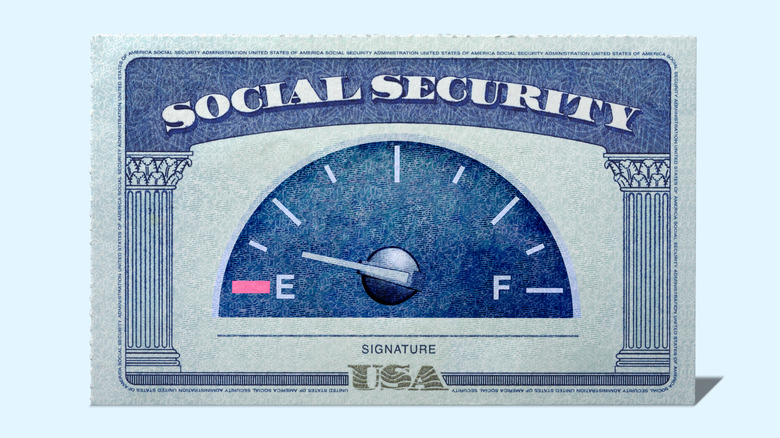
If the government can't arrive at a long-term solution, one option that's perhaps relatively easy to enact given the definitive outcome of inaction would be to cut benefit rates prematurely. The sooner the government does this, the more beneficial the result will be. Unfortunately, that makes this option something of a non-starter, as the idea's simplicity lends itself to being implemented as a last-gasp effort to stem the bleeding ahead of imminent insolvency when the selection of options is running thin. This course of action also doesn't guarantee a positive outcome, and may only elongate the time left before a full rate cut occurs. As of 2025, the Committee for a Responsible Federal Budget pegged that reduction to be 23% with a Social Security deficit of $3.6 trillion forming by 2035.
A partial cut essentially acts as an admission of defeat, and would likely only precede a full loss of the trust fund even if it slows that march to the bottom. More importantly, a premature rate cut would drastically impact the finances of America's current retired population. In 2025, The Senior Citizens League found that nearly 22 million seniors — around 40% of all seniors — counted on Social Security as their only source of income. Cutting rates, even by a small margin, would threaten the financial balance that these Americans rely on, in particular, while straining countless others' budgets in meaningful ways.
End or shrink spousal and dependent benefits

In the Brookings Institution's 2025 blueprint for fixing Social Security, the research center outlined line item changes that all add up to an amount close to the deficit the trust fund currently faces. Among some of the smaller pieces of the pie, dependent benefits could be a potential target for Social Security overhaul. It's perhaps not well known, but children and other minor dependents of Social Security recipients can claim their own benefits through the program, helping to support their needs once their primary caregiver leaves the workforce.
There are also spousal benefits to consider. These are focused on giving non-working spouses access to Social Security funding, even if they didn't accumulate enough credits themselves to gain eligibility. The idea here is that many family partnerships have included a non-working spouse to handle household duties, including raising children. That's a significant work commitment, even if it doesn't draw a paycheck from a de facto employer. Households across the country depend on these additional benefit pathways, and Brookings' research found that they account for 0.17% and 0.03% of taxable payroll, respectively. These are small figures, but they could end up in a larger overhaul effort to balance the program's budget. Eliminating or reducing these expenses would create significant hardship for recipients, though, especially households that featured one working adult throughout the working years while counting on this added benefit figure to make ends meet in retirement.
Tax all Social Security benefits

Currently, a portion of Social Security benefits may be taxed, maxing out at 85% of a recipient's full benefit amount becoming taxable for single filers earning more than $34,000 or married filers with $44,000 in combined income (via IRS). There's also state tax obligations to consider, and many retirees ultimately move to a state that doesn't add additional taxes to their Social Security benefits. Obligations here are dependent on total taxable income, and as it stands, around 50% of all Social Security recipients have their benefits taxed at the federal level. Congressional reporting from 2024 found that the previous year's taxes on benefits made up about $50.7 billion — or 3.8% — of the trust fund's total income.
An option to raise funding for the program would be to eliminate the current tax exemptions and favorable treatment that Social Security benefits receive in order to treat all distributions from the trust fund as regular income. According to the Social Security Administration, as of January 2026, the average check is $2,071 with just under 68 million recipients claiming benefits as of March 2026. The outgoing payment figure is staggering, even on a monthly scale, and taxing these deposits like standard income could drive a notable new source of funding to help prevent insolvency. However, it's crucial to understand who this would affect the most: The almost 35 million recipients who aren't charged income taxes on their benefits are low-income retirees. Taxing this income source would add a brand new strain on their budget that may not be manageable for many. The change would likely increase an existing obligation for upper-class retirees, but it has the potential to upend the lives of those living with far less.
Increase the FICA tax rate for all workers

One direct piece of action the federal government could take would involve a simple change to existing tax rates. FICA taxes are currently set at 7.65% total for employees: 6.2% for Social Security and 1.45% for Medicare. Your employer matches this figure for a total FICA tax rate of 15.3%. Those proportions aren't including the math involved in the cap on FICA taxes that exists for high earners, though that may be another avenue worth considering. A Forbes article from December 2025 lands on a few options related to FICA taxes, but one — and notably, the worst option among the bunch for American workers as a whole — offers a streamlined path to solvency for the next 75 years.
The math suggests that raising the Social Security portion of the FICA tax rate by 3.82% — a move that would generate a 1.91% bump in tax obligations for both employees and employers — would deliver enough additional income to the trust fund to pay out benefits as promised for the rest of the century. That's great news for retirees today, but the fanfare is a little muted for those in the workforce and mainly harms young people at the start of their careers or earlier. A higher tax rate would take more money out of workers' pockets today without offering increased benefit amounts later. It would, however, maintain the current level of payments to recipients now, leading to no change whatsoever to their budgets. It's also fair to say that no one likes having their taxes raised, so a rate hike that affects all workers would be fairly unfavorable.
Raise the FICA cap

Instead of increasing payroll taxes for all wage earners, a different approach offers a targeted increase that will feel more equitable for the typical American. In 2026, FICA taxes are assessed on only the first $184,500. Meanwhile, Visual Capitalist's analysis of Census Bureau data finds that roughly 12.5% of American households earn over $200,000, suggesting that a small portion of the country has astounding wealth. A household income of over $169,800 is a sign of upper-class status, meaning many Americans in the upper class are able to protect at least some of their income from the full weight of Social Security tax contributions. Coupled with a trend of enhanced personal savings for retirement, those with the highest concentrations of wealth in the country are shielded by a twofold benefit when it comes to their retirement financing capabilities.
There are numerous proposals in play aimed at raising the FICA cap. The Social Security Expansion Act is sponsored by Representatives Jan Schakowsky and Val Hoyle and Senators Bernie Sanders and Elizabeth Warren, and aims to raise the earnings cap to $250,000. Bernie Sanders' office reports that this proposal wouldn't raise taxes for 93% of American households. Conversely, a 2021 Congressional Research Service study found this change would resolve around 70% of the deficit Social Security faced at the time if it were enacted in 2022.
Another figure thrown around is $400,000, utilized as part of a "donut-hole method." This model would see income caps remain in place, but only the portion earning between the low cap and this higher figure are exempt. This leaves high earners largely alone while capturing taxes from the most extravagantly paid American corporate CEOs and others.
Raise the retirement age (again)

The Bipartisan Policy Center (BPC) reported in 2025 on a Social Security fix that wouldn't involve changes to taxation or payout rates. Instead, an increase to the full retirement age (FRA) could improve the cash flow problem while minimally impacting workers. The current FRA is set at 67, and waiting until you reach this age to start claiming Social Security benefits will result in a 100% payout of your primary insurance amount (PIA). It is possible, and at times beneficial, to start taking benefits early or late. Retiring on either side of the FRA date results in a small change to the amount you receive: A subtraction for early claims and a bonus for later starts. With some exceptions, these time-based adjustments to benefit payments are designed so that a retiree receives roughly the same amount in aggregate over the course of their estimated lifespan regardless of their retirement date.
Congress passed legislation in 1983 to gradually increase this age, and it reached 67 for essentially all workers in 2022. A similar phase-in that raises the age to 69 — teased out by BPC to run for 48 years starting in 2031 — could achieve better cash flow over the long term, but it does nothing to address the current insolvency crisis. Paired up with other tools to manage the issue in the present, BPC claims that, if life expectancy trends hold up, this increase would result in workers still enjoying the same percentage of their average lifespan receiving Social Security benefits.
The Cassidy-Kaine Proposal

It may be unrealistic to hope for changes that deliver a trust fund large enough to eliminate tax contributions entirely, but the Cassidy-Kaine Proposal exists as a bipartisan effort to introduce a new stream of income that could reinvigorate the fund's existing reserves while minimizing drastic changes that hurt American taxpayers or benefit recipients entirely.
The plan, sometimes known as "the Big Idea," was put forward by Senators Bill Cassidy and Tim Kaine and aims to create a new trust fund by borrowing $1.5 trillion from the U.S. Treasury over ten years to develop a robust investment solution that is eventually folded into the Social Security trust fund with a time horizon of 75 years. It will aim to grow at a pace that surpasses the interest, creating a net-positive overall value change. To achieve this, the principal would be invested in higher-yield equities than the current fund is mandated to hold, with the Bipartisan Policy Center noting that current holdings underperform the S&P 500 by an annualized rate of 4.4%.
However, this plan doesn't do anything to address the upcoming cliff that current recipients face. It's also worth noting that this approach is part of a larger package of more immediate actions that would impact recipients, taxpayers, or both, and isn't a silver bullet that can fix the whole problem. As a result, some pundits have expressed negative views about the plan. Even so, this has been proven an effective approach to long-term solvency action, and could deliver a cohesive approach to eventual stability when coupled with some more painful measures in the present.
The best for the most: Eliminate the FICA cap entirely

Perhaps the best approach to solving the crisis that lies ahead is one that won't have much political will behind it. This solution involves eliminating the FICA tax cap entirely. Instead of working around moderately high earners or raising the cap to continue providing shelter for the most lucrative workplace contracts, an elimination would radically flood the trust fund with new money. Forbes found that if the earnings cap were not in place in 2024, more equitable contributions from just 8% of American workers would have boosted Social Security revenue by 43% — roughly $475 billion — to the trust fund's budget. This is something of a commonsense approach in the minds of many. Allowing some workers to avoid paying taxes on their earnings wasn't the initial aim of the program, and many high earners are establishing their salary packages in ways that help protect even more of their assets from tax liabilities. Health insurance policies, stock awards, and other non-cash compensation isn't taken into consideration at all when it comes to Social Security taxation.
The Peter G. Peterson Foundation projects that eliminating the tax cap altogether would extend the insolvency date out to 2067, adding more than three decades of additional time to develop more long-term solutions to the problem. This would create an even taxation rate across the American workforce, too, giving both high- and low-income earners the same effective tax rate. This solution also dovetails nicely with the Cassidy-Kaine plan that requires some additional time to fully establish gains in the proposed, parallel trust fund.