

The Truth Behind China's Over $100 Billion Real Estate Collapse
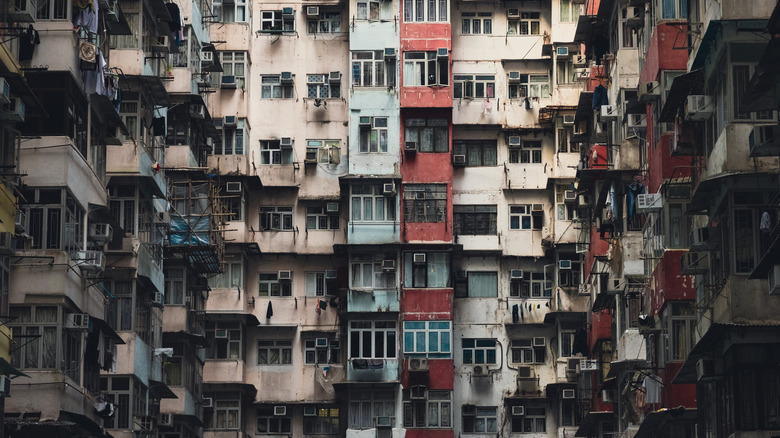
Since 2021, the sale and construction of Chinese homes has been on a steady downward trajectory after several decades of seemingly incredible success. The timing of this shift largely coincides with the implementation of changes to Chinese law — most notably, the "three red lines" policy. More simply, in an effort to reduce speculation within the largely over-leveraged property market, the Chinese government began severely constricting just how much money Chinese real estate developers could take out in loans in 2020. This rapidly pushed the country's property market into a state of crisis as indebted developers attempted to curb their own expansion. As a result, some of the bigger players in the industry lost over $100 billion in the years immediately following the policy. Meanwhile, some individual tycoons have even faced legal consequences far more severe than financial losses for their role in the collapse.
To put things in perspective, the Chinese housing market was valued at around $60 trillion dollars in the early 2020s. Now, researchers report that 85% of the gains seen between 2011 and 2021 are gone (via Economist). While the other shoe may have already dropped in the eyes of property developers, the subsequent housing crisis caused by this collapse will likely impact the Chinese economy, and its people, for years to come.
The Chinese housing market's growth led to collapse
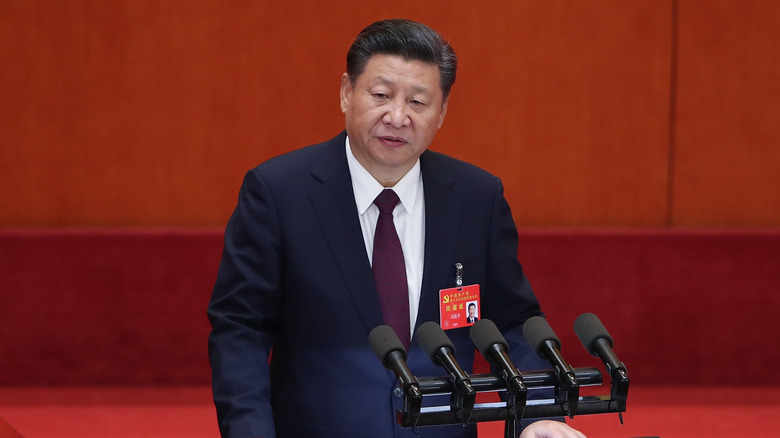
While the effects of a housing market crash are fairly well known in the U.S., this is an unprecedented state of affairs for the Chinese economy. This is largely due to the fact that private property wasn't really a concept in China until the late 20th century due to its communist government. In the 1990s, officials on the local level began enthusiastically selling publicly owned land to private parties to help pay steepening nationwide taxes. In the years that followed, property values began increasing so steadily that it became common practice for property developers to speculatively borrow staggering amounts of money in order to build housing units — only to sell them to the public before they were even under construction.
However, in the late 2010s, the Chinese government began efforts to crack down on this pattern, ultimately implementing the three red lines. This left many developers with both considerable debt and a severely reduced income with which to pay it off. Missed loan payments, drastic asset liquidation, legal trouble, pressure from creditors, and — in some cases — fraudulent activity instead became the norm for many of these developers. While some managed to skirt catastrophe by selling early or implementing tactics similar to the money moves Donald Trump made in the '90s, others are still dealing with the fallout of their housing empires.
The state of the Chinese housing market in 2026
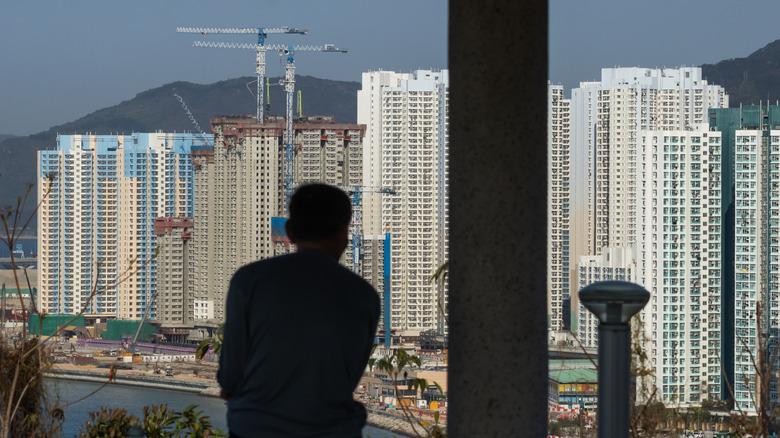
Many are still feeling the effects of the Chinese real estate market's collapse. Homelessness has skyrocketed throughout the country since 2020. In 2025, an analyst at Wanbo New Economic Research Institute, via Yicai Global, predicted that more than 80% of Chinese real estate developers and construction companies would eventually leave the industry altogether — something that will further interfere with housing access. For its part, the Chinese government has been attempting to still the turbulence. In January 2026, it repealed the three red lines policy, and many officials are working to increase the accessibility of affordable public housing throughout the country. With China's trade surplus having reached $1 trillion in 2025, there is certainly room for optimism in that regard.
There have also been notable efforts to bring some of the major players in the housing crisis to justice. For instance, the founder of property development company Evergrande, Hui Ka Yan, was arrested and 2023 after committing fraudulent revenue inflation to stay afloat during the government's initial crackdown in the early 2020s. Evergrande was soon liquidated and removed from the Hong Kong stock exchange, and Yan plead guilty to fraud, corporate bribery, and illegal absorption of public deposits in April 2026.