

America's First Planned Retirement Community Is Still Surprisingly Low-Cost Today

Retirement communities have grown in recent decades — with over 19,000 retirement communities in the U.S., as of 2023, per Market Reports World. However, the concept of an age-restricted community designed entirely for older Americans isn't new. Although Sun City, Arizona is often touted as the first active retirement community in the nation, having been established in 1960, it actually has a predecessor just a few miles down the road. The cheekily named Youngtown, AZ — which still boasts an appealing level of affordable living in 2026.
According to Payscale, Youngtown's cost of living is 2% lower than the national average, with the key driver of this affordability being the town's low housing costs. Interestingly, the senior overlay zoning for Youngtown was actually overturned in 1998 — thanks to the area's low home costs attracting interest from younger families — and this decision may have actually helped the area stay more affordable. Case in point: nearby Sun City and Sun City West both remain senior-only communities, and both boast higher costs of living than Youngtown. In fact, Sun City West's cost of living is 9.4% higher than Youngtown — and 7% higher than the national average.
Low housing costs are the main reason Youngtown is affordable today
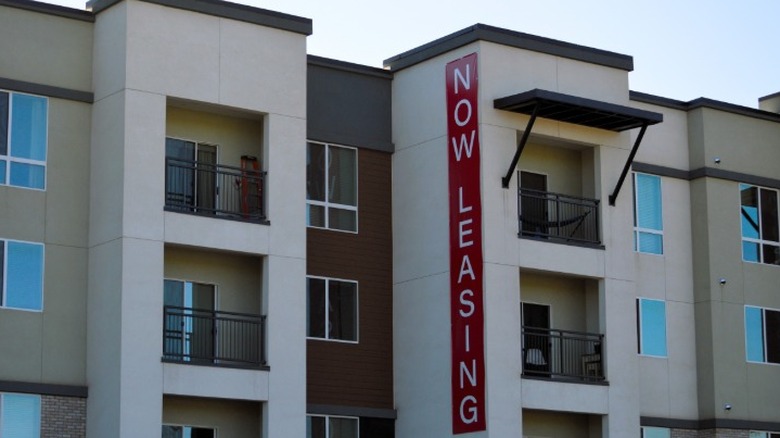
Youngtown is not necessarily the most affordable place in all categories. For example, a local town code imposes a 3% retail tax on top of state and county taxes. Likewise, living costs like utilities, groceries, and transportation all exceed national averages. However, the area that truly shines — and subsequently lowers the entire city's cost of living — is rent and real estate listings. RentCafe pins the average monthly U.S. rent payment at $1,740, while Youngtown renters pay an average of just $1,169 (as of March 2026).
Meanwhile, the average cost of a house in both Arizona and the U.S. at large exceeds $400,000 in 2026, per Zillow and U.S. Census Bureau data via the Federal Reserve Bank of St. Louis. However, Youngtown's median listing price is $320,500 as of March 31, 2026. Redfin and Zillow listings show most available homes priced under $350,000 — as well as some under $200,000. For prospective buyers, this is all the more important considering the average homeowner spends over $20,000 in additional home expenses each year. Youngtown's affordability is even more impressive when looking at its close proximity to Phoenix, where median home prices are over $400,000 and the cost of living is over 7% higher than Youngtown. According to Ownwell, Youngtown also boasts low property taxes, which, with an effective tax rate of 0.35% in 2026 — are significantly lower than the national median of 1.02%.
Home values in Youngtown may go up in the coming years
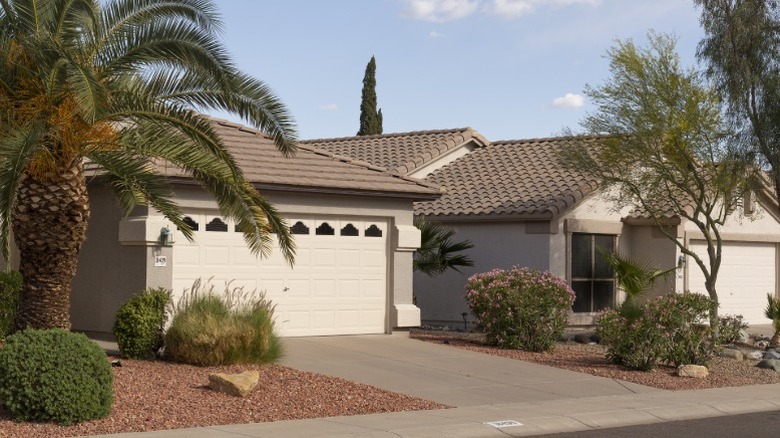
With just 18% of the Youngtown population now over the age of 65 in 2026, per Census Reporter, the area has already undergone significant transformation. Nevertheless, other factors that control home prices, and cost of living in general, could swing things in a new direction. Youngtown's commercial town center is currently undergoing refurbishment, which could drive up nearby home values in the coming years since having nearby amenities and appealing town centers have done exactly this in other areas. Youngtown has also adopted a broader plan to focus on infrastructure upgrades and community growth through 2035, including sidewalk improvements. According to Redfin, even a one point increase in walkability can boost home values by $3,250.
Plus, it's worth noting that the Southwest is not among the regions with the highest inflation rates. Meanwhile, the Zillow March 2026 market forecast anticipates U.S. home values increasing 0.7% by the end of the year, while local Phoenix projections see the area recovering from early 2020s instability. While Zillow data shows that Youngtown prices, in particular, are down 10.3% (as of February 2026) since peaking in July 2022, they've nevertheless almost doubled since 2018. With that in mind, it could be worth taking advantage of the affordable housing in the area before prices increase in the future.