

The Untold Truth Of Kevin Warsh
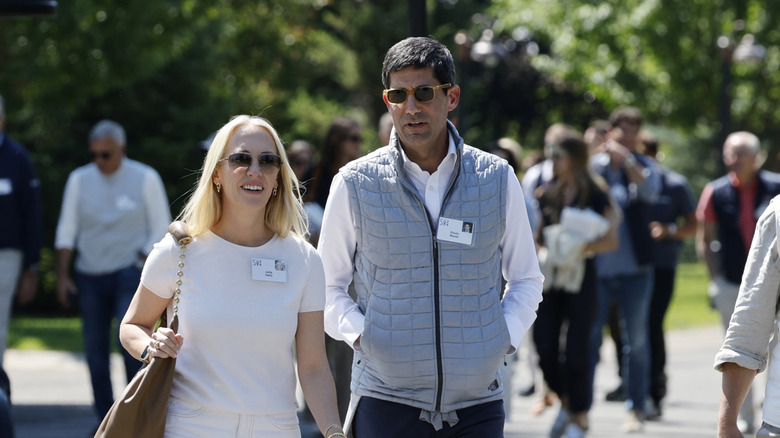
In early March 2026, President Trump officially nominated Kevin Warsh to be the new Chairman of the Board of Governors of the Federal Reserve –- a pick that could have significant impacts on the economy. If confirmed by the Senate, Warsh would succeed current Federal Reserve Chairman Jerome Powell, whose term ends on May 15, 2026. However, almost immediately after the announcement of this nomination, controversy followed.
While Warsh's background as a former member of the Fed's Board of Governors -– from 2006 to 2011 –- might seemingly make him a natural choice for the job, other factors cloud his nomination. In fact, many economists have expressed concern with Warsh's seeming willingness to do the current President's bidding. Plus, Republican Senator Thom Tillis, of North Carolina, has even gone so far as to threaten to block the vote on Warsh's confirmation entirely until a federal criminal investigation against Jerome Powell is dropped. The investigation is seen by some as a punishment for Powell's ongoing unwillingness to give in to Trump's pressure to lower interest rates –- a decision the Fed is responsible for.
However, the larger implications of Powell's reluctance to lower interest rates centers on the Fed's ability to remain independent from the whims of the executive branch — a tenant of the central bank's existence. This same concern also carries over into Warsh's nomination, as he has more recently expressed monetary policy views that are strikingly aligned with Trump's agenda, and which differ significantly from his own past fiscal views.
The larger implications of Warsh's interest rate policy
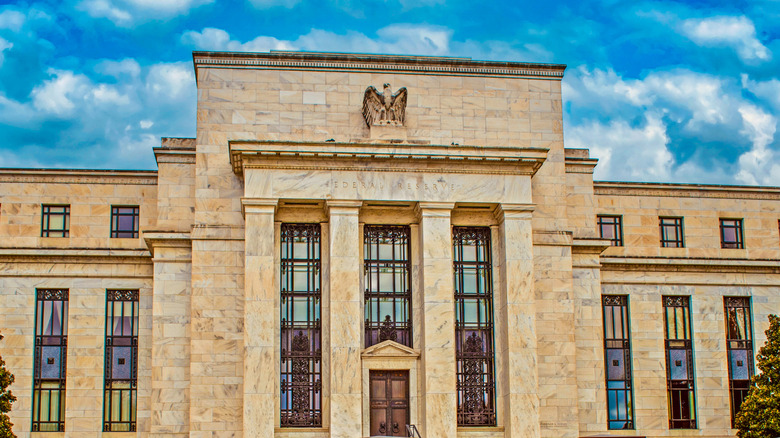
The head of the National Economic Council, Kevin Hassett, has publicly declared confidence that Warsh's nomination will be approved. However, Hassett also went on to also proclaim to Fox News, "I think the [interest] rates should be lower. I think my friend Kevin Warsh probably believes that still too." This is largely in keeping with the Trump administration's long-term pressure on the Fed to lower interest rates. Warsh himself even wrote an op-ed in the Wall Street Journal in November 2025 that was hyper critical of the current Fed's economic policy while advocating for lower interest rates — a policy that runs counter to his own history of previously supporting higher interest rates.
While individual consumers might like the sound of lower interest rates in 2026, the larger issue hinges on the health of the economy. One of the Fed's primary goals is to keep the U.S. inflation rate around 2%. The post-pandemic inflation of 2022 led the Fed to implement numerous interest rate increases as a way to combat inflation. This decision had a largely positive impact, bringing annual inflation down from 8% in 2022 to 2.6% in 2025, per the Federal Reserve Bank of Minneapolis.
However, due to recent economic and geopolitical factors –- such as the war in Iran causing significant oil price increases –- inflation rates have been ticking upwards, hitting 3.3% in March 2026. Even worse, many economists predict inflation will only get worse. With this in mind, Warsh's newfound insistence on lowering interest rates in the face of rising inflation portends a willingness to serve current political agendas over what might be best for the economy.
What's next for Warsh's nomination
Despite initially having a Senate Banking Committee hearing scheduled for April 16, 2026, the process of approving Warsh was instead delayed. As of April 13, 2026 Warsh's hearing has yet to be scheduled, but is expected to occur in the upcoming week at the earliest. The Banking committee serves as a first stop in which a nominee must submit financial disclosures and answer questions from the committee itself. However it's worth noting that Sen. Tillis — the same Senator who has threatened to block Warsh's vote in the Senate — serves on the Banking committee. It's also worth noting that Warsh's financials could be more complicated than most, as he is married to the heir of cosmetics behemoth Estee Lauder -– who boasts an estimated net worth of $1.9 billion, per Forbes.
Regardless of the initial hurdle of the Banking committee, Warsh would likely face additional scrutiny if his nomination reaches the full Senate. While interest rate slashes are perhaps the most commonly cited talking point of Warsh's agenda, he has also publicly declared his desire to essentially change many of the fundamental ways in which the Fed currently operates. This includes changes to the models the Fed uses to forecast, shrinking the organization's balance sheet, changing how the bank communicates policy, and even implementing significant staffing changes. All of this is likely to not only face resistance within the Fed itself, but also from the markets. This, in addition to the questions regarding his objectivity, could serve as sticking points among members of the Senate when voting on his nomination.