

You've Been Warned: A Retiree Might Regret This Big Upgrade

The average person will own at least three houses in a lifetime, per The Zebra. With this in mind, it might be normal to assume that by the time you reach retirement, you will have extensive knowledge about home buying and how to avoid the mistakes that plague younger buyers. However, if the thought of moving during retirement has you worried about things like losing access to your health care professionals or even the support of friends and family, you might instead consider splurging on a big upgrade to your current home.
However, approving a major upgrade to your house can be expensive, especially when living on a fixed income as a retiree. While some home upgrades can improve your home's resale value — others can lead to major regrets. Additionally, even small issues can throw off the budget in a hurry. Instead, the better option might be to tackle smaller upgrades one at a time, paying for them individually before moving on to the next upgrade. Remodeling your home in phases can add more time to the overall work, but ultimately provide important financial protection.
Other financial considerations for home renovations
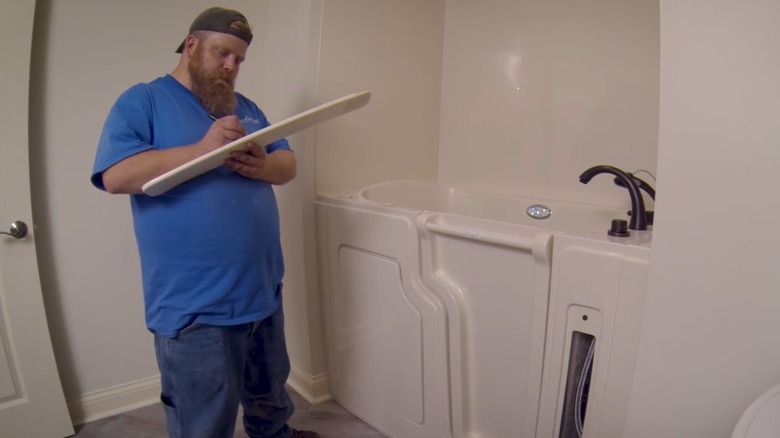
It may sound like a great idea to upgrade your kitchen or add a bedroom for when the grandkids visit. However, spending a large amount of money on this type of upgrade could cost you down the road. For starters, if you don't have the cash on hand, you'll need a loan. Obtaining a mortgage, second mortgage, or even a home equity loan as a retiree can be difficult. With a fixed income, it can be tough to convince a bank to issue the mortgage, even if you're using the money to upgrade the house. In general, taking out a second mortgage for anything but necessary home repairs is not recommended.
Next, even if you may have the money for add-ons and renovations in the moment, you need to also consider any property tax implications of these additions. Increases in property taxes can be difficult for many retirees to handle on a fixed income. Plus, some home renovations can also cause an increase in your home insurance rates.
Another consideration is that spending money on home upgrades immediately after retiring could leave you short on funds in the future if health problems arise. If you spend your renovation budget up-sizing your home, you might regret not having enough in the future for upgrades like stair lifts or reconfiguring a bathroom to make it safer with a walk-in tub and shower. While many seniors prefer to continue living in their homes, it can become increasingly difficult to do so without certain renovations to help you age in place.