

10 Shady Things Walmart Doesn't Want You To Know
Walmart has come a long way as a retail grocery chain. It was founded by Sam Walton in 1962, and at the time, his idea of offering great products for low prices seemed to buck the trends. But the brand's concept of lower prices and great service caught on with Americans, and soon there were Walmarts popping up all across America. In the decades since, Walmart grew to become a household name, and later, a successful global chain. According to Walmart, it currently operates stores across 19 different countries. As a company, Walmart is said to be worth over one trillion dollars.
It's hard to argue against Walmart's many years of success, especially considering many people look to it as the gold standard for grocery store shopping savings and quality. That said, there are a slew of controversies and questionable truths about the brand that would likely make its founder, Sam Walton, very concerned. Whether it's the treatment of the most vulnerable of Walmart employees or accusations about inconsistent pricing, it's likely the late founder wouldn't be too happy with the way that slowly but surely, Walmart's reputation has become mired due to a series of controversies. Here are 10 shady things about Walmart that the company doesn't want customers to know or to think about when weighing where to shop.
1. Walmart's sales prices might not be a bargain after all
In the era of Sam Walton, Walmart's "lower everyday prices" meant something. It felt like a guarantee that you could trust. That and the company's tendency to periodically rollback prices, an iconic approach that made customers believe they could easily find the best prices there. But much has changed over the years, as noted by a disillusioned shopper who shared their experience on Reddit.
One customer posted to the r/economy subreddit that Walmart prices were steadily rising, and not because of Trump tariff-related inflation. The user noted that a can of Glade air freshener cost about $0.97 in 2022. By around 2026, they noted that the same can now cost $4. Granted, this could be a matter of location and local taxes. That said, seeing a simple can of air freshener increase in price so starkly within a few years can be disturbing. And that's not all.
There have been some complaints about Walmart associates ripping tags off of items like T-shirts and replacing them with higher priced labels. Dismayed customers allegedly found themselves paying more for things due to a sudden and rather shady pricing change. If true, this sounds more like a "roll forward" than a "roll back," and while some Walmart employees claim this isn't the case, the controversy persists. Overall, it seems like despite initially establishing itself as a chain where customers could expect to save when shopping, this might no longer be the case.
2. Its stores are designed to make you spend way too much
According to estimates by the U.S. Bureau of Labor Statistics, the average American household spends about $832 each month on food. With the cost of living rising across the nation, the idea of food alone costing nearly $10,000 per year is no doubt distressing. Many people look to budgeting to, at the very least, keep expenses down and help them make rational choices that can save money in the long run. Yet, even as you're working your hardest to cut costs and make smart shopping decision, brands like Walmart are working just as hard to figure out ways to get you to spend as much as possible.
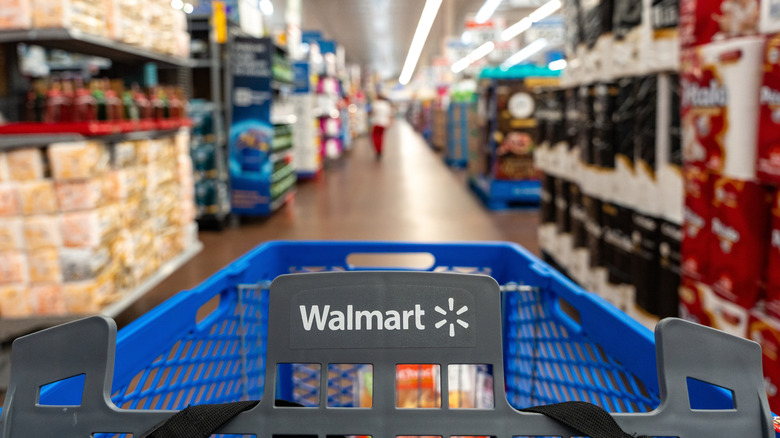
Consider the store design of your local Walmart the next time you decide to pop in to grab a few essentials like eggs, milk, and bread. You may go in with the intention to grab just one or two of these staple foods. However, have you ever noticed that you often need to go to the other side of the store in order to grab them? You may enter Walmart intending just to take home a few sensible food items, only to leave with several other things you didn't originally plan to buy, all because they caught your eye along the way.
To be fair, this store layout psychology isn't unique to Walmart. But while this bit of store shopping psychology isn't unique to this particular brand, you may want to think long and hard about all the extra things that wound up in your cart on the way to the milk.
3. A new Walmart is bad news for small local businesses
At first, it started with a rumor. "Did you hear? We might be finally getting a Walmart!" The idea set small American towns a buzz from coast to coast, as locals were filled with excitement that their little town might just be big enough for a big box store like a Walmart to open shop. Soon the rumor becomes reality. Before anyone knows it, there's a new Walmart store, sometimes a "super store," with practically everything you could need in one prime location: food, clothing, home goods, auto repair, eye exams, and in some locations, a McDonald's or Dunkin Donuts.
Locals became so accustomed to running to the local Walmart that they stopped running to the small grocery stores and other businesses that previously existed in town before the big retailer opened its doors. Then, within a few years, if not a few months, those struggling businesses close their doors, often never to open them again. It was a story that repeated so often across America and elsewhere that there was a name for it: the Walmart Effect. It was a term meant to describe the long-term ripple effect that Walmart stores have on American communities. Not just in shutting down small town competition, but upending entire local economies.
Walmart took steps to clean up its image in some ways, even going as far as to publish a paper about its all-American progressive roots. However, many customers can't ignore all the empty locations where businesses once stood that are no longer standing, thanks in part to the arrival of the major retailer.
4. When a Walmart closes, it can create a food desert
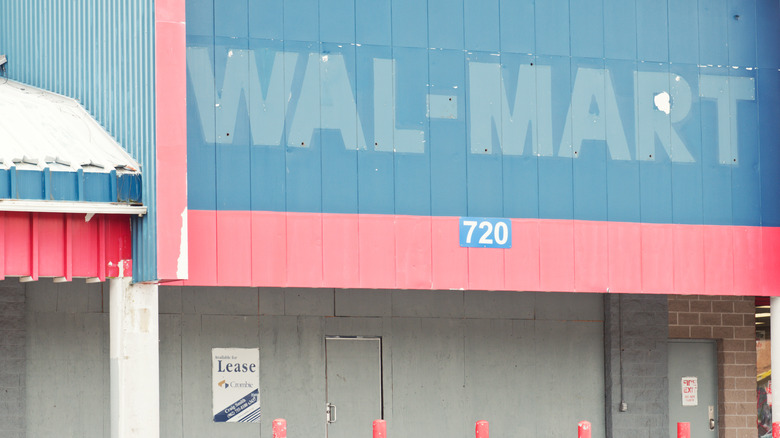
The other side of the Walmart Effect isn't just the shuttering of businesses and outright elimination of competition. It's what happens when the local Walmart proves to no longer be profitable and the corporate decision makers pull the plug. Customers that came to rely on this store as the one place to get all of their shopping needs met are faced, quite unexpectedly, with a new reality: having nowhere to buy groceries, at least, not nearby.
Whenever major retailers like Walmart leave, it creates a kind of vacuum, often referred to as a "food desert." For Americans living in a such a location, they may have to go many miles out of the way to purchase necessities. This can lead to extra spending for fuel or even higher food costs if the new location isn't as affordable as they were once used to. As tough a reality as this is, there are some situations where it still isn't enough. These unfortunate Americans find themselves unable to travel to a grocery store, and so they are stranded in a place where, thanks to the end of their local Walmart, buying necessities that many of take for granted is now a daily struggle.
According to the USDA, there are as many as 17.1 million Americans are currently living in food deserts. Should the Walmart brand go under, it's hard not to wonder whether its failure could bring that number significantly higher.
5. The brand experiences more food recalls than you might think
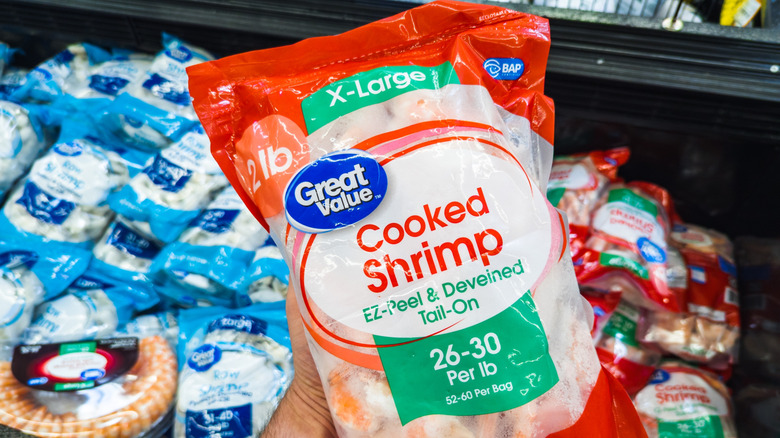
In 2025, the U.S. Food and Drug Administration told Walmart to pull its Great Value frozen raw shrimp from stores across the U.S. due to reports of Cesium-137 contamination. The internet interpreted this news story as a meme about Walmart selling radioactive shrimp, resulting in funny images and TikTok videos that many enjoyed. However, what some people and even loyal Walmart customers tend to overlook with stories like this is that recalls of Walmart products, including food items, aren't as rare as one might think.
In the first few months of 2026, Walmart customers have been inundated with several major food recalls, affecting thousands of products and spanning multiple states. While some recalls involve concerns of allergic reactions, others involve health risks that could result in potentially fatal food poisoning.
One of the reasons why recalls seem to be increasing is that government deregulation in recent years has led to a lowered standard of safety measures that ultimately contributes to problematic products finding their way to store aisles instead of the nearest trash can. Though Walmart is likely doing its best to avoid dangerous food and other products ending up in customer shopping carts, it's still an ongoing issue that likely won't end any time soon.
6. Despite earnings, Walmart employees have low wages
By its own estimates, Walmart employs over 2 million associates worldwide; 1.6 million of those employees are based in the United States. As previously mentioned, the retail giant is worth close to a trillion U.S. dollars. While customers play the main role in Walmart's financial success, employees for the company are also key to keeping the company going. Shoppers might be surprised to know that hundreds of thousands of Walmart employees are reportedly on government assistance.
The U.S. Government Accountability Office found that despite working full-time, many workers still needed to participate in programs like SNAP or Medicaid to cover their basic needs. Senator Bernie Sanders' office specifically named Walmart, criticizing the company for amassing so much wealth and paying so little to its workforce that despite full-time work, they were allegedly unable to afford basic necessities or medical coverage. Aside from pay controversy, Walmart has long been openly anti-union, to the point of getting called out by organizations like UNIFOR for showing questionable training videos to new hires about union representation.
Between poor pay and being on the wrong side of the worker's rights conversation, it's not the sort of image that many customers would have associated with the company in the past. Walmart is especially known for hiring "greeters," a simple paying role, that allowed customers to feel welcomed into the store and also encouraged them to return soon upon leaving. Shoppers probably hoped the financial outlook for those employees were much better than what it seems to be.
7. Walmart might be trying to quietly roll out dynamic pricing
Imagine that you've just run out of eggs, so you decide to pop into your local Walmart store to stock up. The last time you went, you bought a dozen for $2. Yet when you go to pay several days later, they're suddenly $3. You ask your friends how much they paid for eggs. One paid $2.50 and another paid $3.50, all within a day of each other. You go again at a different time and the eggs are $2 again. If you're confused, you likely have never experienced dynamic pricing before.
Also called surge pricing, this refers to businesses adjusting their prices to react in real-time to changes in demand. Inspired by the "peak hours" strategies of companies like Uber, the goal is to take advantage of perceptions in increased customer demand to make as much money as possible. Needless to say, dynamic pricing in grocery stores is anything but a hit with shoppers. It's hardly a surprise, as you won't readily find an American shopper eager to see costs go up at what feels like a random moment based on when retailers like Walmart decide when products should cost more.
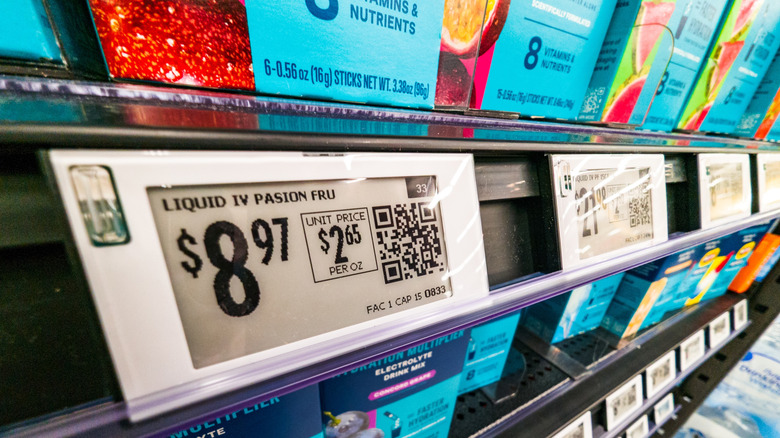
Though there's been no official announcement as of yet, CNBC reports that Walmart workers were spotted adding digital labels to shelves, with some claims that dynamic pricing could be coming to stores by the end of 2026. The company says that prices will be uniform across all stores, but not everyone's convinced this won't mean surge pricing won't be a future issue. CNBC notes that some government officials have already introduced bills to halt Walmart and other retailers from using this controversial pricing approach.
8. What you pay in-store and online isn't always the same
Though we have yet to see whether dynamic pricing takes off in Walmart stores, if you're a current customer that does your shopping online, there's a chance you might already be scratching your head about differences in prices when making digital purchases versus a trip to a brick-and-mortar store. Going to Walmart's website for an explanation doesn't help, as its official FAQs page will only note that the company has no hard knowledge about in-store inventory and pricing, and so cannot perform any related price matching through its website.
While it's possible the impending digital labels in store could be an attempt to solve this issue, some shoppers are a bit dismayed that shopping for products online may not bring the savings that they have long associated with Walmart. Even more confusing, this statement doesn't seem to be limited to the likes of Walmart Marketplace, an umbrella under which a plethora of third-party vendors are able to sell their products for whatever prices they set independently. It doesn't even seem to account for state sales taxes, which are known to make items cost more or less depending on the location of the Walmart store.
Rather than assure customers that there's a mistake or that there's a logical reason why they can expect to pay different prices online versus in-person, Walmart hits customers with plausible deniability, a disclaimer that could make some shoppers think twice about whether Walmart's website is the best destination for immediate savings.
9. The company has used child labor more than once
Perhaps one of the most shady controversies at which Walmart has previously found itself at the center of involves multiple child labor controversies and related ethical issues. For instance, in early 2005, the retail giant was hit with a $135,540 fine for violating the Fair Labor Standards Act (FLSA), specifically the portions of the law related to youth employment. According to the Department of Labor, Walmart employed 85 minors, aged 16 through 17, who were asked to perform a series of prohibited work tasks such as operating forklifts and scrap paper balers.
Despite promises to do better, in 2024, shareholders raised concerns about Walmart's lack of transparency regarding measurable steps taken to deal with potential human rights violations, including child labor violations involving immigrant minors, as originally reported by the New York Times. With so many American shoppers increasingly mindful of the social and political implications of where they shop, learning that Walmart had been accused of being so irresponsible when it comes to the safety and well being of its youngest workers might be too shady for some customers to overlook.
10. It's been sued multiple times for discrimination
Some loyal customers might be shocked to find this out, but the major retailer has found itself hit with multiple lawsuits related to racial or gender discrimination. It's startling to learn, as Walmart as a brand has long held a welcoming, family-friendly image. Yet in early 2024, the U.S. Equal Employment Opportunities Commission announced it had ordered the retail giant to pay $60,000 after reportedly refusing to promote a female employee. Per the EEOC, the organization filed the lawsuit after the Iowa employee was passed over for a promotion and then was reportedly told by way of explanation that she wasn't offered a career advancement because she was a woman with young children.
Around the same time, a Black American family in Jacksonville, Florida reportedly sued Walmart over an incident where they claim to have been racially profiled, resulting in a humiliating police encounter where they were found to have done nothing wrong. The family's lawyer claimed that it was not the first time that Black shoppers have faced unfair scrutiny in Walmart stores (via First Coast News).