

11 Shady Secrets Grocery Stores Hope You Never Learn
The grocery store is a fixture in our modern consumer landscape. Surprisingly, the supermarket is less than a century old, with the first of this sort of shopping option considered to be the King Kullen store in Queens, New York opening its doors in August 1930. The concept has caught on like wildfire and now there are dozens of high profile chains operating in this arena. They all deliver their own blend of value and specialized customer experiences. For instance, Trader Joe's offers its Fearless Flyer circular and a seriously generous return policy, but failing to account for either of these in your shopping trip can be a big mistake that costs you extra money.
While every supermarket is unique, they all frequently deploy some of the same, sometimes shady, tactics to entice you to spend more money. Some are built into the experience and have little to do with the store itself. For example, many shoppers naturally tackle their grocery haul on the weekends thanks to the extra free time, but Wednesday is the best day of the week to shop for savings. Others are intentional design choices. Many grocery stores play slow music to set the mood, or rearrange their aisles and item locations on a regular basis to keep even regular patrons guessing. It's all a psychological game of economic chess. Sadly for the consumer, supermarkets are particularly good at it, especially given the secrecy surrounding numerous strategies deployed to part you with more of your money. Understanding these tricks can help you save, however, so it's worth digging a little deeper, especially given the inflation-racked price of everyday items today.
1. 'Eye level is buy level'
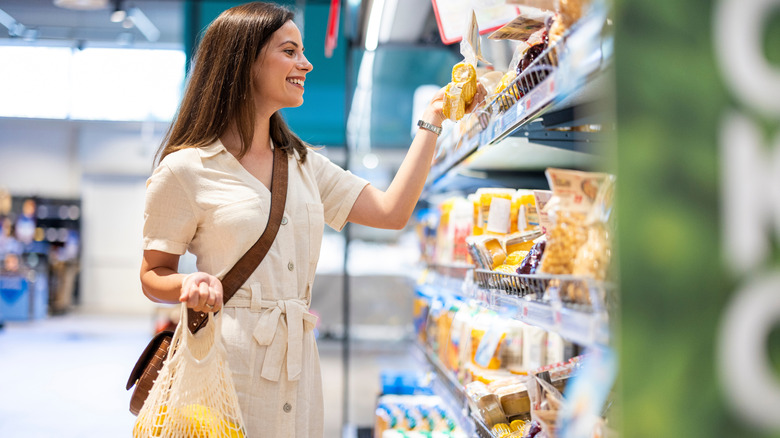
Among the most prominent refrains in grocery store layout and design is the concept of "eye level is buy level." The things you see without any extra effort are frequently the items you'll pick up during a shopping trip. It's an ease of access situation, and grocery stores are firmly in the know. As a result, many outlets place their highest margin option at eye level and populate the spaces above and below with less lucrative selections. Because shoppers tend to fixate on points straight ahead of them, putting items at this same height that are priority sellers for the store can boost revenue significantly.
A 2021 study published in the Journal of Marketing Research actually found this catchphrase to be slightly off the mark. The sentiment remains strong, but in the research team's findings, the optimal position for boosted sales is actually 14.7 inches below eye level, or roughly in line with a shopper's chest. The attention zone does extend upward from that point, however, making the shelf at roughly chest or shoulder level and the one directly above it the prime spots for expensive options. If you're on the hunt for great bargains or budget-friendly option, moving down a shelf to explore other selections is typically your best bet.
2. Endcap product placement can be deceiving
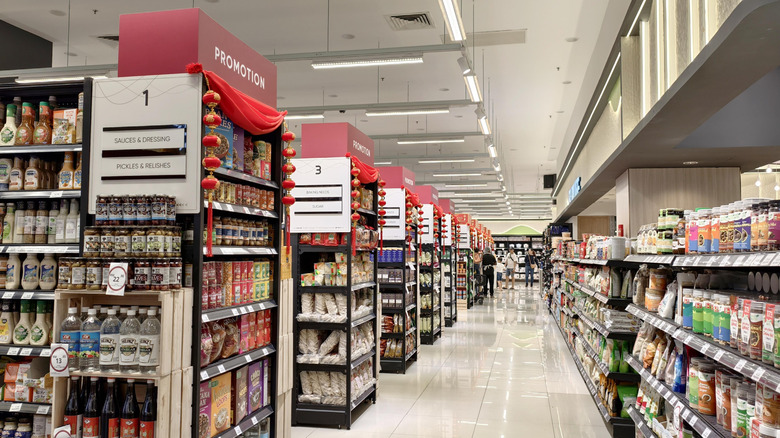
Endcaps are frequently deployed as a tool to drive interest into an aisle. They sit on the ends of each row, facing out into the main thoroughfares of the supermarket and usually sport special buy items, products that are on sale (a tactic frequently among the tools used to tap into a poor spending habit of baby boomers, in particular), or a selection of interest-grabbing products found within the adjacent aisle. Endcaps have been found to increase sales volumes for grocery stores by a huge margin. A 2018 study in the Journal of Retailing and Consumer Services found that "on average, rear endcaps generated 416% sales uplift, while front endcaps generated 346% sales uplift." The study sought to compare how effective the two placements were, in which they discovered that rear endcaps perform "like 'billboards' to draw shoppers into the main aisle."
Similarly, Palmer Retail Solutions reported in 2019 that 44% of shoppers fixate on endcaps, suggesting that these displays act as a substantial attention grabber that helps impact shopper behavior. It's therefore unsurprising that many endcap displays pair on-sale items with regular prices or even the most expensive selection in a product category. They can serve as loss leaders that entice shoppers to ultimately spend more than they planned. It's a good idea to watch out for this tactic during seasonal events or big gameday weekends, for example.
3. Pay attention to the music playing in the store
It's common to drive to a grocery store while listening to the radio, only to walk through the doors and hear the same tune tumble out of the facility's overhead speakers. Grocery stores would be an eerie place without some kind of background music keeping the space from feeling cavernous and foreboding. Frequently, this means playing a popular local radio station. However, plenty of supermarkets opt for their own playlist. It might be unique to the specific location or area, or the tracks selected might come from a corporate office somewhere, dictating the music to all of its branded locations.
Songs may not seem all that important, but slower music is actually selected intentionally by some supermarkets. According to AARP, the sweet spot seems to be at 72 beats per minute (or slower); the result is a 38% increase in average gross sales thanks to the understanding that music speed correlates directly to shopping speed. It's been well documented in the past that a key tactic utilized by supermarkets is the stall. Keeping you in the shopping center for as long as possible breaks down your defenses against impulse purchases by gut punching you with dozens of choices that come at you like machine gun fire. Each new aisle contains hundreds of products, and even if you're just walking from one end to the other to pick up something on your list, it's impossible to remain totally unaffected by the colorful packaging and sheer volume of options. Inside Retail Australia found in 2024 that successfully increasing what is known as "dwell time" can increase sales by over 130%.
4. Loyalty programs are an inroads to your personal data
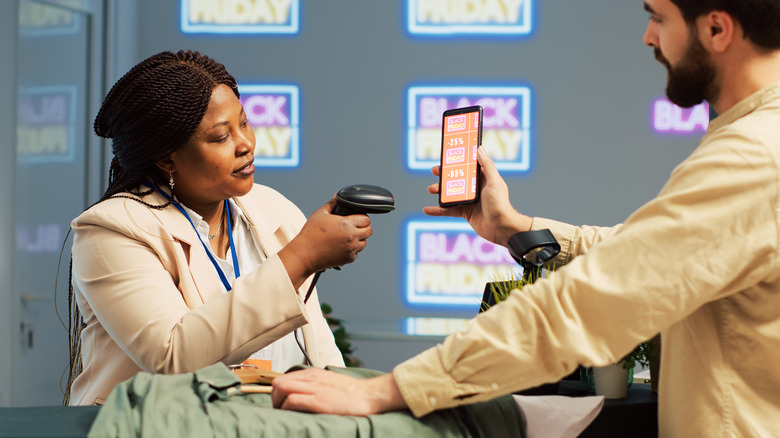
Grocery stores want to gobble up your personal information, often leaning on loyalty programs to achieve this end. This is a long-running trend throughout the consumer landscape, with common tactics including a simple ask for your phone number or email address to send you coupons, your receipt, or other information. Cashiers have been trained to approach this ask as if it were a foregone conclusion that you'll offer the contact details without hesitation. Certainly, having a digital receipt makes organizing your expenses and keeping the transaction record in case you need to return something easier. But there's another reason for this data gathering practice that extends beyond providing a better experience for customers.
Businesses across the spectrum have gotten firmly onboard with the practice of personal data shopping. Building a database of customer details allows brands to better understand their shoppers' habits, both on an individual level and at the macro scale. They can therefore tailor their pricing, layout, and marketing tools more effectively to drive sales. However, there's a darker side to all this. Some companies will sell your personal data, a Consumer Reports investigation in 2025 named Kroger as one grocery chain, specifically, that has sold customer data to brokers. More Perfect Union and others have also uncovered personalized pricing schemes underpinned by these data collection efforts. Yet, rather than acting to save people money, they often serve to inflate profits by charging as much as they anticipate is possible to each individual shopper.
5. Unplanned spending accounts for a significant portion of grocery expenses
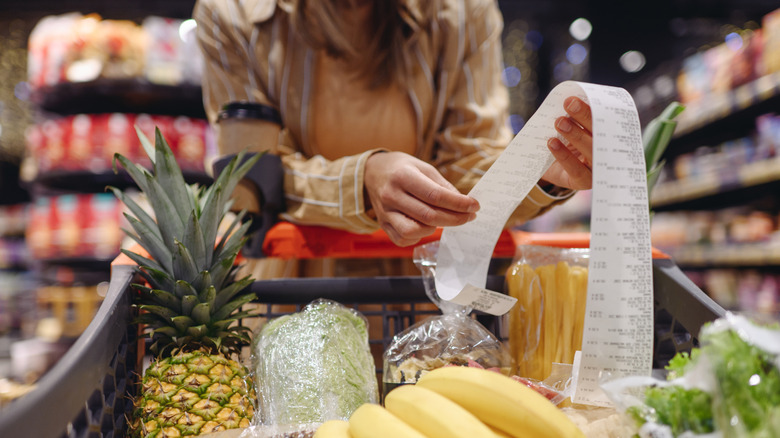
It's well-established that grocery stores are in the business of upselling, cross-selling, and creating the conditions ripe for impulse purchases. But they are even better at it than most shoppers might expect. A 2023 Slickdeals survey found that 36% of Americans spend more on unplanned purchases across categories (which is why your shopping list remains a key tool for tackling impulse buys to lower your grocery bill). This was down from a whopping 73% spontaneous purchasing rate the previous year, however, this appears to be at least in part due to compressed purchasing opportunities thanks to pandemic-era closures, isolation practices, and lockdowns. Moreover, groceries and household items were among just three spending categories that skyrocketed in their impulse purchase rate from 2022 to 2023 (clothing being the third).
Another important ally for shoppers seeking to limit the impact of unplanned spending it the use of the self-checkout line. Among those who frequent the DIY payment option when shopping, women make roughly 32% fewer impulse buys and men 17% when compared to the traditional cashier experience (via AARP). Taking direct ownership over the checkout process perhaps allows for a clearer picture of what you're actually buying, as well as a more accessible view of the total cost of your trip. Whatever the reason though, this approach is a proven money-saver for frugal shoppers.
6. The staples are always placed at the corners or in the back
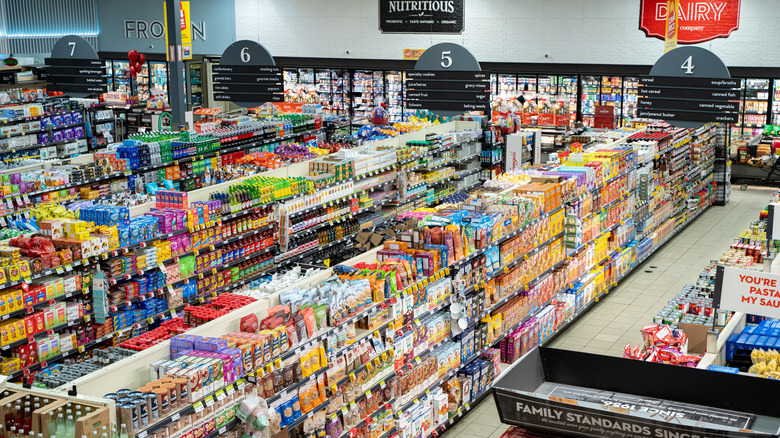
No matter what part of the country you call home or the grocery store you frequent, you're likely to experience one tactic that dominates the supermarket landscape. Once you walk inside the store, you'll often be guided directly toward the fruits and vegetables. This places a bright and vibrant grocery staple as a visually dominant force that imparts a sense of wellness and health. It entices shoppers to browse, hitting a few key notes of the shopping experience that the store is seeking to generate. Browsing here takes a bit more time, slowing your pace, while also creating a mental framework of positivity that descends over the remainder of your visit. Here, you may also encounter loose vegetables that are frequently washed, potentially adding to the bottom line by making each piece just a little heavier when it hits the scale. Food Republic reports that this can result in prices as much as 25% higher.
After leaving the produce behind, you'll generally need to visit at least two of the far corners. Meat products and dairy staples, in particular, are rarely located near each other, forcing shoppers to take the longest route possible to check off each item on their list. Once again, passing as many options and keeping shoppers engaged for as long as possible remains the goal here, and categorical placement of the most prominent goods in each of the opposing corners does a great job of achieving this end.
7. Bright and colorful items are often lower down, capturing the attention of children
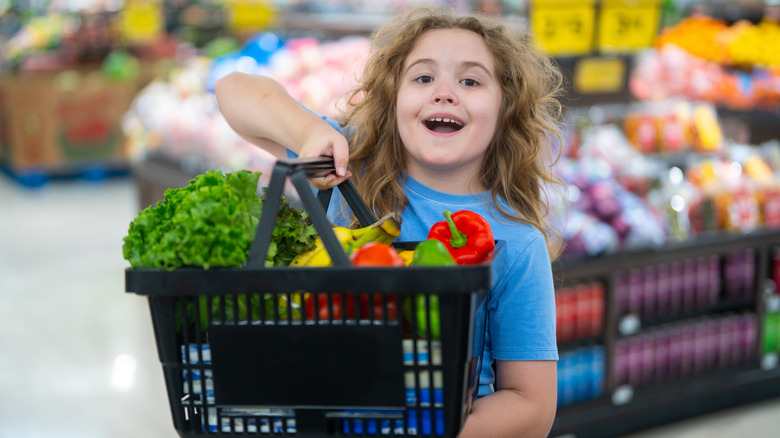
Adult shoppers holding the purse strings aren't the only target for a supermarket seeking to maximize its profits. In the same way that stores strategically place high-margin items at a height between chest and eye level, a secondary "eyeball zone" exists to draw the attention of shoppers' child companions. Parents frequently bring their little ones with them as they gather necessary food items to support the household. And these little shoppers are easily swayed by bold fonts, bright colors, and interesting characters. That's why children's cereals tend to be overwhelming visual displays of color and activity, for instance.
Items associated with child-age consumers are routinely stocked on shelves right in their eyeline rather than up higher. Parents might naturally overlook these selections, but children won't if they're placed at the right height. This creates the potential for a child to grab things and add them to the shopping cart or to incessantly ask for something that's caught their attention. Either way, when shopping with young ones, additional purchases that have been strategically placed down lower are often thrown into the mix thanks to careful aisle arrangement.
8. Aisles are long and frequently reshuffled
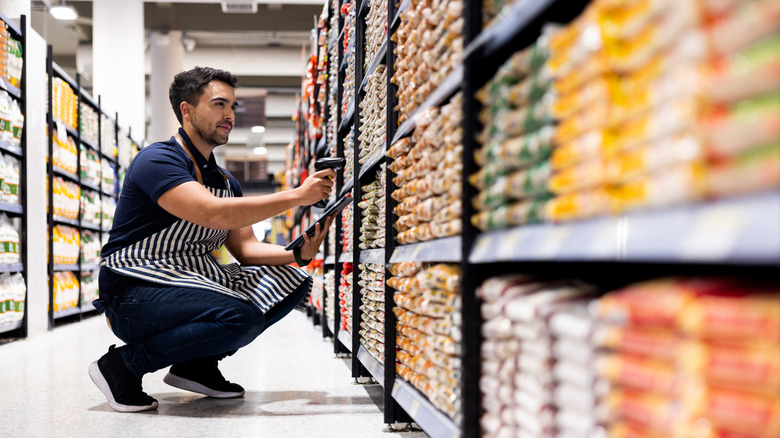
Keeping with the theme of remaining time consuming, grocery stores utilize lengthy aisle design as a rule not a suggestion. Designing stores with aisles as long as possible creates a cavernous sensation, making the whole space feel even larger than it already is. Specifically though, this gives stores the opportunity to stock similar categories in consecutive aisles, with many of the double-ups that shoppers will be seeking near the middle or at competing ends of each row. By maintaining long aisles, shoppers are often enticed to simply continue walking in the same direction in order to move to the next row. Design language here is centered on deceptive stall tactics, and long aisles serve this purpose faithfully.
However, the layout isn't static in many grocery stores. Some supermarkets rearrange some or even many of their products (sometimes opting to shift aisles entirely) on a semi-regular basis. These movements come from data-driven insights about how shoppers select products. Changing specific item locations can create a nuisance for buyers in the short term as they come to grips with the altered layout. But ultimately, the added frustration is worth it to stores because the tactic can capture significantly more time from buyers, keeping them looking for products, and amplifying the potential for impulse buys and other profit-driving actions.
9. Cheaper, generic brands can be just as good, and sometimes are exactly the same
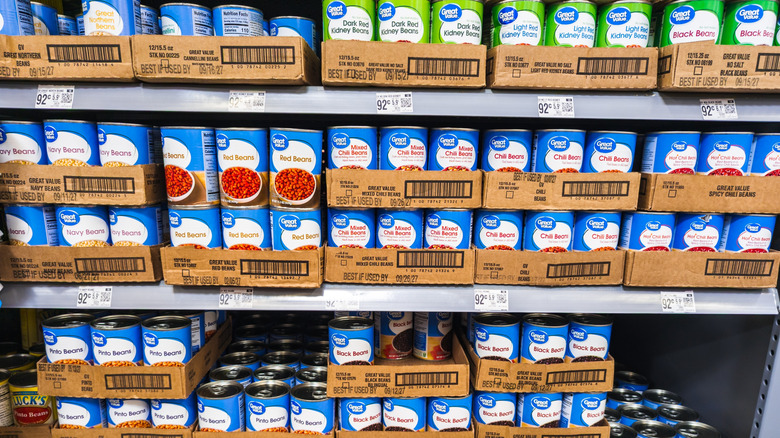
Everyone knows that generic brands are usually cheaper than the name brand products that cost far more. Yet, in many cases, shoppers anticipate a lesser quality from these off-brand options. This has sometimes been warranted criticism in the past, but more recently, a different trend is taking hold. Plenty of generic and own-brand options are the primary draw for shoppers, outclassing the "real thing" they're aiming to emulate.
Even when that isn't the case, generic brands are frequently hiding a different value-added secret. In many instances, the generic product is made by the same manufacturer as the name brand alternative, and sometimes they're created in the same facilities or sport the exact same product within the packaging. This is a prevalent experience when it comes to food goods like cheeses or cold cut meats. A telltale sign of this crossover comes in the form of suspiciously similar packaging. If the tub, jar, or wrapper is shaped the same, it's likely that both products are identical, with one being wrapped in "premium" brand packaging to fetch a higher sale price.
10. Fresher items are farther back on the shelves
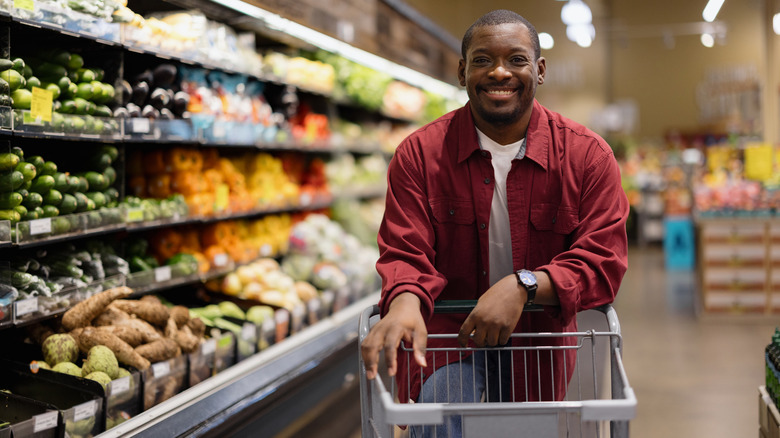
It's only natural that grocery stores would want to sell off as much of their stock as possible rather than allowing goods to spoil. Produce, meat products, dairy, and most other food items have a semi-short shelf life. Yet, grocery stores can't allow their aisles to dwindle down to the bare minimum before restocking. In an attempt to meld the best of both worlds, store employees are trained to add new products to the back of a shelf instead of shoving new items in front of older ones. This allows the things with the nearest expiration date to sit at the front, enticing buyers to grab the oldest products first, reducing overall waste in the process. This practice enjoys the neat effect of boosting profits, too, by minimizing the amount of food waste that isn't sold.
If you're going to use something right away, it's probably best to take from the front of a shelf, lending your energy to a community-wide effort of conservation. But ultimately, this task isn't resting on your shoulders alone. There's no reason to avoid taking products from the back of a shelf to give yourself the longest window of use possible. Taking this example for your own use is also a great way to organize your fridge and pantry. Instead of ramming new groceries into the cupboards, take out the older products from your fridge and cabinets in order to place the newest buys behind your existing reserves to limit your own waste, something that adds up to almost $800 per person each year, according to 2025 reporting by ReFED.
11. 'Sale pricing' doesn't always mean a price reduction
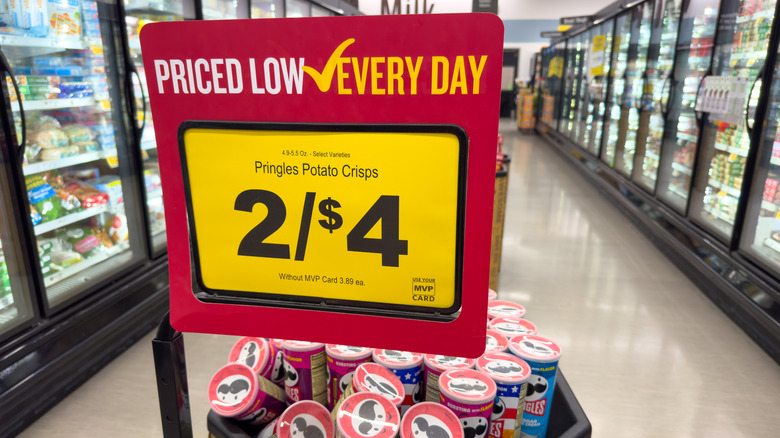
Grocery stores are known to enlist the help of flashy signs that indicate low prices, sale offers, and bundle deals. Bright, bold signage isn't surprising in this environment (or others), but what might come as a shock to shoppers is a tactic hidden in plain sight on the brash, bold text. Reading between the lines, it can sometimes become clear that a neon-colored sign advertising a great price on berries or expensive meat cuts isn't actually highlighting a price reduction. Sometimes, these tools are used to indicate new pricing, but they are frequently called upon simply to make the standard price feel more flashy. The call to action draws buyers in, making them consider a bulk buy or more expensive beverage pack that they wouldn't have otherwise stopped to inspect.
On some occasions, these signs are simply larger printings of the same price tag that previously stood next to the item. The change only acts to call for your attention, making you think that the item is on sale or sports some other unique favorability for a limited time (perhaps a temporarily larger pack size). This works because sale prices are usually highlighted in the same manner, so smuggling a standard price into your field of vision using the same tactic primes you to anticipate added value when there's no meaningful difference to enjoy.