

What Not To Say When Shopping For An Engagement Ring
Whether you're nervously going it alone or undergoing the process with a partner, many consider an engagement ring to be a major purchase. In addition to representing a huge milestone in the lives of many people, these rings can be very expensive. In 2024, BriteCo Insurance found the average cost of an engagement ring to be about $6,775. While that number may have gone down a bit in recent years — Estate Diamond Jewelry places the average price at $6,280 in 2026 — spending that kind of money can still come with a lot of questions or spur shoppers to make statements that may be better left unsaid.
Questions are completely valid when you're preparing to spend thousands of dollars, but saying the wrong thing to your jeweler can signify that you don't know what you're doing and may make you an easy target for upselling. For example, Talker Research surveyed 2,000 Americans on behalf of Chime bank and over 51% confessed to feeling societal pressure to spend big bucks on their engagement. Likewise, you don't want to potentially give your significant other the impression that you are outright looking to spend as little as possible. If you have your engagement ring shopping trip marked on your calendar, but still worry about saying the wrong thing when you arrive at the jewelry shop, here are some common questions and phrases to avoid saying when you get there.
What are the cheapest options?
Per Talker Research, 65% of survey respondents believe that engagement rings have warped from a symbol of mutual love and affection into a financial burden. Beyond the tremendous pressure to spend as much as possible, coming up with a few thousand dollars to buy even an entry-level engagement ring might not be feasible for everyone. If budget is a major concern, you might be tempted to directly ask to see the cheapest engagement ring options available, but this can be a major mistake for a couple of reasons.
First, it's crucial to note that you need not spend every single penny on the ring upfront. If you don't have a bad credit score, you could potentially take out a small personal loan. Many jewelers even offer plans with no down payments and a wide selection of payment schedules. So, just because you don't have thousands in cash set aside for a ring doesn't mean you can't buy one.
By opening the door to multiple financing options, you will greatly expand the range of engagement rings available for consideration. You can then make it easier to find a ring that you and your partner will love while easing concerns related to cost. With this in mind, a better question to ask would be, "Do you offer payment plans or financing options for your rings?"
I heard you shouldn't spend less than three months' salary.
The "three months' salary" rule is a concept that suggests that three times your monthly income should go toward an engagement ring. While this seems like a suggestion based around frugality, you might be surprised that the origin of this practice was less about sensibility and more about the need to stabilize diamond pricing.
In the 1930s, the De Beers diamond company implemented a marketing strategy intended to convince shoppers to spend one month of their salary on an engagement ring. At the time, diamond engagement rings were far from the standard. In the midst of America's Great Depression, the jewelry company began putting out advertisements sending this message in an effort to regain the confidence of disinterested shoppers. Over the years, the length of time associated with the campaign grew to two months, then three.
This rule was never about being practical; it was about making sure that diamond engagement rings specifically felt like an attainable purchase. This becomes very apparent when you stop to remember that salaries differ across tax brackets, and it may take you a longer or shorter amount of time to save depending on your unique expenses. For this reason, it's not overtly necessary to set your budget around a concept that predates the moon landing and much of World War II. Instead, a better question would be, "What is a good savings timeline you would recommend for buying a ring at this price?"
Lab-grown gems are fake.

Lab-grown gems are developed through scientific techniques that closely mimic the way that these jewels are produced in nature. These items get made using either a Chemical Vapor Deposition (CVD) or a High Pressure High Temperature (HPHT) process. Through CVD, a "seed diamond" gets exposed to gases in a vacuum chamber that's heated until layers of new crystals form around the original diamond. With the HPHT process, carbon is exposed to a combination of heat and pressure similar to what's found in the Earth's mantle, creating the environment necessary to develop diamonds.
While the processes to create lab-grown gems may seem daunting, the end results are jewels that are practically indistinguishable from those mined using traditional methods. As for cost, a lot of people have come to prefer lab-grown gems because they are often more affordable than natural diamonds or other precious stones. The exact amount you can save by opting for a lab-grown diamond varies based on a lot of factors, but some retailers estimate you could save between 60% and 95% of what a mined diamond sells for by opting for a lab-grown alternative.
If you're still unsure about buying a lab-grown gem, ask the jeweler to present one to you alongside natural gems. Should you find by looking at them that you can't really tell the difference, there's a very good chance that nobody else will, either.
The resale value doesn't matter to me.
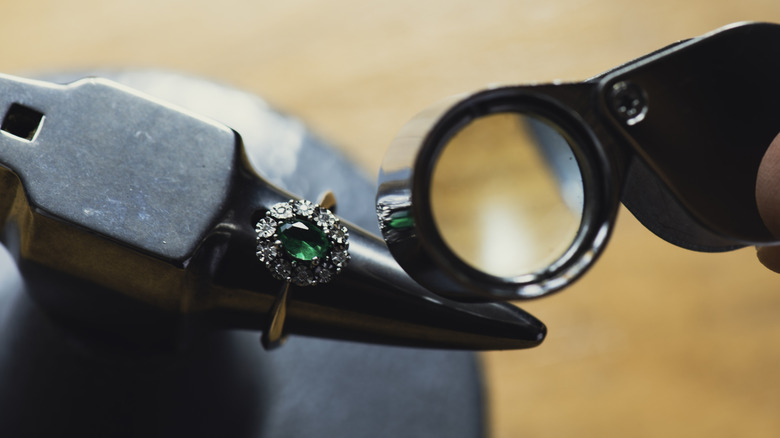
Anything could happen that might make you suddenly decide to sell your engagement ring. Regardless of the reason, you'll want to ensure you're receiving the best possible deal when parting ways with it. So, it's crucial to have an idea of a ring's potential resale value when you buy it. Without all the facts, you could lose out on hundreds of dollars or more.
Often, much of the important information you need will be included in the ring's documentation. For example, the Diamond Brothers estimate that having proof that a ring's been certified by the Gemological Institute of America (GIA) could increase its value by upwards of $1,000. Physical elements such as the quality of the ring's metal and the diamond's weight can also heavily impact pricing.
What buyers are actually willing to pay is another story, but having this knowledge may make you feel a bit bolder about asking for a higher payout while negotiating the resale of your engagement ring. If you don't have the information on hand necessary to negotiate the best price, you could get confirmation by way of a reputable appraiser. You could even ask a jeweler outright if they're interested, but they may lowball you if they sense you're not knowledgeable or intend to resell the ring again for a profit. Therefore, you may need to engage multiple buyers to gain an accurate resale figure.
I want it to look exactly like this celebrity's ring.

The late Diana, Princess of Wales, was a trendsetter in many ways. Her infamous "revenge dress" went down in fashion history, and her beautiful engagement ring features a vibrant sapphire surrounded by small white diamonds. By some estimates, Princess Diana's ring is worth upwards of $400,000 or $500,000. It remains a very memorable and valuable piece of retro jewelry, serving as just one of many examples of how celebrity marriages can influence how members of the public plan their own nuptials.
However, as you probably guessed from the price tag attached to Diana's original engagement ring, exact replication can be pretty difficult when you're dealing with jewelry that is far more rare and expensive than what the average ring shopper can afford. And that issue extends far beyond royalty — many public figures walk around with engagement rings priced in the six-to-seven-figure range. But even when cost isn't a factor, rushing to recreate a Hollywood couple's love story might wind up interfering with your ability to form a unique connection with your partner.
Instead of asking to see an engagement ring that's exactly the one Diana wore, maybe you might like a similar cut that features an emerald instead of a sapphire. Regardless of which star or influencer wears the ring you like, we'd suggest staying open to similar options with their own distinct charms. That way, when you look at the ring, you'll appreciate your own engagement instead of someone else's.
The most important thing is the stone is as big as possible.
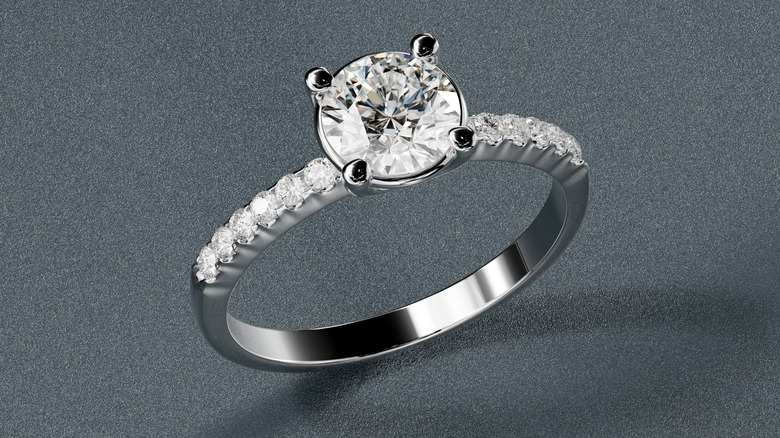
When it comes to engagement ring stones, bigger is often seen as better. Angara, a popular online jewelry retailer, released a report in 2024 that polled 2,000 respondents about engagement rings. According to the survey, 73% of those asked prefer a ring to be at least .5 carats, while 51% would replace their current engagement ring's stone with a larger one if at all possible (via Access Newswire).
So, if you or your partner like the idea of an engagement ring with a huge stone as its centerpiece, you're far from alone. In fact, you might even be able to find certain rings with large stones that sell for less than other options with smaller stones. However, there are a couple of crucial factors to keep in mind: For example, how big of a ring can your partner actually wear? Depending on their hand and finger length, you could find that a very large stone looks gaudy rather than elegant, or comes off as distracting or impractical rather than charming.
Before committing to an engagement ring, you may need to do some snooping to figure out what cut and size your fiancée prefers for their stone. If you've already discussed your engagement, it may be helpful to view rings together to get an idea of the size and shape that works for them.
We don't need to buy insurance.

BriteCo Insurance caused a stir in 2021 when it released survey results that found about 41% of people who bought engagement rings chose to get the items insured. Of those who had not purchased insurance for their engagement ring, 40% admitted that they didn't do so because they felt it was too expensive. Even more disturbing, 18% of respondents submitted outright that they didn't even know that engagement insurance was an option available to them.
In the years since, the results of this particular survey continue to be cited by institutions throughout the jewelry industry in discussions about the merits of insuring engagement rings. You might think that you're fine using an existing insurance policy to cover any potential loss or damage, but many home and renters insurance companies cap coverage for jewelry at around $1,500. If you spent several times that amount on an engagement ring, you may find this coverage woefully insufficient.
If you're concerned about the price, an annual engagement ring insurance premium usually costs the equivalent of 1% to 2% of the ring's value. Depending on the ring, you might not have to pay more than $100 per year — a small price to pay for peace of mind.
It doesn't matter where the stone is from.
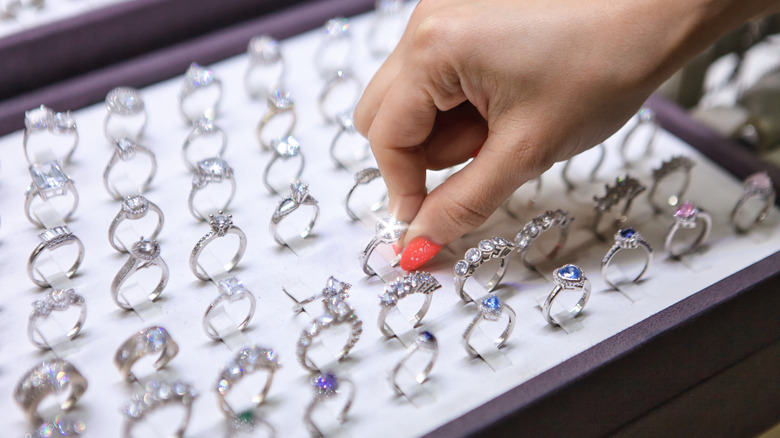
While you're shopping, your instinct might be to prioritize a ring's price or appearance. However, disregarding the origins of a ring or its precious gemstone could cost you down the line. By declaring that you're indifferent to the origin of your engagement ring's stone, you may risk joining the many Americans who lose money to scams. For instance, Pew Research Center reports that 36% of American adults have been victim to online fraud when attempting to make a purchase. A similar survey by AARP found that 41% of American adults have had money stolen due to fraud or deceit. Disreputable jewelry sellers are liable to lie, cover up damage, or mislead customers about a diamond's weight, so getting all the background information you can about the ring you're buying could help you avoid these misdirections.
Potential scams aside, there's also the ethical issue of blood or conflict diamonds to consider. These terms are often applied to jewels that were mined or traded unethically, or sourced from areas plagued by massive sociopolitical unrest and suffering. In order to ensure the engagement ring you choose isn't unethically sourced or fake, you may want to ask where the ring was originally mined or in what lab it was grown. This is another situation where seeing a diamond's certifications can also be useful in the decision-making process. In short, the more information you have about the ring's history, the better.
I don't know if they'll like it.
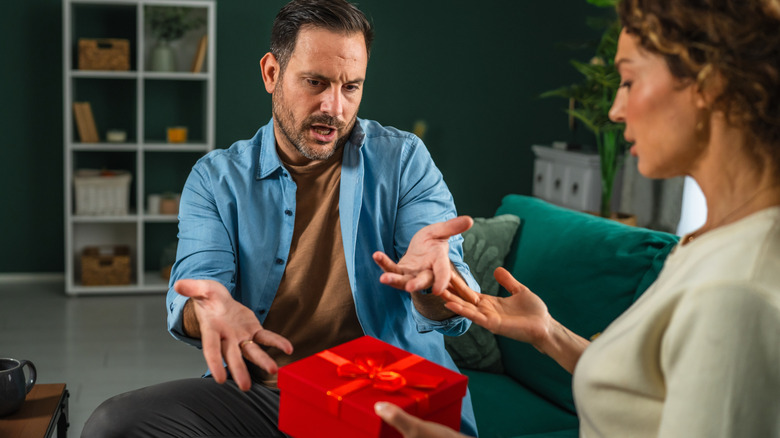
It's perfectly rational to fear getting a ring that your fiancée hates. The idea that getting the wrong ring could contribute to an unhappy partner — or even the end of your relationship — is no doubt stressful, but the good news is that there are some conflict-free ways to create a situation where you both agree on the ring even if the engagement is a surprise.
First, take a look at the jewelry your partner already has on hand. Do they seem to have a preference for gold or silver? Have you noticed that they gravitate toward gemstones of a particular color? Instead of going out on a limb, paying close attention to your partner's existing tastes can provide a helpful blueprint so you're not moving forward with your purchase without a single clue as to whether or not the engagement ring will be a good fit for your loved one. If you're still worried about getting it wrong and don't want to ruin the surprise, you could also invite a trusted third party to do some digging for you. Consulting your partner's best friend, sibling, or parent could be a big help for selecting a ring that your partner will want to wear.
However, if secrecy isn't the priority, the simplest course of action is to simply go shopping with your partner and pay attention to what they're drawn to.
I don't need to see the ring in person.
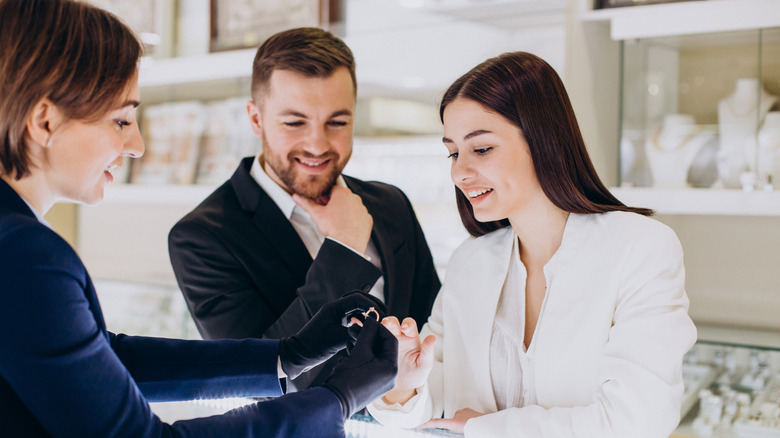
While there are many benefits to shopping for a ring in person, there are those who opt to make the purchase without going to a physical store. According to a 2025 study by The Plumb Club, 12% of survey respondents admitted to making their final engagement ring purchase entirely online (via Rapaport).
While digital resources like video calls and apps designed to allow you to virtually try on rings could certainly help you in your journey to find the perfect engagement ring, starting and ending the shopping process online can be risky. Without seeing the ring in person, you're failing to take full advantage of some of the most basic resources you have for verifying your decision: your senses.
Going in person to finalize your engagement ring purchase may be the best way to get an accurate ring measurement, make sure the ring is cut and set the way you or your fiancée would prefer, or check for any other issues or damages that may need rectifying. If you were to buy a ring online and find that you're not satisfied, you'll often only have a limited time to return it and the process could potentially throw off your desired timeline for a wedding. If you're worried about such issues, but like a ring that you saw online, it might be worth it to ask the seller if there's any way you could meet in person before making the final purchase.