

Dave Ramsey's Practical Advice For Investing During The Iran War
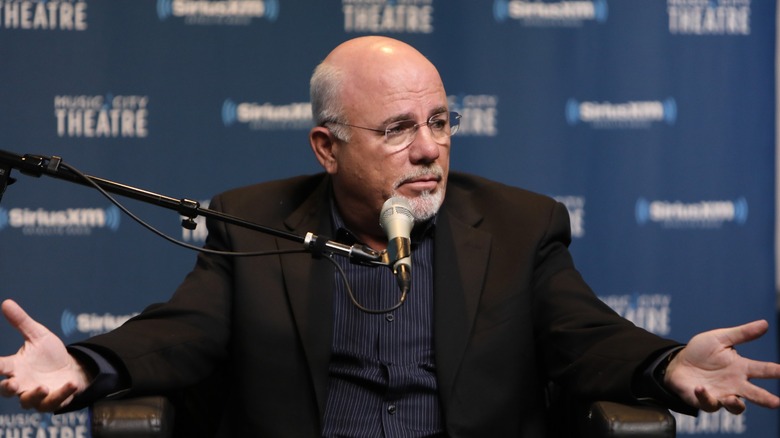
To be clear, Dave Ramsey is a finance guru, not a geopolitical conflict expert. However, the two areas often can, and do, intersect. Just as gas prices jumped under President Trump's tariffs in 2025, the outbreak of war in Iran in March 2026 has strained the global economy – causing the stock market, as a whole, to decline in the weeks following. However, according to Ramsey, none of this is reason enough to pull out of your investments. In the March 11, 2026 episode of "The Ramsey Show," Ramsey answered caller questions about what to do with investments in the wake of the Iran war with his signature bluntness, "You should not change a thing."
Elaborating further, Ramsey explained that the market has historically plunged during the onset of major negative global events. "Those that ride rollercoasters only get hurt if you jump off in the middle of the ride," Ramsey said, noting that the market decline seen during the COVID-19 pandemic recovered just 57 days after it began to dive. "If you jump in or jump out every time you see a bad report on CNN or FOX, you are never going to stay invested, and you're never going to make any money. [...] Don't sit and fret on what the market's going to do based on a war."
Historical data backs up Ramsey's advice
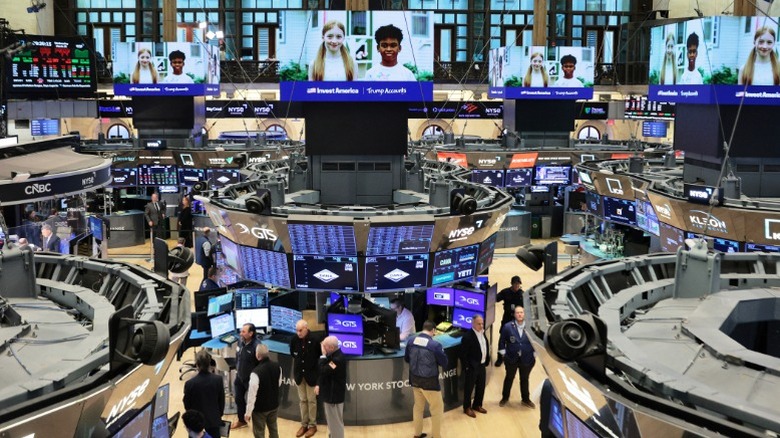
Unfortunately, there are many events that serve as further evidence for why investors should sit tight on their holdings in times of conflict. For example, the Dow Jones lost over half its value during the Great Recession. While significant, the market ultimately made a full recovery by 2013. The Dow dropped more than 14% following the events of the September 11, 2001 attack, and the U.S. invasion in Afghanistan. Nevertheless, full recovery happened by 2004. An investor who maintained their holdings with blue chip companies throughout these years would have seen their 2002 index value nearly double by 2007 — or even quadruple that value by 2026.
Likewise, the reason the market infamously crashed in 1929 was largely because people panicked and began selling off their shares quickly, and in large volume. While the market took nearly two decades to fully recover from that particular event, it did regain its upward trajectory in 1933. The reality is that one of the best ways to prepare for a stock market crash is to ensure you don't panic — and instead stay patient rather than selling.
Investment factors that are more important than global conflicts
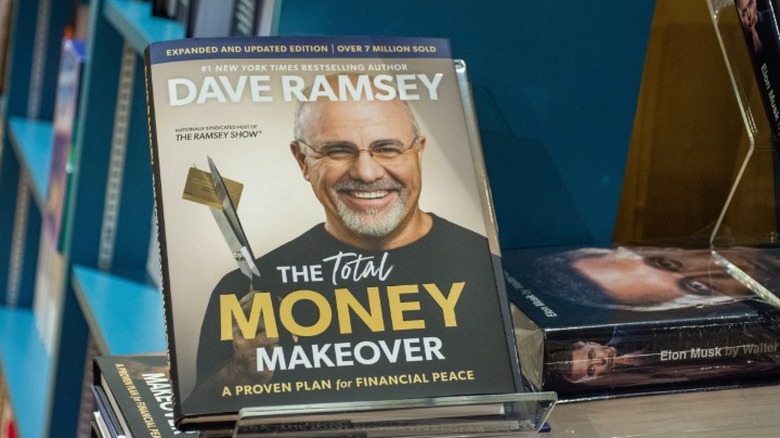
As an investor, you can't control global conflicts, nor can you predict when they might occur or even how long they will last. However, what you can control are the tactics you use when investing. For example, the age at which you start investing is likely to matter far more for long-term growth than any temporary market dip — even those that are severe. Starting younger can give you more time to expand your investments, take advantage of long-term upward growth, and capitalize on compounding interest.
Ramsey's also discussed the nature of long-term investments that all investors should factor in to their decisions. During his show, he explained that, especially in regards to portfolio diversifiers like mutual funds, it's only wise to commit to investments if you're prepared to leave them alone for at least three to five years. After that time, any global event that may have caused a temporary dip will likely already be in the past.