

Consumer Reports Reveals The Most And Least Expensive Grocery Stores In The US

When shopping for groceries — and facing today's inflation – you might wish you could go back to the days of 1970s groceries that cost a fraction of today's prices. However, perhaps the best way to save consistent money is simply by figuring out which grocery stores in your area offer the best overall prices, with or without coupons. Luckily, in February 2026, Consumer Reports ranked both the most and least expensive supermarkets in the U.S., based on prices across a wide range of products such as produce, meat, and packaged goods.
In Consumer Reports' ranking, Walmart's prices were used as a baseline. Of the 35 retailers reviewed, just six grocery stores had better average prices, on a national basis, than Walmart, with warehouse clubs Costco and BJ's Wholesale Club having the lowest prices. Meanwhile, the most expensive retailer on the list was Whole Foods, by a significant margin. CR came up with these rankings after creating a representative sample of stores with the highest market share across six metro areas in the U.S.: Boston, Chicago, Dallas/Ft. Worth, Denver, Los Angeles/Southern California, and Virginia Beach. With that in mind, these pricing comparisons focused on nationally available brands whenever possible since not all grocery stores carry the same items.
Warehouse clubs provide the best grocery prices
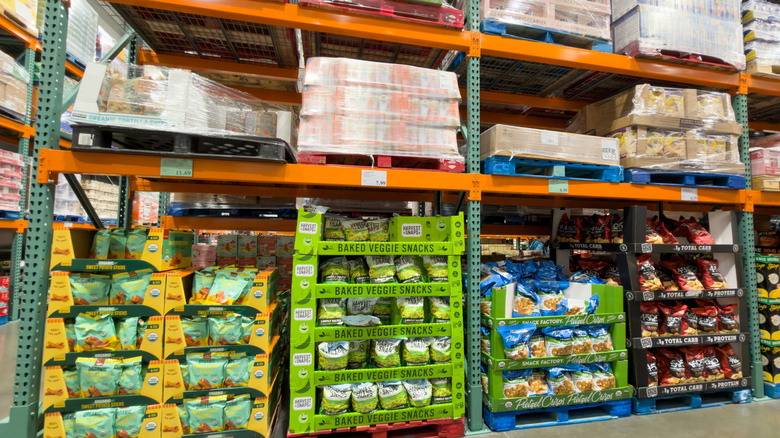
Costco boasted 21.4% better pricing than Walmart in CR's ranking. while BJ's Wholesale Club was barely behind at 21%. However, it's worth noting that Consumer Reports did not include any other warehouse membership clubs on its list, including Sam's Club. It's important to keep in mind that warehouse membership clubs generally require purchasing a membership, meaning any savings will need to take the membership price into account. For instance, the basic Costco membership is $65 per year. Warehouse clubs also largely deal in bulk — meaning you will likely have to purchase items in larger quantities than you might normally buy in order to receive extra savings.
If you are curious how traditional grocery stores stacked up, Lidl was ranked No. 3 on CR's list with prices that were 8.5% better than Walmart, and Aldi came in at 8.3% better. Meanwhile, WinCo, which rivals big box membership clubs, came in at No. 5 with a 3.3% price advantage.
Whole Foods has the highest grocery prices
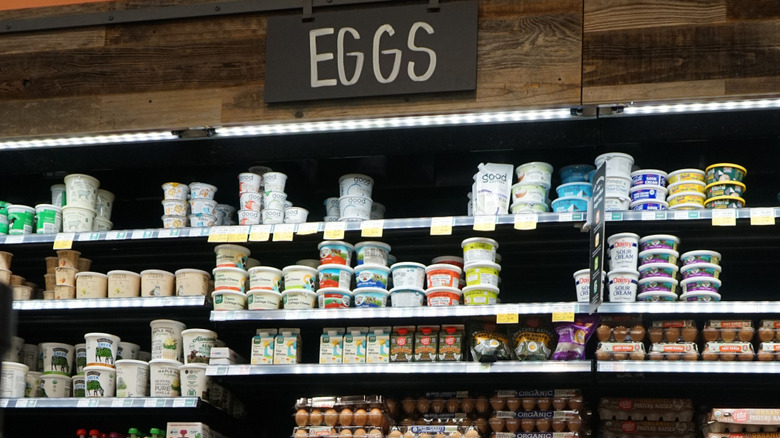
On the opposite end of the list, Consumer Reports listed Whole Foods Market as the most expensive of the 35 grocery retailers it reviewed, reporting a 39.7% higher cost for groceries than the baseline provided by Walmart. In all, 28 of the retailers on the list had higher average prices nationally than Walmart. Whole Foods focuses on delivering high-quality produce, sustainable seafood, and animal-welfare-rated meat, which may be one reason why shoppers don't consider it a price-friendly option. In fact, the general consensus is that Whole Foods is one of America's most overpriced grocery store chains.
Shaw's ranked No. 2 with grocery prices 31.9% higher than Walmart, and El Rancho was No. 3 with average costs 30.1% higher than Walmart. One of El Rancho's most well-known promotions is offering 99-cent tacos that are made in the store to draw customers, despite potentially higher costs on other items. Meanwhile, fan-favorite Trader Joe's had the 10th highest grocery prices, at 24.6% above Walmart's prices.