

'70s Corporate Giants That Are Still Dominant Today
Some of the largest companies of the 20th century in the United States are no longer with us. We've said goodbye to former giants like Bethlehem Steel, International Harvester, and Pan American World Airways. However, there are still several decades-old companies that have managed to remain heavyweights in their respective industries well into the 2020s.
To survive, they've had to navigate the oil crisis and inflation of the 1970s, as well as the rapidly shifting monetary policies that followed. Some faltered along the way, but managed to stay their course and stay in business for years thereafter. Others were so dominant that they were subject to government intervention to end their monopolies, while others still found success through mergers and innovation.
Most of the companies on this list are consumer-facing businesses that manufacture products you may even own already, though several entries might not be as well known to the public as they're focused on business-to-business interactions. Regardless of their varying business strategies, the one thing they have in common is their knack for survival. So, don't be surprised if these companies appear on a similar list 50 years from now.
General Motors
The 1970s began with some turbulence for General Motors (GM) when employees walked off the job at 145 of the car maker's North American facilities in 1970. GM was the world's largest corporation, but a two-month strike that cost in excess of $1 billion was still a shock to the system. Nevertheless, GM maintained its title as the world's largest car manufacturer throughout the 1970s — a status it wouldn't relinquish until a few years into the 21st century when Toyota outsold GM globally in 2008. The next year, GM had to file for bankruptcy. However, with support from the federal government, just 40 days later, it became one of the companies that came roaring back from bankruptcy.
In U.S. sales, GM still continued to outsell all rivals, including Toyota, except in 2021. That hiccup was the result of GM's supply chain's struggle to obtain enough semiconductor chips, and allowed Toyota to get ahead. However, GM quickly recovered its crown the next year and remains the No. 1 seller of automobiles in the U.S. In a January 2026 press release, the company reported its domestic sales for 2025 were around 5.5% higher than the previous year, contributing to an annual revenue of $185 billion. Among its products is the Cadillac XT5, one of the cheapest luxury cars to maintain.
Ford Motor Company
International political and military actions changed the course of the automobile industry in the 1970s. Armed conflicts in oil-rich lands led to an oil crisis, which triggered runaway gasoline prices in the U.S. American carmakers, such as Ford, had no choice but to reduce the production of large gas-guzzling vehicles in favor of models with smaller profiles that could achieve higher levels of fuel efficiency. There were many disappointments, but the Ford Fiesta was a huge hit, becoming the company's biggest seller.
Ford has continued to be a major player by adapting to the times, as evidenced in the 21st century by its pivot away from sedans and toward trucks and SUVs. Its F-series trucks have outsold all others in its domestic class for nearly 50 years. Further evidence of its intent not to lag behind the wave of public sentiment is its emphasis on producing hybrid and electric vehicles. In 2025, the company even stopped production of the Focus, the once best-selling Ford car. Ford's willingness to change helps it remain one of the world's most preferred car brands. In 2025, it was once again among the top-selling vehicle manufacturers: According to a Q4 2025 press release, it closed out the year with revenue of $187.3 billion.
Caterpillar
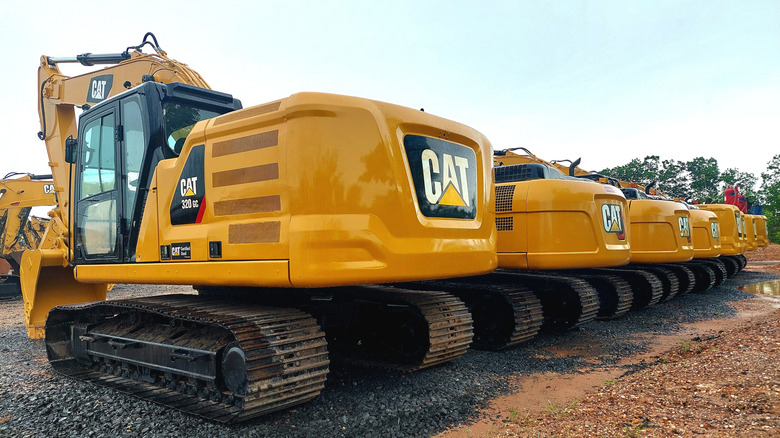
Caterpillar had a lot of heavy machinery competition in the 1970s, but if you can't think of a direct competitor today, that's because the brand spent much of that decade pushing ahead with certain ideas that helped distance it from rivals. The company was already quite popular, but bringing innovations like the hydraulic excavator and the elevated sprocket into the U.S. market helped establish it as a particular force in the 1970s.
The company ended the decade controlling 36% of the global heavy equipment commerce. That market share shrank, but the company has yet to shy away from modernization for the sake of efficiency and profit. In January 2026, Caterpillar even announced a partnership with Nvidia with the aim of incorporating AI into its products, suggesting the brand's designs to stay up to date with contemporary technology are just as dominant as they were 50 years earlier. Caterpillar reported an annual revenue for 2025 of $67.6 billion. That same year, International Construction also ranked Caterpillar as the world's No. 1 manufacturer of construction equipment (via International Rental News).
ExxonMobil
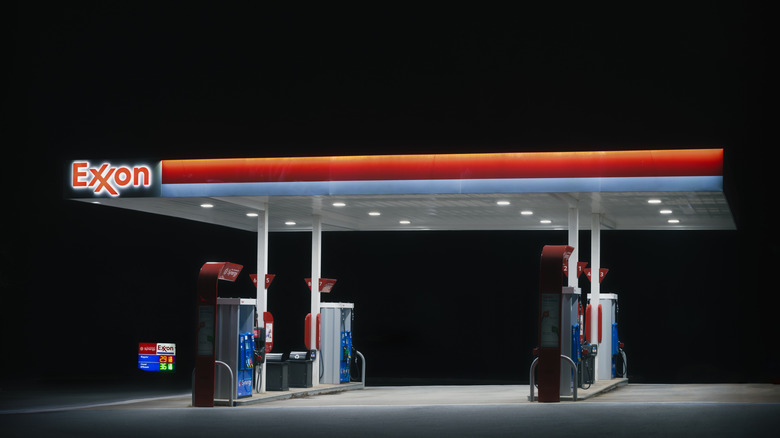
The 1970s were significant for Exxon (now ExxonMobil). Originally established as Standard Oil, the brand was renamed Exxon in 1972 and wasted no time becoming a household name in the years to follow. A year later, several major oil countries stopped shipping oil to the U.S., causing a dramatic rise in domestic oil and gas prices.
Even as American drivers spent much of the decade finding ways to save money when buying gas, Exxon still turned a tidy profit. By the beginning of the 1980s, Exxon boasted sales that surpassed $100 billion. Even a massive oil spill involving an Exxon tanker at the end of the 1980s didn't derail the company. Despite the fact that the multinational suffered a humiliating blow to its public image and stock prices and spent billions on environmental cleanup programs and legal fees, it continues operating as one of the world's largest publicly traded oil and gas companies today under the name of ExxonMobil.
This status is largely the result of Exxon and Mobil Corporation's 1999 merger — a deal Exxon paid around $80 billion to make happen. Now, the media often refers to the company as a member of Big Oil, the handful of powerful oil companies that dominate their industry. As of 2026, ExxonMobil employs over 61,000 people in over 56 countries. According to a January 2026 earnings report, it made $332.2 billion in 2025.
Chevron
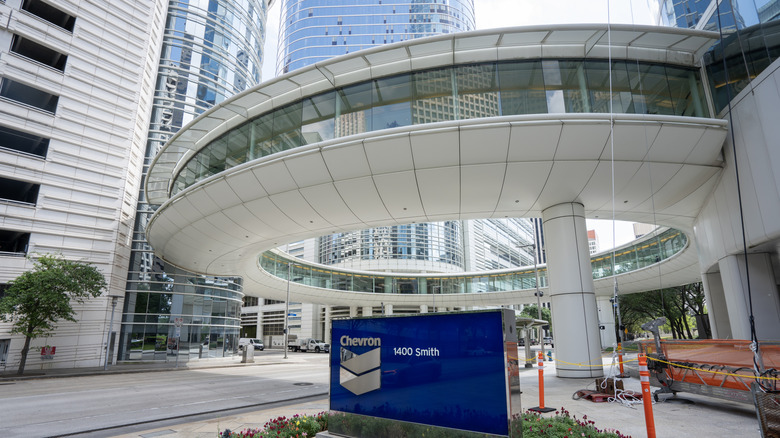
Chevron had to deal with the 1970s oil crisis like all its rival companies, but was fortunate to locate a rich reserve in North America. In the 1970s, the possibility of new oil finds in Alberta, Canada, was thought unlikely. However, in 1977, Chevron shocked the industry by discovering a massive untapped western extension to the existing Pembina oil field.
The modern-day Chevron continues to grow while looking for ways to achieve greater efficiency. For example, the company announced plans to steadily reduce its workforce by as many as 9,000 people — a move that aligns with the brand's reported goal of lowering its overall costs by upwards of $4 billion in 2026, per a 2025 earnings report. However, that level of restructuring would still allow Chevron to remain a major corporation with upwards of 30,000 employees. Despite its planned layoffs, the company reported that it achieved new highs in production both domestically and abroad throughout 2025. Specifically, that same earnings report states the company saw a 16% increase in its U.S. oil output and a 12% increase in its international output. 2025 also marked the 38th consecutive year that Chevron increased its dividend yield. Investors received $6.84 per share, meaning the company paid out $12.8 billion in dividends alone.
Shell
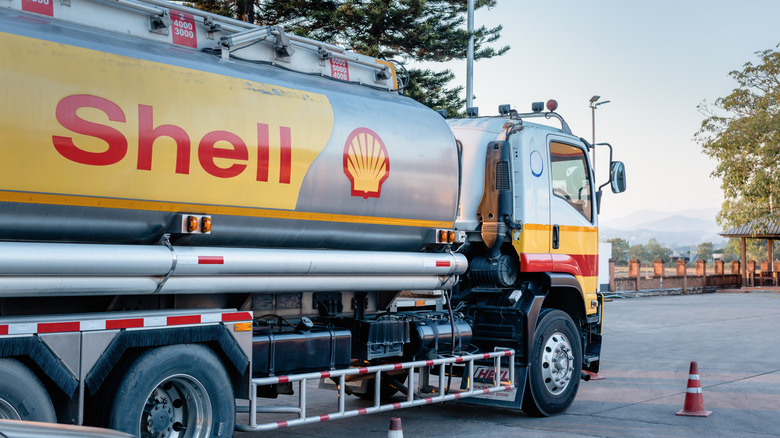
For people below retirement age, it may seem that self-service gas pumps have always been the norm. However, they weren't widely accessible to consumers until the early '70s — largely thanks to Shell. The company first set up self-serve stations in 1971, a move that may have contributed to the company's lasting foothold in the U.S. fuel market. During the decade's energy crisis, Shell responded strategically by broadening its business into other sectors and expanding the geographical scope of its search for oil. According to Shell's website, the company has amassed around 85,000 employees in 70 countries and managed to stay in business for over 100 years.
For all of 2025, the company's adjusted earnings reached $18.5 billion. While that's a drop from the previous year, early 2026 put the company in a very unique position: After U.S. forces invaded Iran in late February, the price of gasoline in the U.S. quickly began to rise. As a result, Shell's stock also skyrocketed in the following weeks, ultimately reaching unprecedented highs in mid-March.
IBM
IBM began the 1970s by making major strides in the incorporation of virtual memory in a computer system and demonstrating computer speech recognition. Those types of innovations made it easy for the public to think of IBM first when they thought of computer technology. As the '70s gave way to the '80s and '90s, IBM's notoriety only grew as its commercials became a mainstay of TV advertising during major sporting events. By the early 2000s, the brand was pivoting away from the consumer technology market and has since largely concentrated on business-to-business operations.
Today, IBM is one of the companies working behind the scenes to make sure other organizations have reliable ways to store data in the cloud. It helps bridge the gap for clients between old and new data storage techniques, often incorporating artificial intelligence software. The company offers its experts as consultants to help design massive computing systems for major institutions like the Scottish government and Banco do Brasil. So, IBM may be less prominent in the popular media, but Big Blue remains a major player in the enterprise computing realm. According to its Q4 2025 earnings report, the company brought in $67.5 billion in revenue in 2025.
Honeywell
Honeywell entered the 1970s riding a wave of success provided by NASA's Apollo missions. Per Honeywell's website, the first successful mission to the moon in 1969 relied on stabilization and control systems built using 16,000 of the company's parts. During the nine-year lifetime of the Apollo program, Honeywell contributed key units for air circulation, waste removal, and climate control aboard the rockets.
In the 21st century, Honeywell is helping airlines meet the new government requirement for extended cockpit voice recordings. Instead of the traditional two hours of recording, the new devices will offer 25 hours. Honeywell products can be found in various industries aboard many different types of machinery. For example, the company's inertial measurement units, which help provide reliable navigation, are used in the military, aerospace, and industrial sectors. The company's accelerometers, which can be used in conjunction with inertial measurement units, help oil and mining drilling teams improve their precision.
Honeywell's continued success brought in $37.4 billion in sales in 2025, and the company's LinkedIn page estimates it employs 110,000 people as of 2026.
Procter & Gamble
Procter & Gamble's (P&G) history dates back to the days of the horse and buggy, but the company has remained a powerhouse for the better part of two centuries by continuing to innovate and partner with outside inventors. One such collaboration led to the introduction of the dryer sheet in 1973 — giving the huge company one more staple consumer product that remains a presence in modern homes — while another led to the development of Crest Whitestrips.
Today, P&G is considered the largest corporate provider of consumer goods in the world. After all, it's difficult to find a family that hasn't purchased at least one P&G product, seeing as the brands under its umbrella include Pampers, Downy, Tide, Bounty, Charmin, Tampax, Braun, Gillette, Head & Shoulders, Old Spice, Dawn, Febreze, Swiffer, Fixodent, Scope, and Pepto Bismol, just to name a few. With that many brands on shelves across the U.S. and abroad, it's no wonder P&G reported net sales of $84.3 billion in a 2025 letter to its shareholders. It's also not surprising that purchasing its stock is considered one of the best ways to prepare for a stock market crash.
Whirlpool
The 1970s began well for the appliance manufacturer Whirlpool, but soon devolved into falling sales due to the energy crisis and a shrinking housing market. By late 1974, its stock hit its lowest closing price ever of $1.50. However, Whirlpool kept ahead of the competition when it introduced the first automatic washing machine to feature solid-state electronic controls in 1977. The corporation continued to expand and prosper through the 1980s and 1990s, pumping out innovation after innovation in the decades that followed. By the spring of 2021, Whirlpool stock had recorded its highest closing price of $200.98.
Part of the company's lasting success is the fact that it has several other major brands under its management. The company's portfolio includes familiar names like Maytag, JennAir, Amana, and KitchenAid, and products ranging from large household items to small appliances that will help slash your power bill.
Whirlpool has 41,000 employees, per the company's 2025 report, with a Q4 press release showing it earned $15.5 billion in net sales throughout the year. As of 2026, the Michigan-born company continues to heavily invest in American manufacturing, maintaining the world' s largest washing machine factory in Clyde, Ohio.
Dow
Dow began modestly in 1897 with its founder's patented method of obtaining bromine from salt water. From there, the company spent much of the 20th century offering its chemical expertise to various war efforts and scientific excursions like the moon landing. However, the company's efforts also aided consumers, as Dow was responsible for the development of popular plastic products like Saran Wrap and Styrofoam.
Plastic of all sorts developed into such a favorite for manufacturers that Dow's sales figures crossed the $1 billion mark in 1964. Plastic's popularity only grew from there, and the company achieved $2 billion in sales just seven years later in 1971. The 1970s continued a period of expansion for Dow, enabling it to reach $10 billion in sales by 1980.
As of Spring 2026, Dow is the world's third largest chemical manufacturer and its stock prices rose fairly steadily throughout the year's first quarter. According to the company's Q4 2025 earnings report, its net sales reached $40 billion and it delivered $1.5 billion in dividends to shareholders.
Alcoa
Some of the most famous achievements of the 20th-century involved the use of aluminum provided by the Aluminum Company of America, better known as Alcoa: Both the Wright Brothers' airplane and New York City's Empire State Building relied on the brand's aluminum for key components. Later, the need for improved aircrafts brought on by World War II led to an increase in U.S. aluminum production and, consequently, Alcoa's rapid expansion.
The company's reach got so wide that, by the 1940s, it got caught up in an antitrust lawsuit with the U.S. government that saw much of its hold over U.S. aluminum production reduced to foster a more competitive environment. However, the company continued to dominate in the 1960s and 1970s, when another opportunity to share in a historic moment came along: Alcoa was one of the key suppliers for NASA's Apollo missions, providing special aluminum alloys built to withstand the rigors of space travel.
Alcoa is still a major player in the aluminum industry. As of March 2026, it's the world's fifth-largest aluminum company based on market capitalization. The company reports having 13,900 employees in 17 countries, and its year-end report states its 2025 revenue surpassed $12.8 billion.
General Dynamics
Founded in 1952, General Dynamics (GD) quickly made a name for itself as a defense contractor. By the '70s, the company was flying just as high as the F-16 fighter jet it developed for the U.S. Air Force around that time. The F-16 went down in history as one of the most successful developments in airborne defense of all time, and GD is still known today for developing weapons systems, combat vehicles, cybersecurity, and surveillance equipment.
GD does a lot of work for the U.S. Navy, developing products like nuclear-powered submarines and the military branch's missile destroyers. According to the Stockholm International Peace Research Institute, GD is the fifth largest arms and military service company in the world. According to a January 2026 press release, the company concluded 2025 with earnings of $4.2 billion and revenue of $52.6 billion. Its 2025 earnings were 11.3% higher than those of 2024, while the company's annual revenue increased by 10.1% over the same period of time. GD currently employs around 110,000 people, and entered 2026 with over $1 billion worth of fresh contracts.
AT&T
AT&T played rough with local competitors for most of the 20th century. The company either bought them or slowly suffocated them by refusing to cooperate or provide long-distance service to their customers. By the 1970s, AT&T controlled such a large portion of the U.S. market that the U.S. Justice Department had to step in and file an antitrust lawsuit in 1974 to force the giant to break apart into smaller competitive companies. When the settlement finally arrived in 1982, the American telecom landscape had forever changed and seven smaller regional companies emerged.
In time, one of the smaller companies, SBC Communications, grew strong enough to purchase AT&T in 2005. However, SBC then changed its name to AT&T, an unusual move that's since ensured that AT&T remains a well-known and well-liked telecom company throughout much of the country. For 2025, AT&T reported revenue of $125.6 billion, making it the second-largest telecommunications company in the U.S. based on revenue.