

The Most Embarrassing Money Mistakes Billionaires Have Ever Made

Some people assume the path to billionaire status is paved with a non-stop sequence of genius moves, savvy investments, and profitable acquisitions. In reality, most wealthy individuals and valuable companies have experienced several failures along the way to business success. The Bureau of Labor Statistics actually closely tracks the survival rates of businesses across the country. The most current data suggest that nearly one-fifth of establishments fall off after only one year. That number jumps to over one-third by year three. By the fifth year, business owners face a 48.6% odds of failure. Every financial decision carries inherent risk, yet it tends to be more acute for billionaires given the sheer scale at which they operate.
While it's certainly true that the wealthy use secrets to protect their wealth, there's no shortage of instances where billionaires risk a lot in the hopes of an equally rewarding payoff. Of course, history shows time and time again that these business bets don't always result in a reward. Some of the most embarrassing money mistakes billionaires have ever made involve the most well-known and prominent minds in business. The minority of these moguls and magnates have been marred by their failures, but the majority have plenty of successes to help make up for the short-sighted or untimely mistakes. Whether you're looking for practical business wisdom or hoping to put your financial mishaps in perspective, let's take a look at the worst business missteps billionaires have made.
Elon Musk's financially deflating conversion of Twitter to X
One of the most recent billionaire slip-ups involved the outright purchase and complete transformation of a once-beloved social media platform. In early 2022, Elon Musk, the world's richest man, took a majority stake in Twitter with a 9.2% position, per Statista. An avid Twitter user in his own right, Musk leveraged his newly established, outsized influence to pressure the company into a sale, threatening to withdraw his investment if the deal was rejected. Following months of back-and-forth communications and legal threats, the Blue Bird was released into the clutches of Musk for a lofty $44 billion.
S&P Global reports that the $44 billion deal represented the fifth most valuable tech deal in recent years. Although Musk secured $25.5 billion worth of financing support to lock in the deal, the mega-billionaire put up $21 billion of his own money. According to Statista, Twitter was at the pinnacle of its financial worth. The company had been steadily rising out of a relative low of $11.65 billion in 2016. The $44 billion figure was the highest at which the company had been valued. Within a year of the purchase, the valuation of X — the company's new name — had plummeted to $19 billion. By late 2024, the number fell to $9.4 billion. The most recent estimates place X's valuation between $32 and $44 billion. Thus, the best-case scenario is that Musk broke even on his colossal investment. However, a litany of lawsuits from across the globe suggests the investment may have been a larger financial and political headache than anticipated.
Rupert Murdoch's untimely purchase of MySpace
The Dot-com bubble marked one of the worst days in stock market history, kicking off a multi-year $5 trillion drain from the economy, according to EBSCO. The most challenging aspect of the transformative internet revolution was determining which companies had staying power and which were doomed to the dustbin of business history. MySpace is the prime example of how, in the midst of a bubble, everything can look fantastic on paper, only to burn up not long into the future. During its rise, MySpace dominated the social media space, of which it was an undeniable trailblazer. Launched in 2003, the rapidly growing site reached 5 million users by its first year. By 2005, that figure skyrocketed to 22 million, according to Statista.
Seeing this fourfold increase in users, Rupert Murdoch, who has the unfortunate position of being among the most expensive celebrity divorces of all-time, bought the ballooning social networking site for $580 million in 2005. Within the first few years following the purchase, Murdoch's deal looked like a remarkable business decision. By 2007, the company had already achieved a sky-high valuation of $12 billion, signifying major potential returns for Murdoch. Those gains were never realized as Murdoch held onto MySpace throughout Facebook's meteoric rise. In 2008, MySpace's primary competitor attracted more users. This site continued bleeding users as Facebook's popularity blew up. Eventually, Murdoch sold the fledgling site to Justin Timberlake and other investors for $35 million. Altogether, the investment represented a $545 million mistake.
Masayoshi Son's failed WeWork investment
WeWork took off in New York City's SoHo neighborhood as a shared working space. Within just four years, the rapidly expanding company raised $355 million in private funding. Taking notice of the company's rapid ascent, SoftBank CEO Masayoshi Son decided to invest. Forbes reports that the bank's total investments in WeWork rose to more than $10 billion by 2019. In January of that year, the stakes appeared to be paying off, with the company valued at an eye-watering $47 billion. In preparation for an initial public offering, WeWork's seemingly unstoppable upward trajectory started petering out. The company's public disclosures revealed unexpectedly high losses and surprisingly low revenue. The CEO stepped down over the debacle, and the company's valuation plummeted from $47 billion to $10 billion by September 2019.
There's no telling whether WeWork could have survived these financial struggles alone, but the impending COVID-19 pandemic washed away much of the public's demand for shared working spaces. The company would never regain its financial footing after the pandemic, eventually filing for Chapter 11 bankruptcy in 2023. Between its highest valuation and its bankruptcy, WeWork's value had tanked from $47 billion to $44.5 million. Commenting on SoftBank's investment losses over the years, CEO Son called the decisions "foolish."
Steve Ballmer's Nokia investment becomes a write-off
The unexpected value of your old cell phones doesn't necessarily mean the company was successful. That's something billionaire Steve Ballmer learned the hard way with the failed acquisition of Nokia. Throughout the 2000s, the Finnish mobile brand was a national and global powerhouse. At one point, Nokia provided 3.6% of the country's gross domestic product and sold about 50% of the globe's mobile handsets, according to The Register. In an attempt to compete with Apple's rising share of the mobile phone market, Microsoft decided to purchase Nokia in 2013. The acquisition cost a whopping $7.2 billion. Steve Ballmer was CEO of Microsoft at the time of the purchase, although he didn't stick around to deal with the aftermath.
According to MacroTrends, Nokia's market value reached an all-time high of $273 billion in 2000 before falling dramatically. When Microsoft bought the company outright, its valuation jumped from about $15 billion to sub-$30 billion. Microsoft leaned out the company by firing employees in the U.S. and Finland, but the penny-pinching was to no avail. Only a few years after buying Nokia, Microsoft decided to write off the investment for $7.6 billion. What became labeled as "goodwill and asset impairment charges" represented $400 million more than the initial investment.
Jeff Bezos's attempted smartphone launch
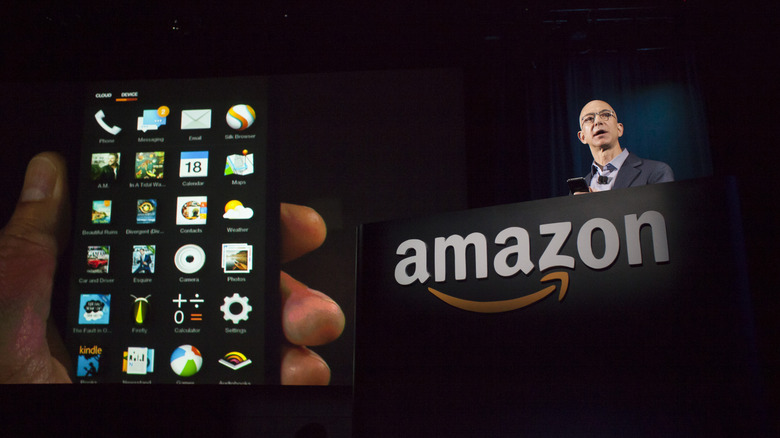
Jeff Bezos is no stranger to transforming his company by moving laterally into new spaces. This flexibility has been the cornerstone of Amazon's success story. The e-commerce giant actually started as an online bookstore before becoming an online retail behemoth and, eventually, one of the most valuable technology companies in the world. Zappos, the popular shoe retailer that's owned by Amazon, is a perfect illustration of Bezos' ability to expand operations into profitable niches. Unfortunately, these ventures didn't always pan out. Amazon's Fire tablets provided proof of concept for the company releasing its own devices, so the brand decided to venture into the smartphone space.
To compete with the top-selling brands, the Fire Phone was priced at $199, roughly the same price as a new Samsung Galaxy or Apple iPhone at the time. When consumers showed their hesitance to adopt a completely new phone brand, Amazon took a dramatic move by lowering the Fire Phone's price to a $0.99. Yet, even the colossal price drop wasn't enough to win over smartphone users. Overall, Amazon spent $170 million on the failed Fire Phones, and currently holds about $83 million of these smartphones. According to TIME, Bezos's failed attempt to enter the phone market stemmed from the entrenched dominance of long-standing smartphone giants, the Fire's limited app options, and a lack of outstanding features.
Jack Dorsey's terrible purchase of Jay-Z's Tidal
Before Elon Musk purchased Twitter, the company was founded by Jack Dorsey, one of the many billionaires who didn't finish college. Dorsey stayed on as CEO of the company until its sale, through which he earned $268 million. Calling his leadership at Twitter "my biggest regret," according to Fortune, it appears the former CEO's earnings weren't only financial. Believe it or not, Dorsey's first tweet sold for $2.9 million as a non-fungible token in 2022. Although Twitter is his best-known project, Dorsey is a serial founder with a litany of successful ventures under his belt, including Block. Forbes estimates Dorsey's net worth to be $5.7 billion. While impressive in its own right, this figure is down from a lifetime high of $12.5 billion in 2021. Similar to many of the other billionaires who have made embarrassing money mistakes, not every one of Dorsey's business decisions was savvy.
In 2020, Dorsey discussed the possibility of Block, then known as Square, purchasing Jay-Z's streaming service. The move appeared fiscally unsound to most of the company's leadership, given Tidal's failing numbers. The music app had posted several million dollars' worth of losses for the prior 10 consecutive quarters. Furthermore, its subscriber count was extremely low, especially compared to competitors. The acquisition even came with significant legal risk as Tidal was being looked into by the U.S. and Norwegian governments. Within a year of the idea hatching, Block bought Tidal for $300 million, a move questioned by insiders within the company and outsiders alike. Dorsey's $10 million donation to a nonprofit owned by Jay-Z in the lead-up to the purchase raised even more eyebrows. Eventually, a lawsuit was brought against Dorsey, which a judge dismissed, plainly stating that founders have the right to make "terrible" business decisions.
Mark Zuckerberg's gamble on the Metaverse

It's impossible to deny the overwhelming success of Mark Zuckerberg, who has amassed a stellar net worth of over $204 billion, according to Forbes. However, the tech mogul has also overseen some of the biggest Meta settlements of all time, totaling in the tens of billions. Beyond expensive legal proceedings, Zuckerberg has also incurred some expensive losses through failed ventures. Among the more recent and notable misses from the tech mastermind is Meta's attempted foray into virtual reality. In 2014, Zuckerberg acquired VR company Oculus for $2 billion in an effort to speed up its impact in the burgeoning space.
The purchase even came alongside a renaming of Facebook to Meta, ostensibly as an attempted rebranding of the social media giant toward a broader focus on the Metaverse. Despite all the generated buzz, marketing tweaks, and business shifts, the main arm behind Meta's VR venture, Reality Labs, saw its workforce slashed by 10% in early 2026. Overall, the unit suffered 1,000 job losses. Since 2020, this section of Meta has lost a staggering $70 billion. According to Statista, Reality Labs has only generated between $1 and $2 million annually from 2020 to 2025, failing to secure a profitable year since launching.
Gerald Levine and Stephen Case's collapsed merger of AOL and Time Warner
In 2000, media colossi AOL and Time Warner decided to merge. AOL, which was at the height of its early internet success, scooped up Time Warner for $165 billion. When the two companies joined forces, many people felt as though the new AOL-Time Warner juggernaut would blow out the competition. AOL was riding high with millions of users, and Time Warner was eager to capitalize on the opportunity. As with all technology bubbles, it was tough to see what was around the innovation corner. Around that period, dial-up was dominant, providing roughly 97% of the internet to Americans. Broadband was a nascent technology used only by about 3% of users, according to Fortune. Overall, only about half of Americans had access to the internet. AOL was a leader in dial-up, but struggled to make the transition to broadband.
Although these service gaps existed, the AOL-Time Warner company really started struggling when the Dot-com bubble ushered in one of the country's worst recessions. At once, the business started shedding subscribers, advertisers, and, eventually, profits. This ill-timed acquisition, only a few months before a huge economic downturn, saw AOL's valuation tank from from $226 billion to a measly $20 billion.
Larry Page's lost billion-dollar bet on Google Glass
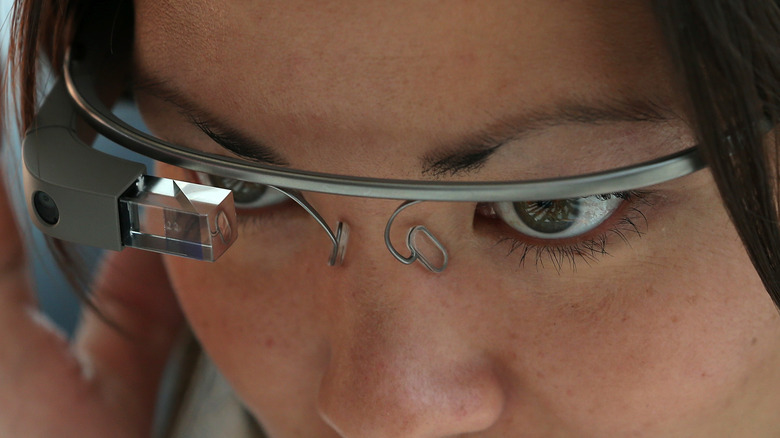
The technology landscape has become so competitive that companies often feel the need to push the envelope on innovation. This can lead to overextension into products that are believed to be revolutionary pieces of technology that eventually fail to break into the mainstream. The Google Glass stands out as a clear embodiment of this phenomenon. Larry Page oversaw the failed release of Google Glass, which was supposed to marry the capability of a computer with the functionality of glasses. With an ability to scour the worldwide web, record at a moment's notice, and project a map onto the real world, the Google Glass seemed like a promising product. Shortly after the Google Glass's debut, Larry Page pulled the product back into the research and design phase.
Forbes suggests that the initial failure came from poor marketing and purchasing friction. In short, Google didn't do a good job of telling people what it was or how they could buy it. Eventually, Google Glass was discontinued entirely. While the futuristic tech's short-term issues were attributed to communication challenges, its long-term failure was associated with more foundational issues. The $1,500 price tag proved too punitive for the average consumer, preventing the Glass from becoming a mainstay among the public. Furthermore, there were privacy concerns surrounding the ability for people to record without others knowing.
Jerry Yang's rejected acquisition of Facebook and Google
Most of the embarrassing money mistakes billionaires make involve proactive investments that have gone awry. However, business history is also chock full of missed opportunities. Perhaps no billionaire has famously passed up so many propitious chances as Jerry Yang, the founder of Yahoo. Famously, the groundbreaking search engine had an opportunity to acquire Google, a hitherto unknown name in the web space, for only $1 million in 1998. As fate would have it, Yang got another shot at purchasing the rising competitor in 2002 for a hefty $5 billion. This would have been a relatively minor investment for a company that was worth $125 billion at its peak. Instead of passing altogether, Yahoo made a dismissive $3 billion offer.
Eventually, Yahoo's once-dominant stranglehold on the search engine space was toppled by Google. Now, Yang's company only accounts for 1.39% of traffic, while Google dominates at 90.01%, according to StatCounter. Similar to Yang, many investors wonder how much money they would have if they invested in Google 10 years ago. Yahoo's misfortune with Google is the most commonly told tragedy in the company's legacy, but it's certainly not the only missed opportunity. Yang offered Mark Zuckerberg $1 billion for his fast-rising social media company. Rumor has it that a mere 10% boost in the purchase price would have secured the deal. Netflix was another major slip-up. In 2013, Yahoo opted to purchase a now-struggling Tumblr instead of spending more on Netflix. On the flipside, Yang even missed auspicious chances to sell his company. Microsoft would have taken the company off his hands for a sizable $46 billion. Assuming more future growth, the company rejected the offer only to sell for $4.8 billion eight years later.
Henry Ford II's blunder in releasing the Edsel model
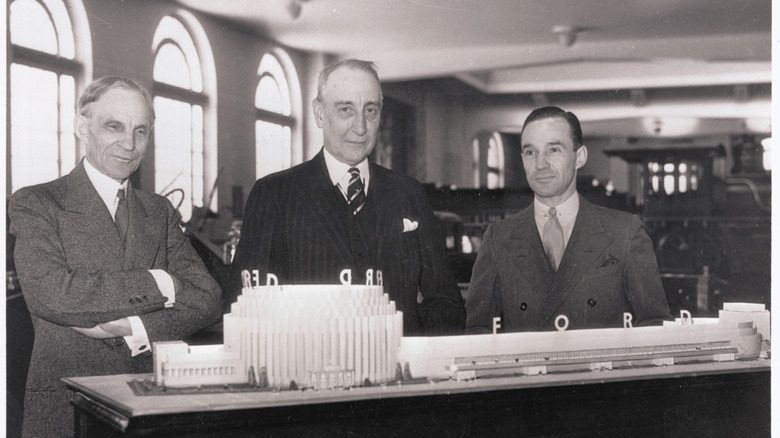
The Ford brand has been associated with some of the most expensive recalls in history, but the automotive manufacturer's list of business blunders dates far back in history. Ironically, the public only knows about a marque's popular models because those with low demand don't get much exposure and eventually become defunct. However, some duds are so infamous that they stick with a car brand for decades. For the Ford Motor Company, the Edsel is a legendary mistake. Not content with a single model, Henry Ford bet large on an entirely new division which would produce 18 different vehicles.
TIME reports that the automaker poured $250 million into the design, planning, and development of this new-fangled model, which was named after the owner's son. Keep in mind this was back in 1957, so that investment equates to just shy of $3 billion, according to inflation adjustments by Dollar Times. The projected sales figures required for financial success were higher than all other estimates for contemporary vehicles. Despite all the fanfare and promotions, the Edsel failed to meet the moment. The vehicle never gained traction with the public. Edsel's overwhelming flop was caused by Ford's failure to meet high expectations set by an extensive marketing campaign, the futuristic design, which led to parody, and various features that didn't connect with the real needs of drivers.