

The Unexpected Cost Of Bananas In The 1970s Vs. Today
The 1970s were perhaps the most inflationary decade of American history. Prices were consistently climbing, and it seemed like Americans had to pay a premium for everything from gas to groceries. Many household essentials cost pennies in the '70s, but those pennies went a lot further back then.
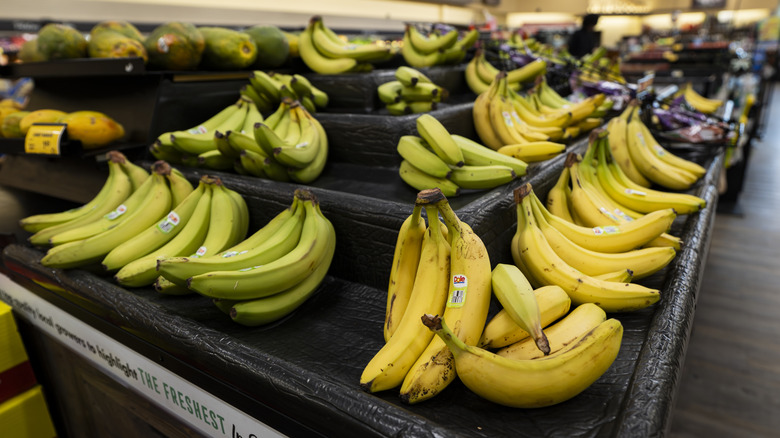
At first glance, bananas from the '70s look absurdly cheap by modern standards. The Bureau of Labor Statistics (BLS) reports bananas cost about 23.2 cents per pound in 1975. Therefore, if a medium bunch of bananas weighed two pounds and you paid for it with two quarters, you'd probably walk away with change. However, if you adjust 23 cents in 1975 for inflation, the BLS's CPI Inflation Calculator estimates that the same pound of bananas cost roughly the equivalent of $1.41 in February 2026 dollars. That means a two-pound bunch would sell for nearly $3 by today's standards.
To put those prices into perspective, the average price for bananas was about 65 cents per pound in February 2026, according to the Federal Reserve Bank of St. Louis. So, while it may look as if bananas now cost around six times more than they did in 1975, they're actually over 50% cheaper when accounting for inflation. Despite tumultuous grocery prices and growing concern for the cost of living, the price of this rich and nutritious food has remained so affordable in recent years that bananas are among the groceries you can buy in Costco for less than $5.
Bananas aren't the only grocery that held the line on price
Apart from bananas, a handful of other staple foods also managed to stay relatively affordable over the past several decades. Eggs, chicken, and tomatoes are good examples of grocery products that stayed relatively cheap even as other grocery costs climbed. A United States Department of Agriculture (USDA) report showed that from 1980 to 2006, inflation-adjusted prices for bananas, Red Delicious apples, iceberg lettuce, and dry beans also fell by between 0.8% and 1.6% per year, while the prices of other produce declined over shorter windows.
While these inflation-adjusted cost reductions from the 1970s and 1980s may just be a testament to how disruptive the Great Inflation was, there's evidence to suggest that some foods genuinely became cheaper simply because agriculture and food distribution got more efficient over time. For example, one USDA report found that, while the costs of living and agricultural production rose at similar rates throughout the latter half of the 20th century, the price of farmed produce largely flattened after the 1970s.
Still, you should not take this to mean that every grocery item got cheaper. The USDA has also found that some foods moved in the opposite direction, with bread serving as one example of a staple that became more expensive in the decades surrounding the turn of the millenium. So, while bananas and some other products may technically be cheaper than they were 50 years ago, it's still not a bad idea to embrace grocery shopping strategies that can save you money.