

How Long It Will Take For Gold To Hit $8,000
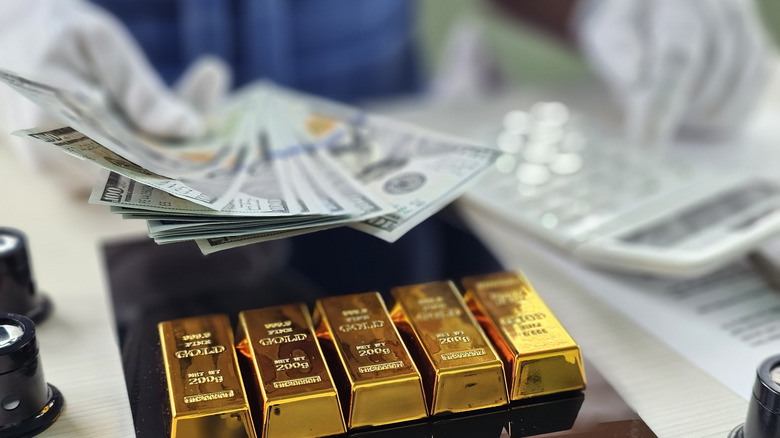
Gold, the historically stable 'safe haven' investment, has instead been on a roller coaster in early 2026. Price volatility, fueled in large part by investors seeking 'safe' investments in a time of increasing economic uncertainty, has pushed gold (and silver) prices to record breaking heights. In fact, gold hit a record high of $5,589.38 per ounce in late January 2026, before the U.S. and Israeli attacks on Iran caused a sharp decline in prices in March.
While volatility is likely to continue in some form or another throughout 2026, investors may be wondering if gold's overall upward trend will continue long term. Even more so, will this increase hit the $8,000 level -– and if so, when? We spoke exclusively with Bill Stack, a Certified Financial Fiduciary, RICP, and the agent/owner of Stack Financial Services, about the future of gold prices. In keeping with a 2024 report he wrote for United States Gold Bureau, Stack explained that gold is likely to hit $8,000 per ounce in the next few years. He told us, "I believe we will likely see $8,000 (or above) by 2028-29." With that said, there can be a lot to understand about how gold price predictions are calculated, and why some estimates show gold hitting the $8,000 mark sooner, or even later, than Stack's prediction.
How the gold market got to where it is in 2026
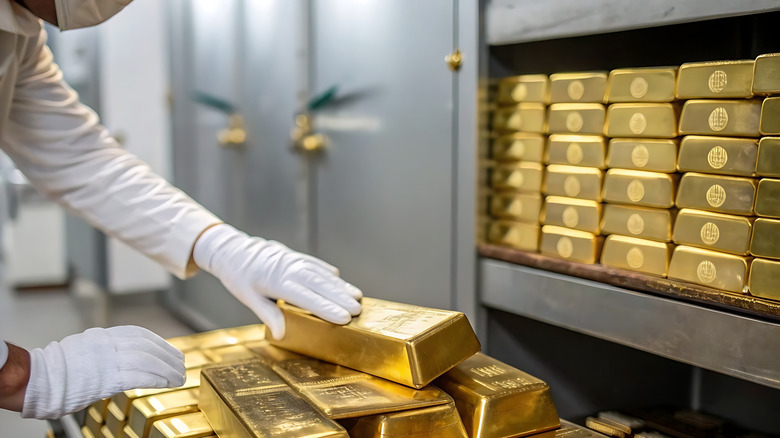
There can be a lot to understand about what actually controls the price of gold, and how the gold market reached where it is today. As Bill Stack explained to us, "When we look at how gold historically has performed over a 20-50 year time span, the long-term average has been about 8% per year." This also means that gold largely outpaces inflation, which is just one of many reasons that investors like to use it as a way to protect their portfolios. Not to mention how useful it can be as something to sell during a recession.
However, as investors likely know, and as Stack explained to us, gold was instead averaging around 2% in returns per year -– or sometimes even less -– during the roughly 2012 to 2023 timeframe. With that in mind, Stack told us, "In order just to get back to a long-term average of 8% for 20 years, this means gold would need to average 14% per year for the next decade." However, the industry has instead ballooned in an unexpected way, "Since 2024, gold has performed even better – 41% per year as of March 2026."
If you're wondering why gold has suddenly rallied in such an extreme way, Stack told us, "This is due in part to stagflationary conditions developing we haven't seen since the 1970's and 80's." As prices continue to increase across the board thanks to inflation, and the economy continues to show weak growth, the stage is set for gold to only continue increasing in value.
Understanding why gold predictions are so varied
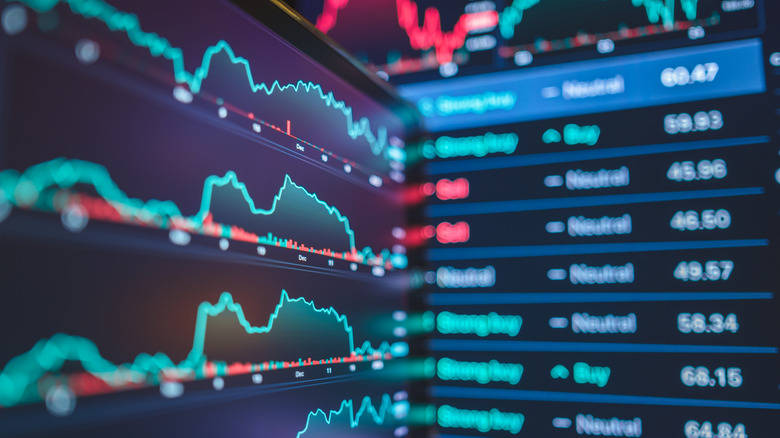
Perhaps the most important takeaway from any gold price predictions is to take them with a grain of salt. As Bill Stack explained to us, "It is nearly impossible to predict exact prices or precise dates when gold might hit a certain price, so it is normal to have variations in estimates."
Stack also offered a word of warning to those who might be keeping a close eye on published gold projections and estimates. He explained that, "it can be useful to consider the source of the projection. The estimate of an independent analyst might be less conflicted than the estimate(s) of an analyst provided for a company with a vested interest in higher gold prices." Companies dealing in gold securities could have a financial interest in ensuring gold projections are more inflated than economic conditions might warrant as a way to ensure clients continue making gold purchases. As Stack puts it, "In other words, their future employment might be directly tied to their current estimates of future gold prices."
For anyone looking to instead keep their own eye on the price of gold, or even run their own predictions, Stack recommends that you "consider the gold/silver ratio, or gold/DOW ratio, to see how gold prices are behaving relative to silver prices or the stock market – to help determine if gold prices are likely to increase or decrease in the short-medium term."