

12 Top-Selling SUVs That Are Perfect For A Retiree
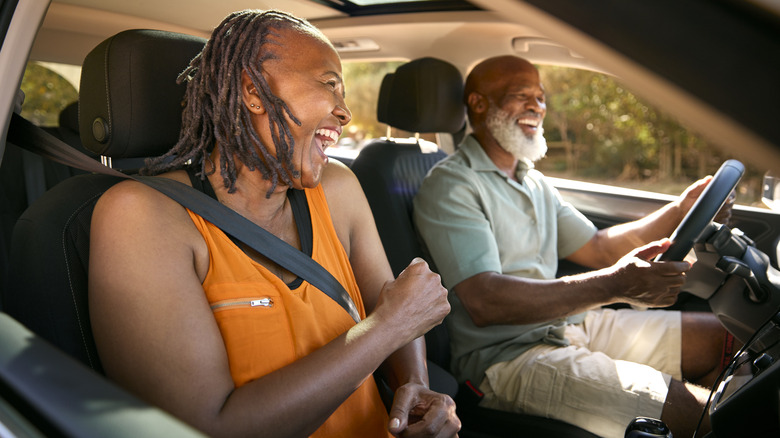
If you've already entered retirement or feel it fast approaching, you may be considering some major lifestyle changes. One of the decisions you'll have to make for this new chapter in your life concerns your automobile. While an SUV can be a great fit for many retirement lifestyles, you'll want to ensure you pick one that matches your present situation, not your old life.
So, what makes the ideal retirement vehicle? Circumstances differ, but there are some likely commonalities that retirees shopping for an SUV might share. For example, most retirees like the idea of saving money. After all, you don't want to be stuck with one of those cars that will drain your retirement savings. Instead, we looked for SUVs that have excellent fuel economy and solid reliability histories. We also opted to keep higher-end luxury models off this list, as they tend to have higher MSRPs than other options and can often be more expensive to insure. Not only are their upfront costs prohibitive for the vast majority of people, but their maintenance is also generally more expensive.
In addition to saving money, comfort is also a priority for many drivers — and seniors in particular. This list includes vehicles noted for their comfortable interiors and designs that work well for passengers with reduced mobility. We also spotlight safety, including crash test results and safety features that could save seniors money on car insurance.
Subaru Crosstrek
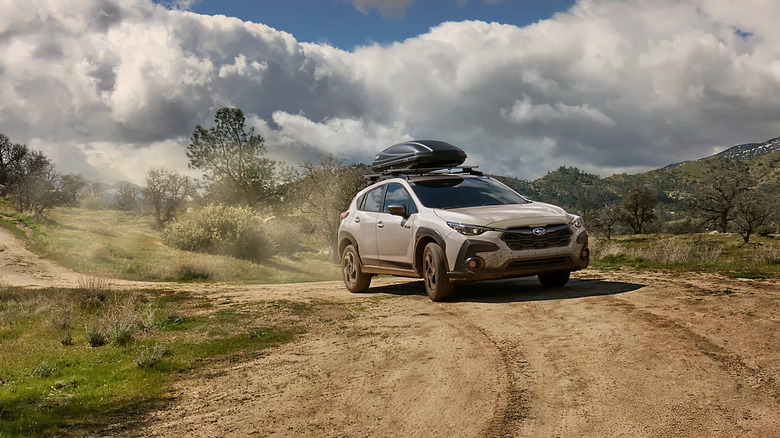
The Subaru Crosstrek offers the comfortable seating many people crave and goes above and beyond in terms of safety. According to a study published in a 2025 issue of Innovation in Aging, the estimated annual number of injuries related to entering and exiting a vehicle is more than 217,000. Adults 65 and older accounted for over 28% of those accidents. So, many older persons may prefer vehicles specifically designed to simplify their entries and exits. One of the keys to a positive driving experience is seat height, as both low seating and extremely high seating can present problems for those with mobility issues. This concern makes the Crosstrek's lifted chassis especially appealing to older drivers for this reason.
Subaru also enhances the safety of its vehicles with features it refers to collectively as Eyesight Driver Assist Technology. One of its abilities is to keep you centered in your lane even when the road curves. Its adaptive cruise control not only regulates your speed, but also maintains a safe distance from cars ahead of you on the road. Also available on higher trims is Subaru's DriveFocus Distraction Mitigation System, which features a camera system that analyzes the driver's head and eye movements for signs of drowsiness or distraction.
Honda HR-V
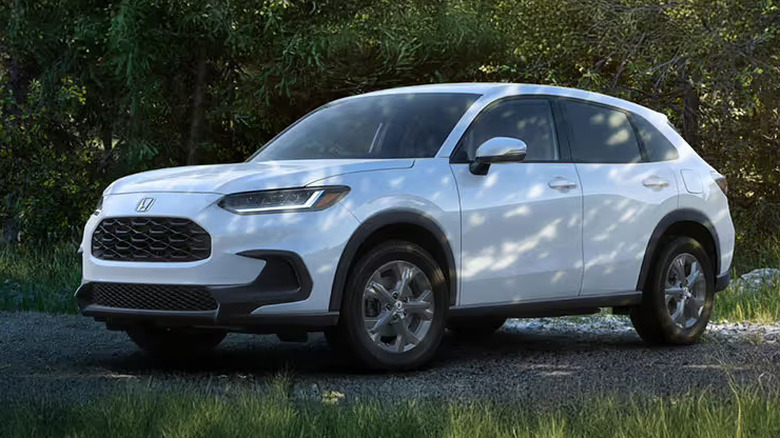
When they reach retirement age, many seniors may not need as much cargo space as their working lifestyle demanded. If you're no longer driving around young children or hauling equipment for work, a wider selection of options could suit your needs. But those still looking for a subcompact SUV with plenty of room may be pleasantly surprised by the storage capacity in a Honda HR-V. The Honda HR-V provides more cargo space than you would expect in an SUV this small, and its rear storage area is laid out in a convenient way that accommodates loads of many shapes and sizes. That sounds perfect for golf clubs, pickleball rackets, or gear for your next road trip.
HR-V owners at Kelly Blue Book (KBB) loved the vehicle's reliability, giving it 4.3 stars out of a possible 5. Overall, owners expressed confidence in the HR-V to serve them well. One person was even willing to give up their 400-horsepower Mustang in favor of the Honda.
Additionally, opting for an HR-V has the potential to save you money over the years. For example, CarEdge estimates that, during the first 10 years of ownership, an HR-V will rack up maintenance and repair costs around $687 lower than the average expense associated with competing vehicles in the SUV sector.
Ford Bronco Sport
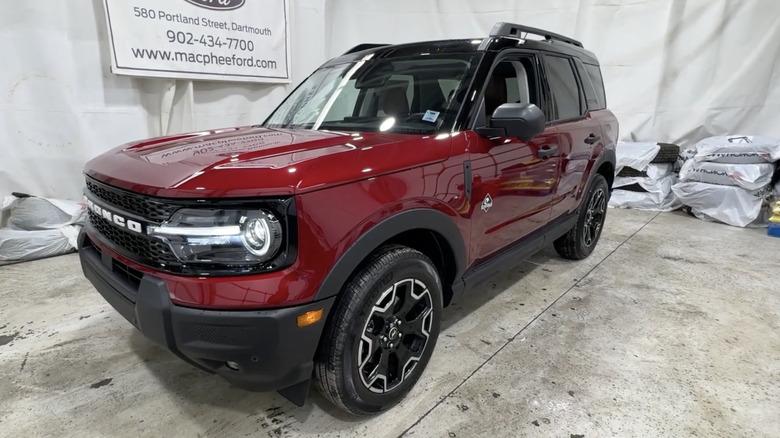
Do you enjoy taking backroads through demanding wooded or rocky areas? Maybe your favorite pastime requires a strong vehicle that's capable of getting you over tough terrain and back home safely. If your retirement lifestyle calls for genuine off-road ability and you don't want a monster-size truck, the Ford Bronco Sport may be your answer. It packs the best of the full-size Bronco into a more manageable vehicle. But the Bronco Sport isn't just for off-road use: Reviewers have celebrated its unibody construction and suspension for providing a smooth driving experience even on more laid-back streets.
The Bronco's ruggedness in the wild and its gentleness on the road are well matched by its safety features. The National Highway Traffic Safety Administration (NHTSA) awarded the Bronco Sport five out of five stars for overall safety. The vehicle garnered perfect scores for frontal and side crashes while receiving four stars for its high resistance to rollovers in single-vehicle accidents. The Bronco Sport also meets the NHTSA's standard recommendations for safety technology, which include warnings for both forward collisions and brake departures. It also includes emergency automated braking that helps drivers avoid collisions and supplies additional braking power if the driver's input is insufficient to stop the vehicle.
Toyota RAV4
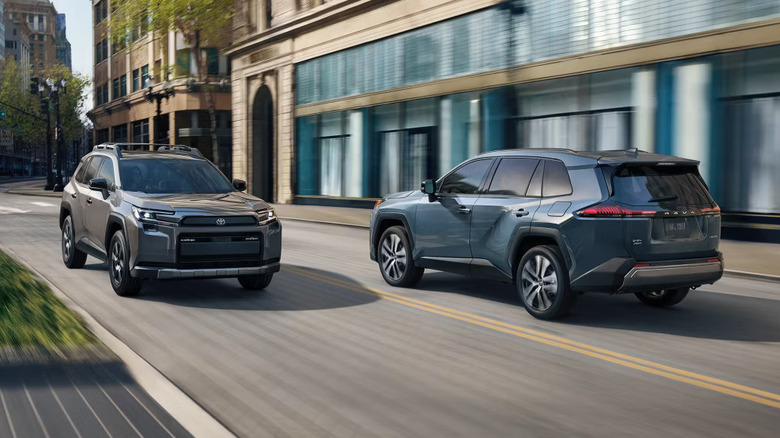
The Toyota RAV4 is a ubiquitous sight on the highway and backcountry roads. One of the reasons is the Toyota brand, which manages to merge economy with comfort that appeals to drivers of all ages. The RAV4 offers plenty of room for both front and backseat passengers, while also providing generous cargo space. Car and Driver's testers could store 10 carry-on pieces of luggage inside the vehicle with the rear seats up and 24 when they were folded down.
Toyota protects the RAV4 with the type of warranties you would expect to see for one of the best-selling and reliable cars on the market. The 2026 model's hybrid battery is protected for 10 years or 150,000 miles, while the powertrain receives coverage for five years or 60,000 miles. There's also a limited warranty for three years or 36,000 miles. Additionally, Toyota also tosses in complimentary scheduled maintenance for up to two years or 25,000 miles.
The manufacturer's suggested retail price (MSRP) of a 2026 base-model RAV4 is $31,900, and Toyota provides a wide range of trims to suit every driver's taste and circumstance. However, the most costly trim still keeps the price well below $50,000. Features that might entice you to pay more than the entry-level price include heated seats, 18-inch wheels, and a plug-in hybrid variant that accepts fast charging.
Honda CR-V
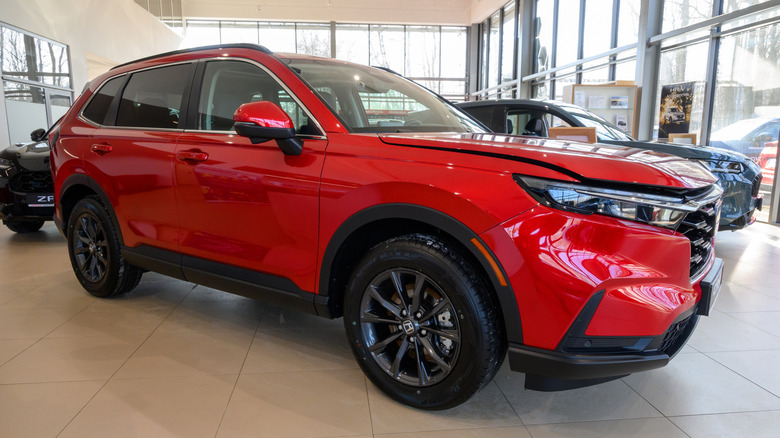
Honda is another car manufacturer that understands that people — and especially seniors — have trouble stepping up into vehicles that are high off the ground, and the height of the CR-V could be just right for those who have trouble getting in and out of most cars. As an added bonus in the space category, a taller passenger can ride comfortably even in the back seats thanks to their 41 inches of legroom in the 2026 model year. This model also has large rear doors to help simplify access for passengers and cargo. Behind the rear seat is an additional 39.3 cubic feet of cargo room. Fold the seat down, and the storage space expands to 76.5 cubic feet.
The 2026 CR-V scored top honors in federal safety testing. Honda routinely provides a comprehensive group of electronic safety features like automatic emergency braking across all the CR-V's trims. However, an upgrade will get you alerts for blind spots and rear cross traffic. The base model is the 2026 CR-V LX, which features a competitive starting MSRP of $30,920. A mid-tier EX will run drivers $33,150, while a top-of-the-line Sport Touring Hybrid starts at $42,550 new. At these prices, it's no surprise the CR-V is known as one of the best cars you can buy whether you're retired or not.
Chevrolet Equinox
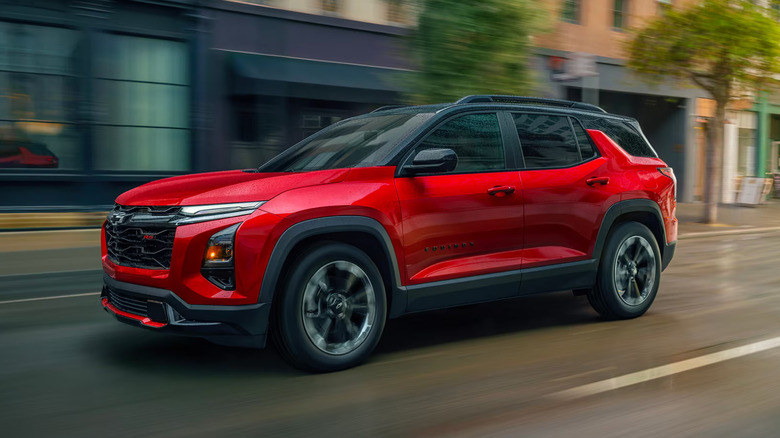
The 2026 Equinox offers a full range of safety assist features, heated front seats, and excellent fuel economy for a starting price of around $30,000. That's near the bottom of what you'd expect to pay for a small SUV, but KBB suggests discerning buyers can probably save even more: The website predicts a base-model Equinox LT could sell for around $28,100. If you upgrade to the RS or ACTIV trims, it's doubtful you'll need to shell out much more than $32,000.
Seniors that have trouble operating the modern digital switches on many cars may also be relieved to hear that KBB and other reviewers have praised the Equinox's intuitive electronic controls as one of the highlights of recent year models. The driver has an 11-inch instrument panel and an 11.3-inch screen for the infotainment system with controls conveniently positioned for easier operation.
Even better, Chevrolet doesn't make you pay extra for comfort. For example, even the entry-level Equinox model includes heated seats and a heated steering wheel. Along with the comfort comes a long list of safety features, including emergency braking and lane assist. If bad weather is a common occurrence where you live and you need the extra assurance that comes with all-wheel drive, you can also purchase that as an add-on to any trim level you choose.
Hyundai Tucson
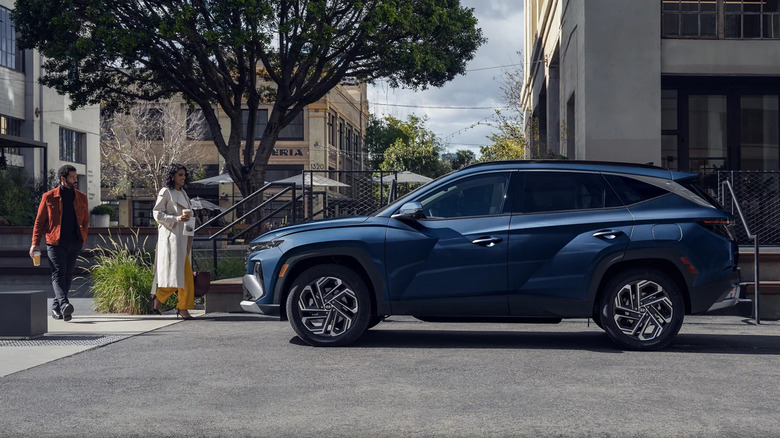
Whether you opt for a model with a combustion engine or hybrid powertrain, there are plenty of factors that make the Hyundai Tucson a solid value for retirees. With combined gas mileage ranging from 26 miles per gallon on base trims to around 36 for hybrid variants, the Tucson will glide to your destination while saving you cash at the pump.
According to Edmunds' gas mileage calculator, the monthly cost of driving the SE version of the Tucson with its 2.5-liter 4-cylinder engine would be $227 in the Los Angeles, California, area, compared to $276 for the average SUV. The determination is based on driving 15,000 miles annually with a majority of those miles spent on city streets. Using the same basic conditions, but changing the location, you would spend an estimated $154 in Chicago, Illinois, where the average SUV would cost $209 to drive the same amount. In Richmond, Virginia, the cost would drop to $144, over $50 less than what you'd spend driving a competing SUV.
Saving money on fuel doesn't mean that you have to sacrifice comfort, either. The interior design has been widely praised for feeling more luxurious than you'd expect for the price range. The highest trim level, the Limited, even adds a heated steering wheel to go along with its heated front and rear leather seats.
Nissan Rogue
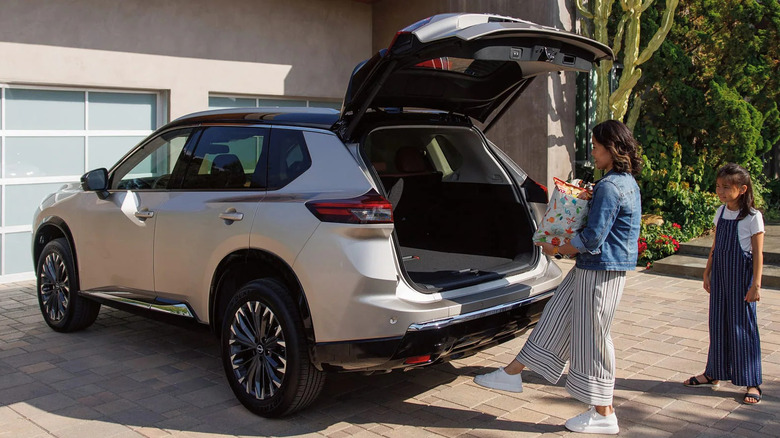
Compact SUVs don't have to be claustrophobic. The Nissan Rogue has more interior space than the larger mid-size Nissan Murano. It provides drivers 36 cubic feet of storage space behind the rear seating when the back seats are in the upright position. Fold them down, and you'll have 74 cubic feet available for luggage, recreational equipment, and other goods. Nissan also makes it easy to store and later retrieve whatever you need thanks to the fact that the Rogue's rear doors open almost a full 90 degrees. If you or someone you're traveling with needs a little extra assistance exiting or entering the vehicle, this feature could be especially advantageous. Meanwhile, the Rogue's hands-free powered liftgate makes it even easier to access your groceries, luggage, or equipment.
Retirees looking for an especially cushy ride may also find the Rogue's seating is more comfortable than what you'll find in much of its competition. Nissan incorporates technology based on NASA research into its Zero Gravity seats, which are specifically designed to keep drivers and their passengers in a comfortable and ergonomic position while they're on the road.
Subaru Forester and Forester Hybrid
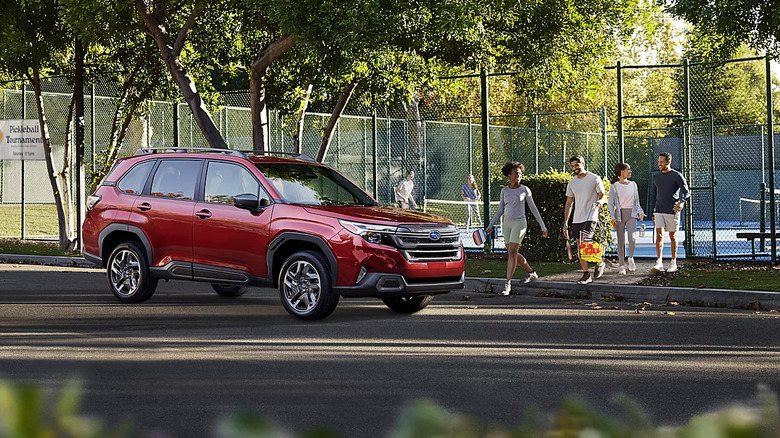
Consumer Reports (CR) names the Subaru Forester one of its top choices for a compact SUV out of 28 current models, and the hybrid variant has plenty to offer drivers without compromising on the size of the cargo hold. So, if you want to maximize your vehicle's fuel efficiency without downsizing too heavily, this rugged ride could be a great option for you.
Reviewers praise the Forester's outstanding visibility from both the driver and passenger seats. However, the cabin still provides comfortable headroom to all but the tallest drivers. More recent Forester year models have also been celebrated for providing a quiet ride in the cabin thanks to additional noise-reducing efforts from the manufacturer. This may also be another solid option for retirees who are tired of the overly modern controls present in many new vehicles: Subaru still offers manual audio system control knobs for tuning into radio stations and adjusting the volume.
The Forester is also one of the cheapest cars to insure, which is no surprise given Subaru's longstanding reputation for making safe automobiles. Both the hybrid and combustion-powered 2026 Foresters have no difficulty achieving the NHTSA's highest overall safety rankings, so seniors behind the wheel of either of these models can be at ease on the road.
Kia Sportage
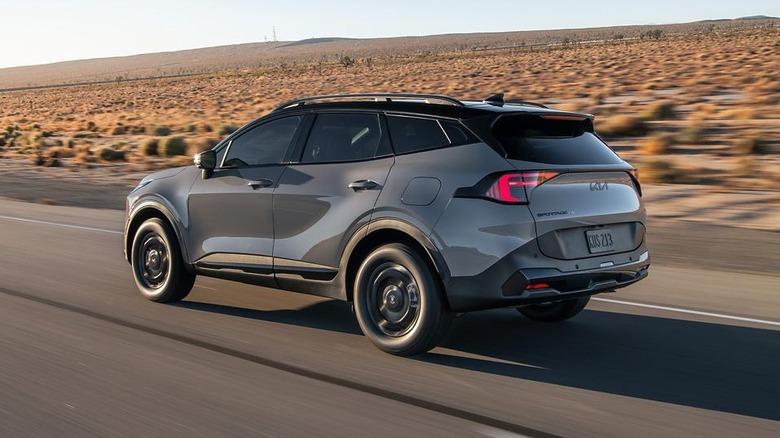
One of the most attractive aspects of the Kia Sportage is how customizable it is. If your retirement years will mainly be made up of short drives, even the base-trim Kia Sportage may make trips to the gas pumps few and far between with an EPA-estimated 28 miles per gallon combined fuel efficiency. However, those taking longer trips may want to opt for a hybrid option which could push your gas mileage up to 42 miles per gallon for combined driving. Additionally, retirees looking for some extra traction in areas where the weather or terrain might demand it can also opt for a trim with all-wheel drive.
With such a wide variety of trims and options for personalization, it's no surprise that the Sportage was Kia's top-selling model in 2025. However, it's essential to know exactly what you're looking for before pulling the trigger on a specific variant. For example, the all-wheel-drive hybrid's gas mileage goes down to just 35 miles per gallon in combined driving, so what you gain in traction may cost you at the pump. Additionally, the 2026 Sportage Hybrid's towing capacity is 500 pounds lower than the gas-powered model. So, retirees hoping to move around a lot may have to weigh versatility against fuel efficiency. Luckily, the Sportage doesn't lose much cargo space or rear legroom to accommodate a hybrid engine setup: Testers at Car and Driver report fitting 11 carry-on pieces of luggage in the cargo area with the rear seat upright and 26 with the seat folded down.
Ford Escape
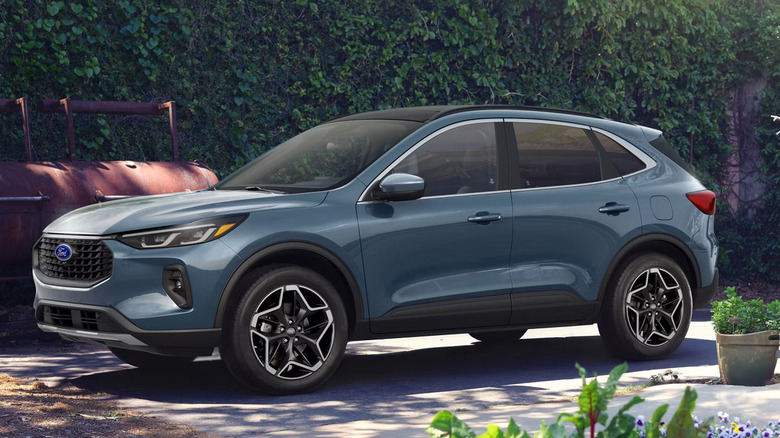
Ford continues to be one of customers' favorite car brands according to Consumer Reports, and the Escape certainly helps illustrate why that's the case. It achieves terrific gas mileage, has comfortable seating, and a solid reputation for safety. A combustion-engine-powered 2026 Escape with front-wheel drive has an EPA-estimated fuel efficiency of 30 miles per gallon in combined city and highway driving, while the plug-in hybrid version boasts 40 miles per gallon in combined driving and a staggering 101 miles per gallon on a full charge.
The MSRP of an entry-level 2026 Escape is comparable to the competition at $30,350. Upgraded trim levels can take the price to $38,935. If you want to ensure extra comfortable front seating, consider the Platinum edition, which includes a 10-way adjustable driver seat and a six-way adjustable passenger seat. There are also additional safety features available at the Platinum level, including parking sensors and a surround-view camera setup.
Regardless of the trim package you choose, you can rest easy riding in an Escape. It's built on the same platform as the Ford Bronco Sport, and fared just as well as its cousin in federal safety tests. The NHTSA awarded the Escape five stars in overall safety after it received five stars in both the frontal and side crash tests. It also garnered four stars for its resistance to rollovers in single-car accidents.
Mazda CX-5
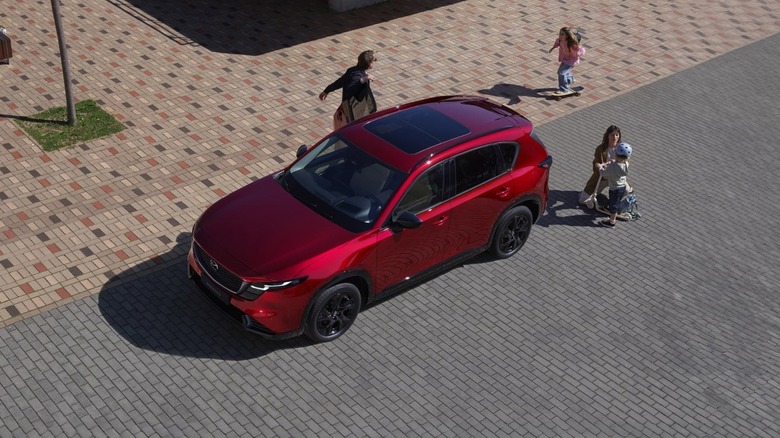
If you considered previous editions of the Mazda CX-5 too small for your needs, you might want to take a second look: The 2026 version of the CX-5 has expanded in pretty much every way possible. Passengers have more legroom, making the SUV a potential solution for taller family members or seniors looking for that little bit of extra comfort as they travel. Passengers in the front row now have 41.7 inches of legroom, which is one of the more generous accommodations in the subcompact category. Even back-row passengers now have a spacious 39.9 inches that accommodates taller riders with ease.
Lots of legroom is great, but some vehicles can still be a challenge for passengers to enter and exit. Fortunately, Mazda tackled this issue by increasing the door sizes in the latest model. The interior space is also accommodating to a large array of lifestyles, as the cargo area is considerably larger than previous model years. Starting at less than $30,000 for the base model, this is a competitively priced compact SUV with a wide selection of trims that all feature all-wheel drive as a standard perk.