

The Unexpected Cost Of Butter In The 1970s Compared To Today

Based on the Census Bureau's report that the U.S. had about 340.1 million residents in 2024 and the U.S. Department of Agriculture's (USDA) estimate that the average American consumed 6.8 pounds of butter that same year, Americans ate around 2.31 billion pounds of butter in 365 days. While that's not quite as much milk or cheese as the population consumed in the same timeframe, it's still a considerable increase from half a century ago. Throughout the late 1970s, the average American consistently ate less than 5 pounds of butter per year. But while consumers may have eaten less of the popular dairy product, they technically paid a lot more for it.
The Bureau of Labor Statistics (BLS) reports that butter was among the groceries that cost pennies in the 1970s, selling for an average of $1.03 per pound in 1975. Meanwhile, as of February 2026, the Federal Reserve of St. Louis reports the same amount sells for an average of $4.31. However, adjusting for inflation, butter is actually cheaper in 2026 than it was in the 1970s. According to the BLS Consumer Price Index Inflation Calculator, $1.03 in February 1975 equals about $6.41 in February 2026. In other words, the 2026 retail price of butter is actually about 33% lower than it was 51 years earlier.
How is butter cheaper now than it was in the '70s?
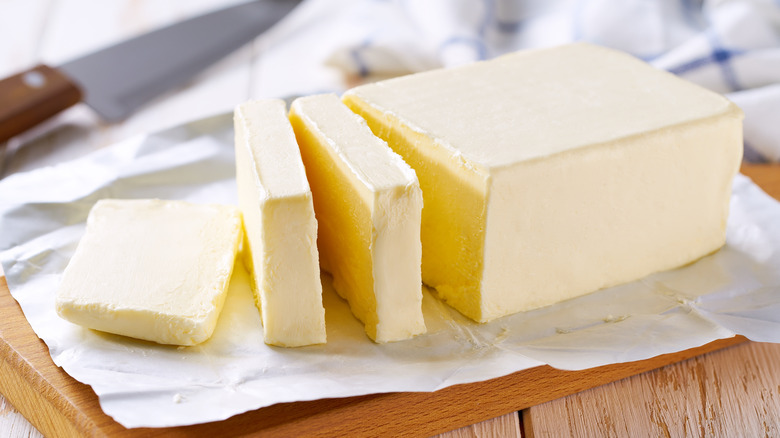
Many believe life in the 20th century was marked by living essentials with considerably lower prices than they have today. While that's true in some respects, the 1970s were a period of sustained inflation and agricultural issues. You may recall how egg prices skyrocketed in 2025. Well, the 1970s saw similarly high egg prices as well — and it wasn't even caused by disease: The decade of disco simply occurred against the backdrop of the Great Inflation.
According to Federal Reserve History, this period stretched from 1965 to 1982 and was plagued with recessions, energy crises, and huge inflation due to post-war demand and limited supply. At the same time, the Soviet Union's poor harvest in the early 1970s put a heavy burden on U.S. grain, which also experienced shortages from drought. All of this led to higher U.S. food prices and, ultimately, higher butter costs.
As of 2026, inflation has somewhat eased since the mid-1980s and American dairy has become more productive: The USDA projects 2026 milk production to reach 234.5 billion pounds — up from 231.5 billion in 2025 — largely because of a higher milk output rate by cows. According to the USDA data, 53% of butter's price in 2023 was directly determined by how much manufacturers paid farmers for the milk-derived skim and fat used to make it. That suggests butter prices still closely track the cost of raw dairy. This milk availability also explains why Costco butter has stayed high quality and cheap.