

Iran War Triggers Oil Supply Crisis And Trump Isn't Hiding His Feelings
The U.S. and Israel's recent attacks on Iran have led to uncertainty, fear, and even anger across the political spectrum. However, one of the most concrete consequences of the conflict so far has centered on the price of oil. In the days following the initial February 28, 2026 attacks, the price of oil reached — and far surpassed — heights not seen since 2024. From March 6 to March 9, the price per barrel shot up roughly $25 – peaking around $120. There are several forces driving this price increase, not the least of which is that Iranian oil depots have been specifically targeted in recent attacks. Meanwhile, Iranian officials have effectively blocked the Strait of Hormuz, a popular oil distribution route. According to the U.S. Energy Information Administration's analysis of Vortexa data, this route averaged 20 million barrels per day in 2024 and 2025 – 20% of the world's consumption.
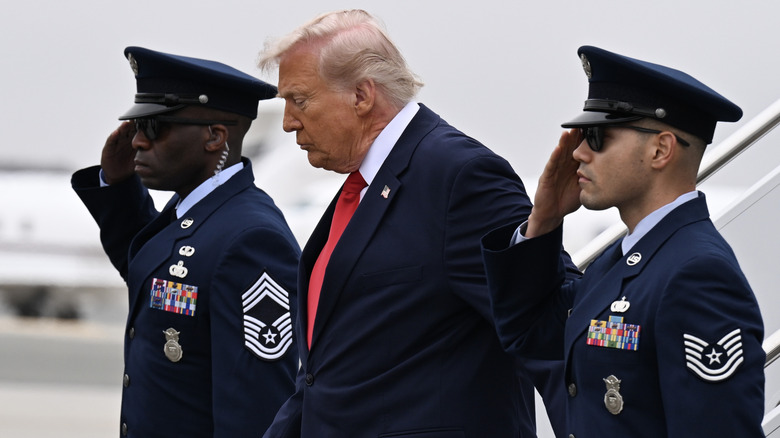
Despite the fact that Iran houses some of the world's largest and richest oil reserves, President Donald Trump has remained notably undeterred by the potential consequences of all-out war. Instead, Trump addressed the oil situation on Truth Social, writing, "Short term oil prices, which will drop rapidly when the destruction of the Iran nuclear threat is over, is a very small price to pay for U.S.A., and World, Safety and Peace. Only fools would think differently." With that said, Trump's decisions in the coming days could be the deciding factor as to whether oil price increases are, in fact, temporary or not.
How U.S. consumers will be impacted by rising oil prices
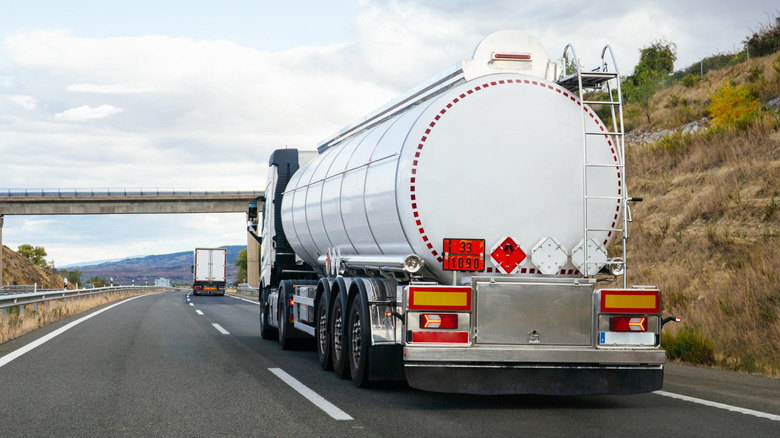
Despite that fact that many U.S. politicians have urged Trump to tap into domestic petroleum reserves to help stay market shifts, as of March 9, Trump has yet to act on this suggestion. In the meantime, American consumers are likely to wind up footing the bill. AAA reports that the average price of a gallon of gas has already shot up nearly 50 cents since mid-February 2026. As oil distribution, and production, continues to slow, prices will likely continue to rise. This only adds to the financial burden of consumers who also continue to shoulder the cost of tariffs.
In fact, some analysts believe that Iran is actively leveraging its oil production industry as a way to weaken U.S. consumers. As senior Brookings Institution fellow, Robin J. Brooks, wrote on his Substack, "The Iranian regime is battling for its survival. Since it has no hope of matching the U.S. and Israel militarily, its only play is to spike oil prices as much as possible, in the hope that popular sentiment in the U.S. turns against this war."
Of course, the oil industry is just one area being impacted by the war with Iran. Banks like JPMorgan have already warned investment clients about the conflict, and are predicting broader market shifts to come. Not to mention, seven American soldiers have died in action so far — with the potential for many more should the conflict continue.