

Fact Check: Will Trump Actually Cut Taxes For Social Security In 2026?
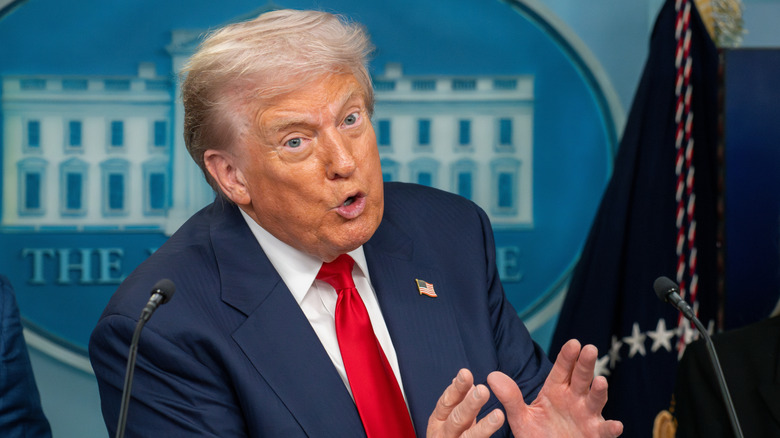
Despite promises that he would eliminate federal income taxes on Social Security benefits, President Trump has not successfully made this claim a reality. While certain states are making pushes to eliminate taxation on Social Security benefits, no such policy exists at the federal level as of March 2026. However, despite this fact, there is still a significant (if temporary) 'Senior Deduction' that seniors can enjoy this tax season.
While an outright elimination of taxation on Social Security benefits did not materialize, as planned, in Trump's One Big Beautiful Bill Act (OBBBA), the legislative package did create an extra $6,000 deduction for seniors for tax years 2025, 2026, 2027, and 2028. With that said, this deduction does have certain income-based eligibility, and is only available to taxpayers aged 65 and older. Most notably, this extra deduction begins to phase out for single filers who earned more than $75,000 – with the deduction not applicable to those who earned $175,000 or more. For married couples, the full deduction is available to those who earned less than $150,000 jointly. However, while this deduction could help seniors in the short term, bigger tax refunds in 2026 could ultimately hurt taxpayers in the future by speeding up Social Security's insolvency.
Why weren't Social Security tax cuts included in the OBBBA?
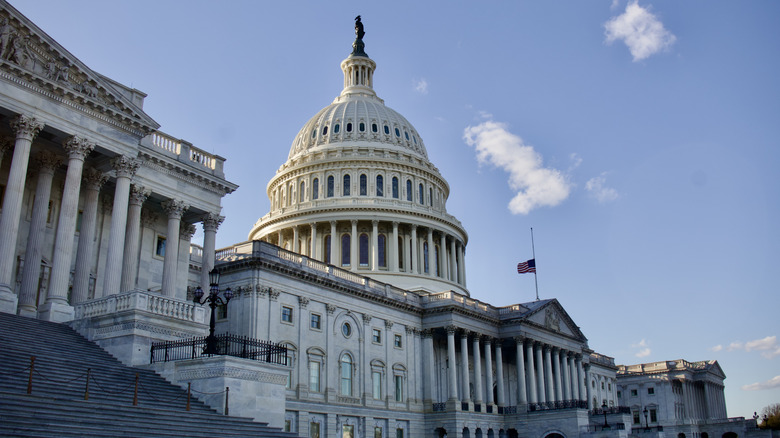
You're not mistaken in thinking that a Social Security tax exemption was originally included as part of the OBBBA. However, what prevented this specific provision from moving forward had to do with the way in which the bill was brought forward. The OBBBA was put through as a budget reconciliation, rather than as a more formal bill. This was primarily done, by Senate Republicans, as a way to ensure the legislation could bypass the 60-vote filibuster requirement that is generally required for advancing bills in the Senate –- instead requiring only a simple majority. Even then, Vice President JD Vance had to serve as the tiebreaker vote, with the OBBBA only passing 51-50 in July 2025.
As a result of this work around, the OBBBA was then subject to something known as the Byrd rule which limits what, exactly, can be included in reconciliation bills. More specifically, the Byrd rule requires that any provisions included in a reconciliation bill must be primarily budget related. In this case, making such a significant change as eliminating the taxation on Social Security benefits was considered too extraneous from the budget to be included. As a result, the provision about eliminating federal taxation on benefits was removed from the OBBBA legislative package. If Trump intends to someday make good on his promise to eliminate these taxes, he would need to work with Congress to more officially either repeal or revise the existing laws that made these benefits taxable in the first place. Until then, seniors will have to rely on the OBBBA's temporary deduction.