

What You Should Never Say When Applying For A Mortgage

Anyone who has bought a home before knows that the mortgage application process can be rife with hurdles and time-consuming steps. Even a highly qualified buyer with a credit score over 760 (or even up into the 800s) with access to the best interest rates will have to jump through at least a few hoops to prove their trustworthiness to a lender. The mortgage approval process is also one that blends automated gatekeeping processes with the personal touch of genuine human interaction. You'll need some key financial data points on your side, like a debt-to-income ratio below 36% (and a maximum of around 43%, according to Rocket Mortgage), and an income level that slots your proposed mortgage repayment in at a maximum of about 28%. These make the cold hard calculations work, but there's still the loan officer to discuss the finer points with before you get the final sign off on the funding.
The human component of the lending process doesn't have to be scary or difficult, but it's still among the sticking points that first-time buyers can easily get wrong when applying for funding. Namely, there are plenty of things you might say to a lender while sitting in the bank's office that can raise some red flags. This might end up delaying your approval or perhaps even uncover hidden issues that can get your loan denied altogether. Some of these problematic offerings are bound to be uncovered, like undisclosed credit card debts, while others raise eyebrows and bring extra scrutiny upon you and your future plans.
Asking about the foreclosure process before you've bought the house
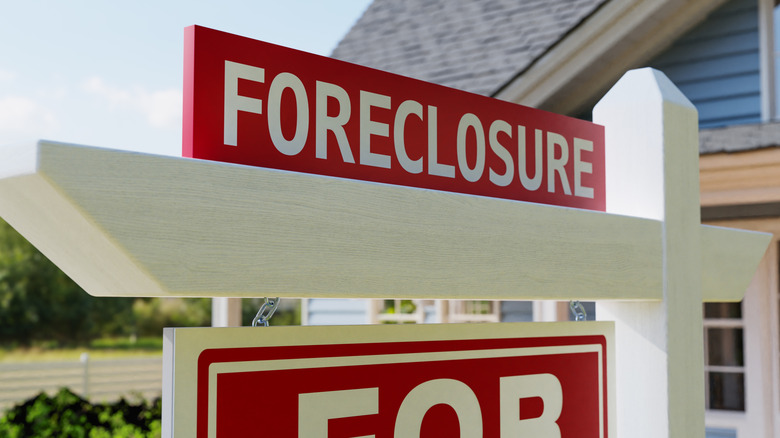
A buyer who doesn't understand how the foreclosure process works should undoubtedly acquaint themselves with this consequential outcome. It's always a good idea to understand the full spectrum of potential consequences and challenges you might face while entering unfamiliar territory. However, a healthy curiosity about this component of the real estate market is one you shouldn't share with your mortgage lender. Doing your own due diligence about how foreclosures work without involving the bank will give you the information you need to know while also protecting you from any image problems that this question can bring up. Unfortunately, bringing this up can make it seem that you might already be considering defaulting.
This is a question that can be easily explained, but you're almost certainly going to deal with some extra scrutiny by asking your lender about how they deal with nonpayment. Foreclosure processes can't officially start until you're six months behind on payment, but some banks may be more willing to work with you than others if you reach out during times of struggle. If you lose your job or find yourself dealing with a temporary illness, for instance, a short reprieve might be all that's required to get back on track. All of these answers are available online and can be asked at a later date if necessary, but leaving these out of the conversation early on in the process is usually best.
'I'm also shopping for a new car'

Making financial decisions often requires a lengthy planning process. When buying a new home, you'll want to avoid other big purchases in the months leading up to the sale. Big changes to your credit mix can indicate potential trouble in repaying the mortgage you're seeking. Therefore, it's usually a good idea to avoid things like investing in a new car in the lead up to your mortgage application. If you are in the market for a new vehicle, you should keep this intention to yourself and wait until your home purchase is finalized. Whether you're buying with finance products or trading in a vehicle and paying the rest in cash, signaling that you're planning multiple big ticket expenses in a short span of time will leave your mortgage lender wondering if you actually have the means and motivation to handle all of these obligations.
Of course, it's important to keep your monthly payment mix at a manageable level. Many buyers simply won't have the means to juggle both new debt products, and so the idea of combining a home purchase and new car shopping together should be a short-lived one. Most will be saving diligently for the down payment on their home and usually won't be able to swing both big purchases. Even so, if you are lucky enough to have this financial flexibility, purchasing the car second and keeping your plans under wraps will help speed along the mortgage approval. NPR reported in 2025 that the average new car costs roughly $50,000, while a used vehicle runs buyers around $25,000. Either purchase adds a notable monthly repayment to your budget and can drastically change your debt-to-income ratio.
Highlighting the down payment funds as a 'loan'

The median down payment for a home purchased in the United States in July 2025 was $62,000, per Bankrate. Typical buyers also save for seven years before making the leap into home ownership, according to 2025 data from Realtor.com. Arriving at the down payment price is big milestone, and numerous options are available to help you get there. For instance, banks allow buyers to use funds gifted by parents or other loved ones to support their savings or as the entirety of a down payment as long as the other financial elements of the application fit within the parameters of eligibility. However, while a parent can help you with the cash required to get a home, they can't usually lend you the money. Most banks don't want to lend out money to someone who will be taking on a secondary debt in addition to the mortgage. This is generally disqualifying, especially since many will naturally prioritize paying back their family member over a third party lender. If you've made an arrangement with a loved one to help you collect the down payment, you should not freely disclose this to the bank.
The same can be said for borrowers who don't know exactly where they are going to get all of their down payment money from. If you don't have all of this cash on hand already, staying mum about your plans to source the rest of the funds is a good idea since this may pose additional financial risk. Of course, it's also worth reconsidering your own personal readiness for this responsibility if you have to borrow these funds. If you aren't prepared for the financial responsibility, you may end up finding yourself house poor and struggling to make ends meet in the future.
Volunteering information about hardships with existing debts

If you are struggling with your current debt load, buying a home and taking on another obligation to repay a lender isn't likely the right call. Strictly speaking, you need a debt-to-income ratio below 43% (but ideally a figure in the high 20s or low 30s), and a credit score above 500 to qualify for the most inclusive types of mortgage loans on the market. Even if you qualify, living with a significant financial squeeze is only going to exacerbate the existing debt management issues you face. Moreover, with FHA loans come with other obligations that can stretch your budget even thinner. Buyers who are experiencing existing hardships should seriously consider their options before diving into a mortgage application. If you're in this boat, you should absolutely keep the struggles you're facing to yourself. The numbers outline virtually everything the bank needs to know, and so opening up to share the context of your personal feelings and mental state about these figures will only to compound the trouble.
A mortgage broker may be willing to give you a loan after looking at your financials, even with a spotty history. If you indicate that you are already struggling with this responsibility, mentally, it will only serve as a warning to the mortgage broker that you may not be ready for the additional responsibility. You don't need to be secretive about your life or budget, but you do need to keep negative feelings and financial stress to yourself in order to limit the opportunities a mortgage lender has to second guess your validity as a potential client.
'I often have overdrafts'

Overdraft charges and the use of overdraft protection even without additional fees can be a real problem for those looking to borrow money to buy a home. As is the case with many aspects of your personal finances, there's no way to hide the presence of overdraft events from your bank statements. As a result, you shouldn't lie about this feature of your history. However, actively disclosing this fact can be misconstrued as a mental framing device that brings about a negative connotation. If you're applying for an FHA loan the presence of overdrafts on your account trigger the need for an additional, manual review of the application in order gain final approval. However, you'll generally offer just a few months' worth of bank statements to your lender (although some ask for up to two years of financial documentation), and so activity prior to the cut-off isn't relevant unless you bring it up. Signaling that you have experienced this in the past can lead to additional checks even if they don't show up on the bank statements you've provided.
The way you talk about overdraft use is also critical. Asking if it will impact your application because you've experienced it is significantly different than saying something that indicates, even if accidentally, that you don't take this seriously when it occurs. Lenders want to know that you are going to use your money responsibly, and talking about overdrafts in a flippant manner sends the opposite message.
'The house needs a lot of work'

Plenty of buyers today are looking at homes in foreclosure or planning on purchasing a property previously inhabited by an older resident. Experts are split on what the future of the housing market will entail as baby boomers continue to die or move out of their homes, with the nearly $19 trillion worth of real estate owned by the generation changing hands over the next few decades. Older homes and properties that have not been well cared for often require even greater renovation focus. With the economic squeeze affecting consumers across the spectrum, targeting properties that need more work and feature discounted prices can ultimately be the only viable way to get into a home for many. The upfront savings you receive from investing in a fixer-upper ultimately create plenty of logistical hurdles for new buyers, and harping on about these needs can sometimes add to the headache.
Because every buyer will have their own vision for a home, speaking about renovation plans isn't necessarily going to sink a mortgage application, but going beyond the basics can add a wrench into the plan that you don't expect. If you continuously talk about how much work needs to go into the house with your mortgage lender, they may ultimately seek to reappraised the property, worrying the house is actually worth significantly less than expected. A drastic change to the value of the home can impact your ability to secure financing.
Disclosing plans to quit your job in the near future

Changing jobs is something that Americans do on a regular basis today. The modern worker enjoys a tenure in any one position averaging just under four years. No lender is under the impression that you'll be in your position forever, with crystallized finances that look unchanged over the duration of a mortgage's repayment term. But stability is a prized element in the application process. Mortgage lenders seek to limit their exposure to borrowers who are inviting turbulent seas into their lives. This is why banks don't tend to easily lend money to applicants who have just changed jobs. The same uncertainty exists for those who plan on leaving their current role in the near future, but only if you highlight those intentions. Even if you have a better job lined up, the uncertainty can scare a lender. This potential point of instability creates more questions than it answers, leading delays in your approval.
There's nothing stopping you from making a change in your career and workplace circumstances after you've bought a home, and this can be valuable to stabilize finances during this transition. However, unless you're asked about this directly you shouldn't volunteer any information about your plans to leave your current workplace while navigating a mortgage application. Moreover, many people with entrepreneurial aspirations may be seeking to launch their own business or expand a side hustle they're already operating. Once again, stability wins the day while seeking funding for a new home. Keeping these plans under wraps will help sell you and your financial circumstances as a safe investment for the lender, even if you have big plans for the future coming down the pike.
'Do I really need homeowner's insurance?'

If you buy a house while using a mortgage product, you will almost certainly be required to carry homeowner's insurance. There is no federal law mandating coverage when purchasing a home, but lenders overwhelmingly stipulate that borrowers maintain a current policy to protect everyone involved in the event of substantial damage to the property. There is very little, if any, wiggle room here and lenders tend to expect that you'll know this about the transaction.
Asking questions is often beneficial, but knowing your audience is just as important. Asking your lender if you really need this additional coverage can indicate that you are intending on canceling your policy or letting it lapse after the deal is finalized. As a result, questions of this nature can slow down your approval while lenders conduct due diligence in greater depth about you and your risk profile. The human interactions of a mortgage application can shed light on many of the questions you may have about the process, especially as a first-time buyer. But they can be equally instructive for a lender looking to understand you and the risk you pose, financially. Any indication that you may become problematic can be cause for extra scrutiny, delays, or even an outright dismissal of your application.
Asking to keep financial details from a cosigner or joint borrower

Trying to hide parts of your financial history from your spouse, another co-borrower, or cosigner signals an extreme willingness to cheat and deceive. This acts as an immediate red flag to a lender assessing you and your value as a prospective client. If you are willing to lie to presumably the most important people in your life then chances are you'd absolutely be willing to lie to just about anyone else. This acts as a strong indicator that you won't have a problem seeking to deceive the bank or others if it would benefit you personally. There are many reasons a person might want to hide negative financial information from loved ones, but seeking to enlist the help of a mortgage lender rather than just having a conversation about the reality of your financial circumstances indicates a larger underlying problem as well as a significant level of risk for the lender.
If you bring up a question like this, you should expect to face incredible scrutiny on your application. The chance of being denied the loan you're seeking rises immensely and the person you've asked to advance the lie may ultimately share these details with the other parties as part of the explanation for why you are being denied or must experience further investigation. Seeking to hide details often brings them to the surface, and nowhere is this more prevalent when it comes to working with third party financial professionals.
Attempting to alter financial documents to create a more favorable outcome

Altering financial documents or lying to a bank about your intended purpose is mortgage fraud. Still, many buyers engage in a simple fib, for instance, when purchasing a second home. Experian notes that real estate investment loans tend to exhibit rates between 0.25% and 0.875% higher than standard mortgages. Leveraging the property as an investment is naturally riskier than buying a home you'll maintain as your primary residence. In real terms, this small difference can amount to tens of thousands of dollars over the lifetime of a loan, and so borrowers are often incentivized to fudge the paperwork, assuming they won't get caught. Because this is such a well-known approach, banks are often on high alert to catch this sort of behavior.
There's also a difference between lies of omission and commission. You should strive not to leave anything out and to be entirely truthful with your lender, but it's reasonable to not share something that the bank doesn't ask about, for instance, plans to rent a room to a friend or family member might bring about additional questioning but isn't typically essential to disclose. Altering or hiding critical information, though, can result in your application being denied or worse, depending on the severity of your actions. Virtually everything is digital today and so the chances of succeeding in this kind of deception are almost entirely nonexistent. Your plans can change as time marches on, but you can't start a new borrowing relationship with a lender on the basis of a lie. You will be caught, and the penalties can include steep fines or even jail time.