

JPMorgan Has One Big Warning As Iran Conflict Shakes The Market

The recent military campaign against Iran by the United States and Israel has caused financial volatility in the stock market and with oil prices. Wars can affect the stock market in several ways, often causing short-term sell-offs and spurring investors to embrace assets like gold and bonds. In the days after the bombing campaign against Iran began, the markets followed the expected pattern, as U.S. stock indexes became extremely volatile.
In this unpredictable environment, JPMorgan is reportedly warning its clients to not sell off stocks if the conflict continues. Instead, it's advising clients to take advantage of lower stock prices and increase stock holdings while they're cheaper. The note, reportedly sent to clients of JPMorgan, recommended not reducing their holdings because the conflict is not expected to last long. Widespread media reports attributed the comments to JPMorgan's UK-based Head of Global and European Equity Strategy, Mislav Matejka.
Market volatility often makes it tough for investors to stick to their long-term plans, as they may panic when seeing daily losses in their investment tracking apps and account balances. Considering one of the best tips for investing in stocks as a beginner is to use a buy-and-hold strategy, however, riding out volatility is an important step to follow. JPMorgan's advice is to double down and not only hold the stocks you have, but also to purchase additional stocks during this period of lower prices during the early days of the conflict.
JPMorgan's reasoning behind a buy strategy during the conflict
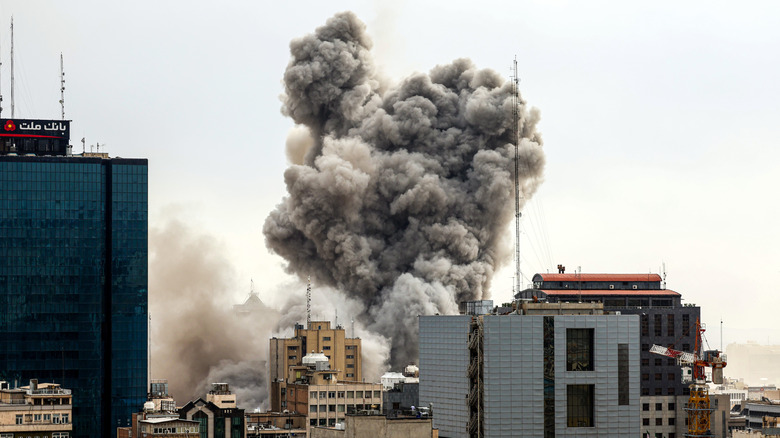
In the note to clients, JPMorgan's Mislav Matejka mentioned that because the fundamentals in the stock market remain positive, there's no reason to join in the selling spree if prices are dropping because of investor panic. Matejka said in the note that although oil prices rose immediately after the bombing began, those prices should soon return to normal because of excess supply that's available to the market. Per the note to investors, Matejka believes that due to the upcoming elections in the United States, the conflict in Iran probably won't drag on.
Typically, savvy investors refuse to buy stocks in situations that would equate to trying to time the market. Many people consider buying the dip as a form of trying to time the market, so some investors may be skittish about using JPMorgan's strategy. However, Matejka didn't recommend waiting for the lowest possible market prices before adding more securities, which would represent more of a market-timing strategy. He simply stated that those who have a long-term investing horizon can take advantage of current short-term market weakness to increase their holdings.
How the stock market has responded to similar conflicts in the past

Armed conflicts in the Middle East have been common over the past few decades. Since the 9/11 terrorist attacks, the United States has conducted bombing campaigns against several Middle Eastern countries and fought wars directly against the Taliban in Afghanistan and the government of Saddam Hussein in Iraq.
Before the Iraq War began in March 2003, stocks were weak because investors were skittish about the possibility of the conflict. By the end of 2003, though, market prices strengthened. The S&P 500 Index opened 2003 at 879.82 and finished the calendar year at 1,111.92, an increase of more than 26%.
The United States and Israel bombed Iran in June 2025 in an effort to destroy that nation's nuclear weapons program, and Iran responded with a missile attack against Israel. The S&P 500 Index dropped 1.13% the day after the strikes began to 5,976.97. However, that conflict did not escalate any further, and the S&P 500 Index reached 6,878.11 by the end of the calendar year, representing a 15% increase from the day after the initial attacks. Of course, there's no guarantee that the stock market will react the same way in the future as it did in the past, even though similar events are unfolding.