

The US Neighborhood Where Residents Have To Pay To Leave
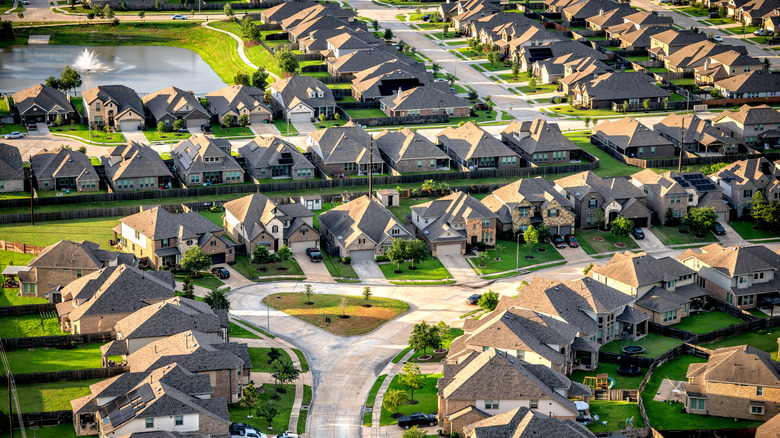
You've probably heard the saying, "You couldn't pay me to live there," usually referring to some challenge that makes living in a certain location harder than it should be. Unfortunately, for people living in a newer neighborhood in the Houston metro area, they have to pay for the privilege of living there, thanks to an odd design of the development that made a toll road the only way in and out of the neighborhood.
According to reporting from KHOU television in Houston, the Creekland Village neighborhood in Cypress, Texas, has only one way in and out of the development. They must use the Grand Parkway, also known as Texas State Highway 99. Several sections of the Grand Parkway carry a toll, including the section that provides access to Creekland Village.
Residents told KHOU that they're paying 56 cents each time they use the toll road. While that amount hardly makes the Grand Parkway one of the most expensive toll roads in America, the cost adds up fast each time neighborhood residents go to work or run a simple errand. Whether this situation was a result of poor planning, a lack of communication among authorities, or — as some cynics allege — done on purpose to guarantee a constant source of toll revenue, residents are understandably frustrated.
How the toll problem manifested in the Texas neighborhood
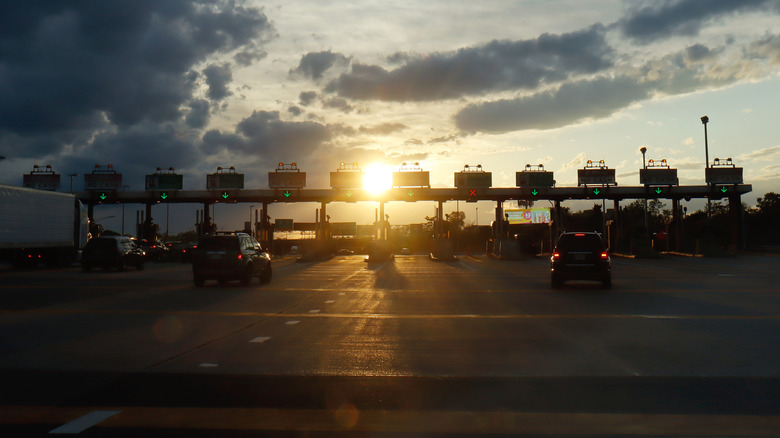
Construction on homes in the Creekland Village neighborhood in Cypress, Texas, began in early 2023, and plans called for 3,000 homes. As residents began purchasing lots and building houses, they say they had no warning from the developer about the toll road problem that would affect them in the future. In fact, residents claim they were not charged tolls while the neighborhood's homes were being built. After construction was started and completed on toll booths later, though, the toll charges began.
The Texas Department of Transportation (TxDOT) says the problem doesn't occur regularly in other areas because developers or other third parties build frontage roads that give neighborhood residents options to exit and enter the neighborhood without having to use toll roads. In this situation, because of the way the neighborhood was laid out and with no frontage roads built, residents cannot reach other roads without traversing at least a couple of miles on the Grand Parkway and paying the toll each time.
Solutions being considered include figuring out how to exempt people who live in Creekland Village from paying the toll. Some people suggest offering reduced toll fees for the residents. However, neighborhood property owners who asked TxDOT or Harris County to intervene were told to work with the developer to try to fix the issue, meaning reduced or exempted toll rates seem unlikely to occur.
Why toll roads are so common in the Houston metro area
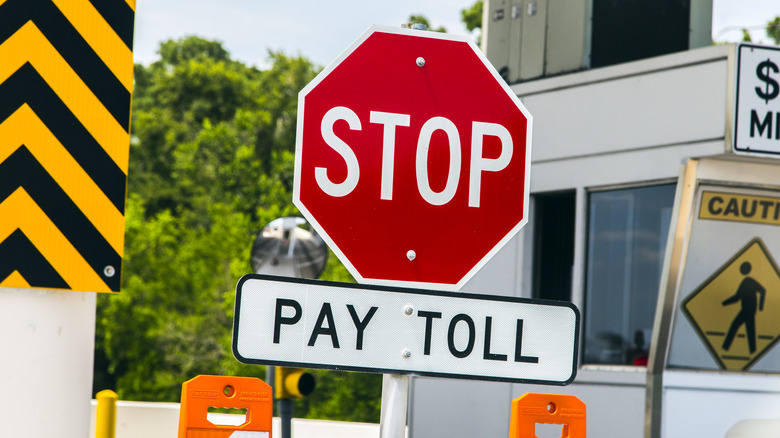
Houston is already one of America's most overpriced cities and metro areas, thanks in part to long commutes that burn a lot of gas and cause extra wear and tear on vehicles. Toll roads also contribute to the cost of commuting in the Houston metro area.
Houston is known for problems with sprawl, in part because the city has traditionally had limited zoning regulations in place. The metro area also grew incredibly fast in the back half of the 20th century, contributing to sprawl. Houston's metro now consists of almost 12,500 square miles, making it larger than the state of Maryland. Fast population growth fueled the sprawl. The metro area had fewer than 1 million people in 1957. It surpassed 2 million people by 1975 and 3 million by 1991. According to Greater Houston Partnership, the metro's population in 2025 was 7.8 million.
With such fast growth in size and population, transportation funding from state and federal government sources weren't keeping up with the demand for new roads. Building toll roads speeds up the road construction process. Toll roads are profitable, too, helping governments meet budgets without raising taxes. According to reporting from Fox 26 television in Houston, toll roads in the metro area generate $1 billion in annual revenue. Paying so many road tolls may be one of the reasons younger people and retirees regret moving to Texas, though.