

Counterfeit Tires Could Cost You Big Time - Here's How To Spot Them
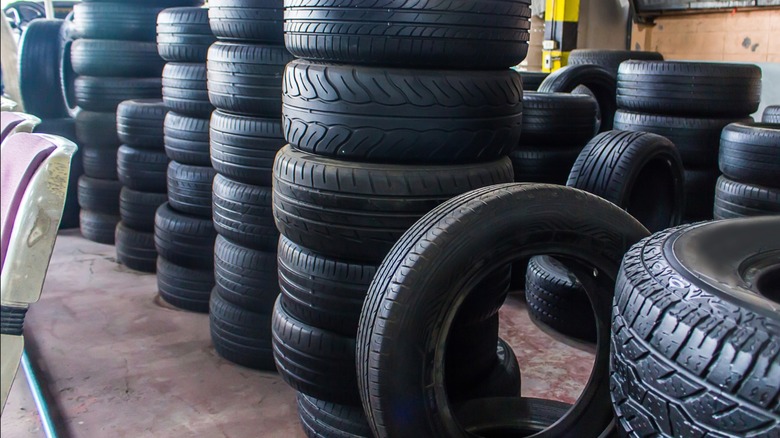
Many inexperienced car owners might think otherwise, but replacing tires is not cheap. It's best practice to buy them brand new, and most vehicles benefit from regular replacements of all four at a time. According to Goodyear, the labor associated with installing four tires costs around $100, including mounting, balancing, and tire pressure monitoring system (TPMS) checks. But the tires themselves are also a major expense. Consumer Reports found that drivers spent $212 on a tire on average, with prices ranging from about $600 to over $1,400 for a full set, depending on vehicle size and tire type.
At a glance, counterfeit tires are appealing, since they cost 30% to 50% less than real ones to buy. However, those savings come from cutting back on the materials that make the tires durable. The reason authentic tires cost so much is that the raw materials needed to manufacture them are pricey. Reputable tire manufacturers spend billions every year on rubber, steel cord reinforcement, carbon black fillers, chemicals, and textiles. Michelin, for example, estimates that raw materials amounted to €5.9 billion ($6.39 billion) in cost of sales in 2023, with rubber and reinforcement materials comprising a big share of the figure.
When you buy tires, you aren't just paying for a brand name; you're investing in a critical safety component engineered to withstand thousands of miles of heat, weight, and friction. Counterfeit tires may cost you less upfront, but if they fail, you'll be stuck with voided warranties, repair costs that eclipse initial savings, and possibly damages. They'll also wear down faster than their authentic counterparts, so you'll be paying for replacements more frequently. Fortunately, you can verify a tire's authenticity and compliance by examining the markings on its side (the price point is another good indicator).
Here's why fake tires are typically more expensive in the end
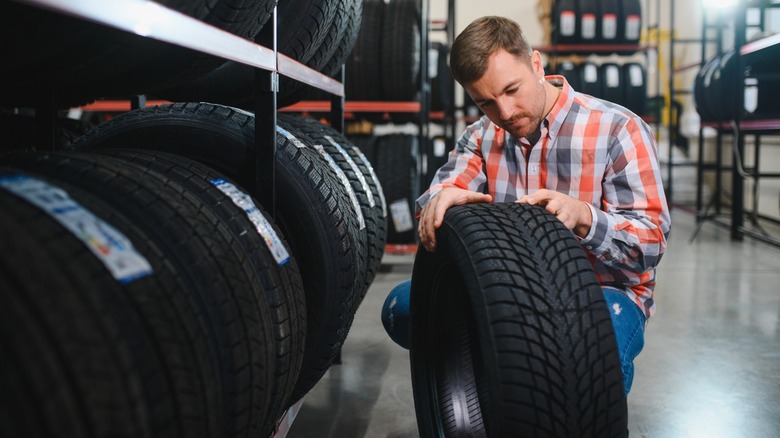
Counterfeit tires are made to resemble the product of a legitimate brand, but most times, they don't meet the brand's quality standards. If you don't do your due diligence and end up buying counterfeit tires, you will likely have no recourse if one fails. In cases where counterfeiters steal molds from established brands, like in the Pegasus Advanta SUV tire Consumer Reports tested, the question of who takes responsibility along the supply chain becomes murky, and you can be left with an unredeemable warranty — or a tire that won't qualify for any car-related recalls. If you can't replace one counterfeit tire when it fails, you'll have to change out the whole set and pay more than if you bought real tires from the get-go.
The financial drag doesn't end there. AAA warns that pothole impacts and tire damage can lead to bent wheels and expensive suspension damage, with repair costs between $250 to $1,000. Using low-quality tires increases this risk, not to mention the danger of a tire failing mid-drive and putting you and others in harm's way.
A closely related and common problem is improperly labeled tires with incorrect DOT and TIN marks — a sign to look for when confirming a tire's authenticity. To examine a tire, look for the "DOT" marking, which certifies that the tire meets federal safety standards. After the DOT number, you should see the tire identification number (TIN), which often comprises seven to 13 characters. If these are missing, malformed, oddly spaced, or poorly molded, take this as a red flag. That said, before you look for defects or sidewall text inconsistencies, the clearest sign that a tire is counterfeit is if it's suspiciously cheap and sold by an unauthorized dealer.