

The Most Reliable 'Invisible' Assets Hands Down

Invisible assets are everywhere. They aren't invisible per se, but they do behave differently from the tangible items consumers and owners interact with to obtain value. For starters, invisible assets aren't generally found on financial statements because they're difficult to fully flesh out and quantify — and are often even harder to sell or trade. They tend to encompass intellectual property and perhaps "vibes" more so than a physical form that can be held, sold, or bought. Likewise, they can't easily be used as collateral or leverage, and their definitive value to a brand or individual is usually quite speculative. Yet invisible assets do have the ability to generate financial wealth for owners, and they can be passed on or sold to others.
Ocean Tomo reports that in 2025, 92% of the S&P 500's total value was derived from the intangible assets that listed companies possess, versus a 68% share in 1995 during the start of the dot-com boom. Clearly something is afoot here, and it's for investors to explore this obverse of corporate (and sometimes individual) value production in an effort to better evaluate market behavior. Intellectual property like software code or a brand's cornerstone image like the Nike "swoosh" are great examples of intangible assets, and they serve as a valuable starting point in this quest of understanding.
Brand power driven by logos and visuals
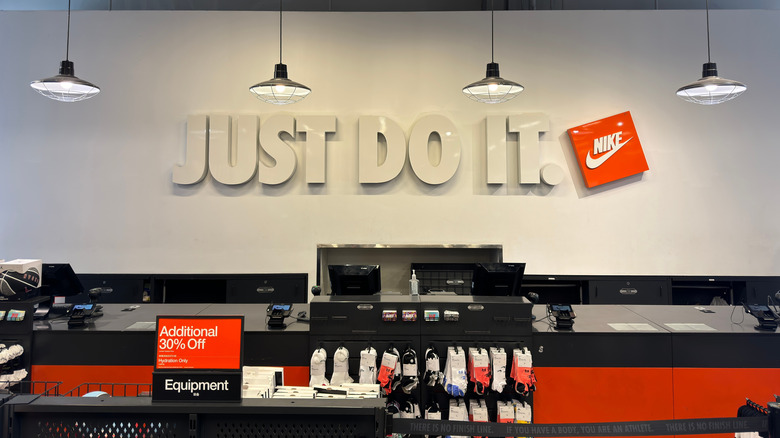
Nike's swoosh and "Just Do It" catchphrase are powerful branding elements; they don't drive sales directly, but they generate significant brand recognition that sways buyers in the market for new gear toward the company's products. The "cool" factor produced by these branding elements is underscored by commercials that focus on lifestyle visuals rather than direct usage of the products, driving an increase in sales through a kind of subconscious messaging rather than a straightforward tool that offers measurable financial outputs. A commercial is produced with a particular budget in mind, but the value of images and themes captured within the billboard, radio ad, or TV spot are hard to quantify in real dollars and cents.
The most valuable brand recognition elements in the world belong to Apple, according to research by the World Intellectual Property Organization. According to reporting by the outlet in 2025, the United States dominates the world with a 90% intangible-asset intensity among its top 15 firms, with Apple leading the charge both domestically and globally. Apple's branding has sought to sell an experience for decades, with its products packaged in gloriously luxurious boxes and ensconced in visual and tactile decadence once you complete the ceremonial unboxing. You'd be hard pressed to find a person who isn't at least familiar with the brand. This drives home the point that in 2025, Apple earned $435.6 billion in revenue (via MacroTrends) while delivering what many deride as a product inferior to Samsung — its primary competitor — while far outpacing its 2025 revenue of $236 billion (per a Samsung Newsroom release).
Research breakthroughs

Technology companies are at the forefront of the intangible asset curve. Brands like Apple feature slick product rollouts and enjoy planetwide name recognition, yet the positioning of the tech sector's invisible asset strength goes deeper still. Behind the sheen of their products, technology firms both large and small sit on a treasure trove of technological breakthroughs and research and development projects.
Research products go far beyond the world of technology, though. A great example can be found in the pharmaceutical industry. The infamous "Pharma Bro" price gouging incident offers a darker view of the power that research breakthrough ownership holds. Martin Shkreli (the one-time owner of a shockingly valuable vinyl record) was the CEO of Turing Pharmaceuticals when it acquired the rights to produce the drug Daraprim in August 2015. He then set in motion a scheme aimed at keeping generic options out of the market while raising the drug's price from $13.50 to $750 per pill. His actions landed him in prison and have resulted in a lifetime ban from operating in the pharmaceutical industry.
On a lighter note, genuine innovators in the pharmaceutical space find new and exciting ways to improve the lives of people on a daily basis. Targeted treatment regimes to support patients suffering from some of the most vicious diseases we face as a species have led to amazing advances in lifesaving and preventative tools. The companies that lead the way include Eli Lilly, the largest company in the sector globally with a market cap of $934.79 billion. Johnson & Johnson follows, with a valuation of nearly $500 billion in 2026 (via AlphaSense). These companies produce tangible assets, but much of the value they wield comes as a result of the research performed under their roofs.
Intellectual property
Intellectual property is a bit like the findings of a valuable research project. Makers of all backgrounds pore over their craft to create something they find valuable, and occasionally, the market assigns significant financial value to the end product. Some of the most valuable IPs exist within the artistic realm. George Lucas sold Lucasfilm to Disney in 2012 for over $4 billion. The key asset within the company's coffers was the intellectual property of the "Star Wars" universe. Disney has taken the concept and developed five feature films and a slate of serialized shows based on the characters and ideas first canonized by Lucas (with plenty more in the works). CNBC reported in 2018 that in just six years of IP ownership, the media juggernaut had already recouped the cost of its investment.
Another valuable example can be found in music. In 2021, Bruce Springsteen sold the publishing rights to his entire catalog for $500 million. Springsteen had a vitriolic and public fallout with his manager in 1976, effectively preventing him from recording new music for a year, during the high that followed the release of "Born to Run." In 1992, he gained complete control over his catalog. The 300-plus songs outlined in the deal are really just words on a page, but to listeners they mean so much more than that. The ongoing value of his body of work is worth a gigantic passive income stream of roughly $20 million annually through publishing agreements, radio and streaming royalties on Spotify, and more.
The patent advantage
Patents are codified statements of ownership. They signal to the wider marketplace that a person or business owns the concept of a tangible thing. Patents are granted for new designs of physical products, as well as for frameworks of conceptual or technological elements and processes. Just about anything can be patented, from the paper clip (patented in its current form in 1927) to TiVo's ability to record live television (submitted in 1998 and granted in 2001). TiVo introduced a watershed technology to the television viewer, underpinned by a range of patents. But the brand's physical products were short lived. The company ended up fighting others over patent disputes and derived its primary revenue through licensing deals for the technology its patents covered. In 2016, TiVo was bought by Rovi for $1.1 billion.
Another famous acquisition specifically targeting patent rights came in 2011, when Google bought Motorola Mobility for $12.5 billion (Motorola's main business is actually now Chinese-owned). Specifically, Google's CEO at the time, Larry Page, announced the deal saying that the purchase would "... increase competition by strengthening Google's patent portfolio, which will enable us to better protect Android from anti-competitive threats ..." (via Forbes). Interestingly, a dense patent portfolio can stymie efforts made by the competition. With enough technology patents in its arsenal, a company has the ability to render its competitors inert as they work through designs on their own products, slowing others down and giving the patentholder a leg up when building new tools or workflows.