

The Hidden Downsides Of The 'No Tax On Tips' Rule

Among the many changes to U.S. legislation as a result of the One Big Beautiful Bill Act (OBBBA) — signed into law by the Trump administration in 2025 — is the No Tax on Tips stipulation. This new tax law could change restaurant tipping forever, as it allows many service industry workers to subtract up to $25,000 in tips from their income taxes.
While this regulation could potentially save thousands of Americans a considerable amount on taxes every year, it might not apply to everyone. Since the OBBBA is enacted by the federal government, several state and local authorities have found ways to counteract it on a smaller scale. Illinois, Maine, and New York all initially opted out, instead choosing to enforce state taxes on tips. Similarly, officials in Washington, D.C. attempted to decouple municipal tax laws from the OBBBA — thereby continuing to enforce local taxes on tips.
However, Congress has since voted to block the District of Columbia's attempt to circumvent the tax cut, and New York Governor Kathy Hochul has since launched her own proposal for a state-level No Tax on Tips legislative measure. With that said, as of February 2026, Maine and Illinois are holding fast on taxing tips, leaving many tax filers confused. Plus, there is widespread concern regarding how the OBBBA's tax cuts will impact federal and state funding in the coming years, with 2026 tax refunds already coming in higher than they were in 2025.
Why state and local officials want to continue taxing tips
While exempting tips from taxes would help many working-class Americans financially, there is evidence to suggest that the consequences of this legislation might not be universally positive. With that said, the Congressional Budget Office (CBO) estimates that the No Tax on Tips provisions could increase the national deficit another $52 billion by 2034, while some of the other OBBBA tax cuts could grow it by hundreds of billions more. The CBO also estimates that No Tax on Tips could reduce federal revenues by over $31.6 billion during the same timeframe. As of February 2026, the national debt stands at over $38 trillion — and continues to grow steadily — so it's unsurprising that officials might be resistant to dropping revenues.
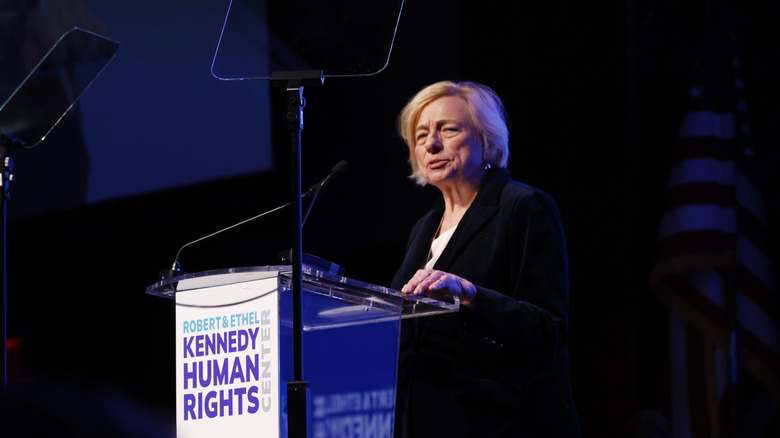
Maine Governor, Janet Mills, cites similar concerns for her state's financial well being. Namely, she predicts that the tax cuts outlined in the OBBBA could cost her state's budget roughly $400 million. Even in low-tax states, the cost of living can be surprisingly high — and Maine is not even considered a low-tax state. Officials in the area have already expressed concern that, whether or not Maine embraces all of the OBBBA's provisions, these federal-level shifts could cause further hardship to the state's general population.
Ambiguities in tax law might confuse taxpayers

It's worth noting that the federal No Tax on Tips regulation already has some details that could cause tax-paying service workers some serious confusion. Possibly the most significant of these points is that these tips need to be paid willingly by customers in order to qualify for the exemption, which means income earned from any automatic gratuity systems or service charges could still be taxable. This means that even service workers in states that have agreed to stop taxing tips may need to start tracking the nature of every single tip they earn — or risk incorrectly reporting their taxable income.
Additionally, service workers living in areas that continue to enforce state taxes on tips may need to start tracking what portion of their tips they can subtract in adherence to federal requirements in addition to how much they'll need to report on the state level. Plus, Illinois and Maine could set new precedents that eventually influence other states — meaning service workers across the nation may want to keep an eye on their state's tax laws in the coming years.