

One Of The Most Unconventional Assets Can Outperform Real Estate (But There Are Risks)
For better or worse, U.S. home prices have risen pretty steadily for the better part of 15 years, though the housing market did level out somewhat in 2025. Still, most investors have counted on some a positive, if at times underwhelming, return on their properties for much of the 21st century. With that said, it's not unusual for a real estate investment to yield returns of around 10% per year — in fact, that's a fairly standard goal among property owners.
However, investing in farmland can be even more lucrative. According to AcreTrader's analysis of data from the the U.S. Department of Agriculture and National Council of Real Estate Investment Fiduciaries, farmland yielded owners an average return of around 12.75% per year from 2002 through 2022, thanks to both its own appreciation and the revenue it can (and often does) generate. Dennis Shirshikov, a finance professor at the City University of New York, offers a similar conclusion, telling GOBankingRates, "The expected returns for farmland investment are historically around 10% to 12% annually..."
However, before you sell your house and move somewhere agricultural, it's important to consider the risks that can come from investing in farmland. The average farmer's income may be impressive, but farming comes can come with all manner of expenses that general property owners don't deal with, and the revenue that farmland generates is heavily dependent on numerous uncontrollable factors — like the weather.
The extra expenses, and potential income streams, of owning farmland
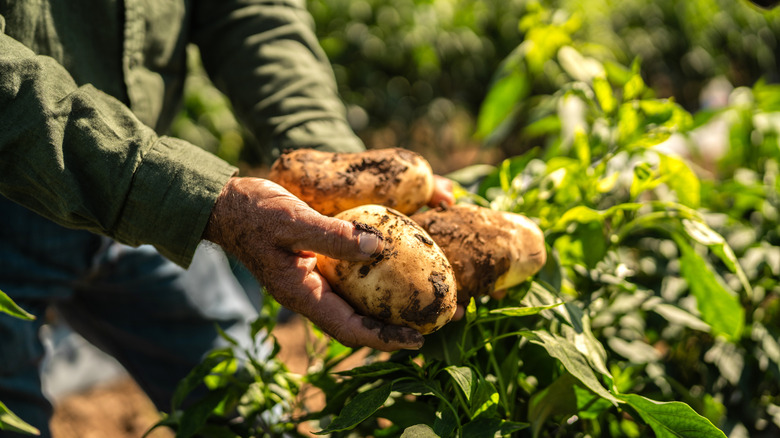
Owning farmland comes with a lot of the same upfront costs as real estate. Obligations like utilities, down payments, insurance, and taxes don't go away, but are instead joined by other expenses like farm-related equipment and materials. Depending on what you grow, you'll also need to invest in soil, land treatment, livestock, or even tools. And while farm related work vehicles are already expensive, inflation on items like tractors is far outpacing that of more traditional cars. It doesn't help that major equipment manufactures like John Deere are also exploiting farmers.
Of course, depending on the size of the farm, there are also labor costs to consider. The United States Department of Agriculture's (USDA) National Agriculture Statistics Service found that farmworkers charged, on average, between $17 and $20 per hour, as of April 2025. Agricultural managers charged even more, at over $31 per hour.
The tradeoff is that farmland is a pretty reliable inflation hedge, and tends to generate considerably more streams of income. You can sell what you grow, or even rent out space to tenant farmers if you have the room. Additionally, agrotourism is a growing industry in its own right — provided you don't mind visitors. A real estate investor might be able to sell a home for profit or rent out units, but that's largely where the potential for real estate income ends.
Farmland revenue can be out of your control
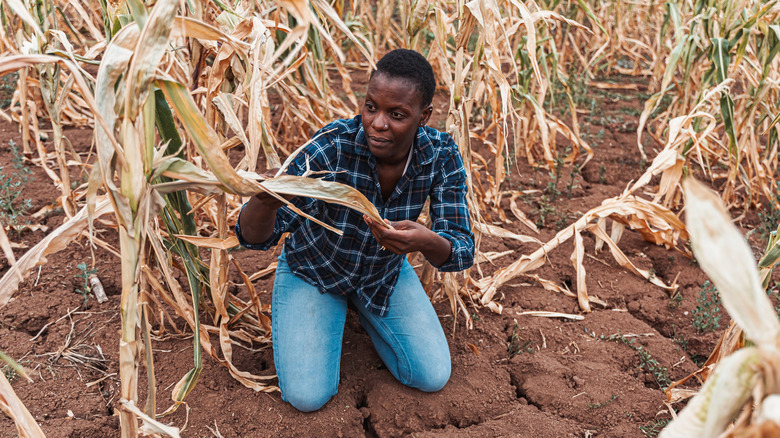
According to the Farm Bureau, extreme weather destroyed over $20 billion in crops throughout the U.S. in 2024. Early 2026 has already been the coldest winter in decades for some regions of the country, and severe weather events have occurred more frequently in recent years. Additionally, a 2024 study by the Environmental Defense Fund, Cornell University, and Kansas State University, for every 1.8 degrees Fahrenheit that the planet's temperature has increased over the last 40 years, gross farm income reduced by 7%. Plus, there's little evidence to suggest Earth is getting any cooler in the coming years, so this does not necessarily bode well for the future of the industry.
That said, agricultural products have seen massive spikes in value in recent years, and there are many networks of support for struggling farmers. The Trump administration even announced $12 billion in aid for American farmers in December 2025. This may be a volatile period for the industry, but farmers are also likely to get a lot more support and financial assistance than landlords are.