

These Top-Selling Cars In Florida Are Also The Most Reliable

Every year, millions of buyers flock to the same handful of cars because they are drawn by their reputation, marketing, or even popularity. That is partly why best-selling rankings recycle the same trucks, sedans, and SUVs. Unfortunately, popular doesn't always mean reliable. When a car is so common, it becomes easy to follow the trend and buy it without doing due diligence. The most popular car in your state could be the one most likely to drain your savings with repair bills. But it could also be the model that holds its value and runs without complaint for years. Florida's car markets exemplify these possibilities aptly.
According to the most recent 2025 sales rankings published by Edmunds, which uses car registration data to track buyer behavior, the five top-selling cars in Florida are Ford F-Series, Toyota RAV4, Tesla Model Y, Honda CR-V, and Toyota Camry. Ford and Tesla, though hugely popular, have a less-than-ideal reliability record and demand huge maintenance costs. The others, however, are as dependable as cars come.
To evaluate reliability alongside popularity, reference was made to long-term ownership data from various sources. The focus was specifically on depreciation rates, maintenance expenses, and real-world ownership costs over a five-year period. These figures reveal which of Florida's top sellers have a strong mechanical design, high build quality, and stable long-term ownership behavior.
Toyota RAV4
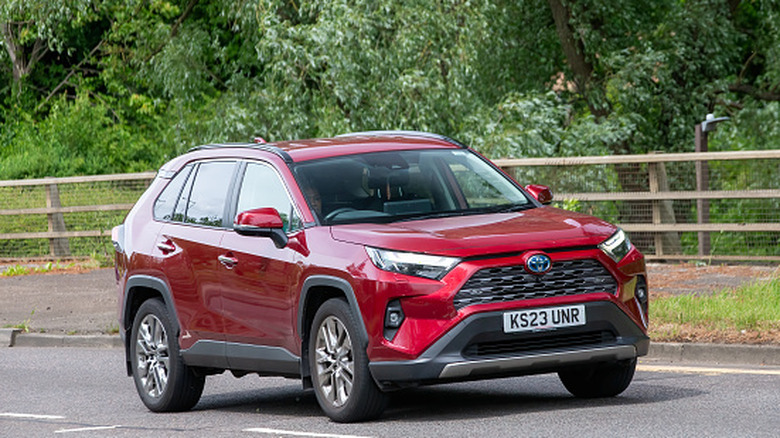
Toyota has built a reputation for making reliable cars, and the RAV4 is one of the strongest examples of that trend. The RAV4 consistently reigns as Toyota's best-selling model and is the most popular vehicle that's not a pickup truck nationwide. It's listed as the third best-selling car in the U.S. through 2025 and the second in Florida, behind only the Ford F-Series. That kind of popularity usually comes with a catch, but the RAV4 backs it up with a reliability that translates into financially sound ownership costs.
A brand-new 2025 model starts at $29,800, with higher trims reaching $39,555. Those upfront costs might seem steep, but the RAV4's reliability shows up in the numbers that matter after purchase. According to CarEdge, the Toyota RAV4 will depreciate by $10,377 after five years. In those same five years, you will only spend an estimated $1,938 on maintenance. If you have to conduct a repair, the cost will venture a bit above average at an extra $429 per year, but this balances out when you factor in the model's low unscheduled repair frequency of 0.3 times per year.
The used market also favors the RAV4. Kelley Blue Book considers the 2018 model year one of the best used cars for retirees, largely because it combines proven durability with affordable parts and predictable service needs. If you buy used, you can expect the same low maintenance without the new-car price tag, which can be rare in the SUV category.
Honda CR-V
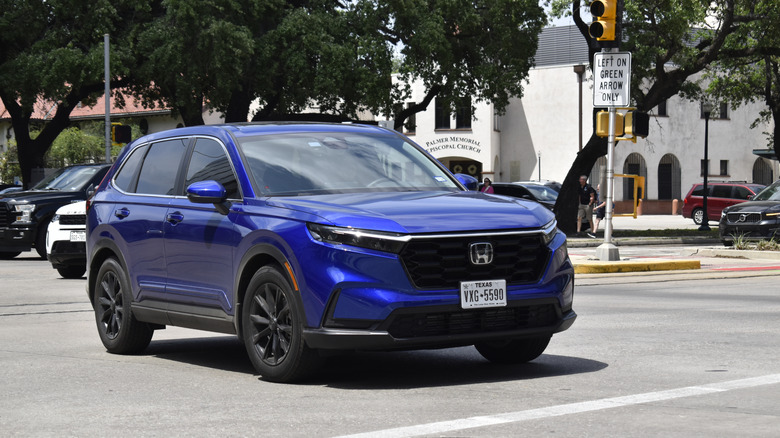
Honda CR-V is the fiercest competitor of Toyota RAV4 in the subcompact SUV market. While Honda matches Toyota's reputation for reliability, it's slightly less popular than the RAV4. Per Best Selling Cars, Honda sold 403,768 units of the CR-V in the U.S. — about 75,000 units fewer than the RAV4. Due to that remarkable sales volume, it closely followed the RAV4 as the fourth best-selling car in Florida in 2025.
The CR-V is popular for good reason. It's known to deliver both mechanical dependability and financial predictability, which is why it consistently ranks as a low-risk long-term ownership vehicle. If you purchase one, you can expect to spend on average $36,935 over five years, according to CarEdge. About $2,500 of that amount will go toward maintenance, and just over $11,000 will be lost to depreciation. The Honda CR-V is one of the cheapest cars to insure, with an average annual full coverage premium of $2,270. For context, per Bankrate, the national average is $2,697 per year, meaning the CR-V saves you over $400.
A Honda CR-V has a great average ownership cost; not because it is cheap to buy, but because it's designed to avoid failures, which create unforeseen expenses. If repairs do become necessary, they are generally less expensive and easier to complete because of parts availability. This is unsurprising because of Honda's popularity, simple engineering, and expansive dealer network.
Toyota Camry
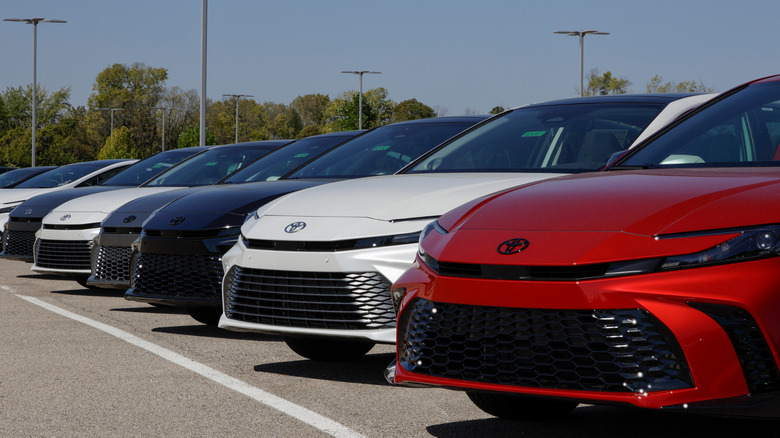
Toyota's focus on durability and long-term reliability means that the automaker has not been easily swayed by emerging manufacturing trends. This explains why the Camry remains the king of sedans and is considered one of the safest bets on the market today. A well-maintained Camry can easily reach and surpass the 250,000-mile mark with diligent care. In fact, an iSeeCars study found that Camrys are more than three times as likely as the average car to reach at least 250,000 miles. There is even a 1999 Toyota Camry in Florida with over 500,000 miles on its odometer, as certified by a local Toyota dealer.
This kind of longevity is possible because Toyota makes engineering choices that favor its proven platforms rather than overly complicated innovations. The company chooses simpler, more reliable systems like torque-converter automatic transmission and a naturally aspirated engine over the more complex dual clutch transmission and turbocharged engines. The result is solid reliability that is great news for your finances.
Toyota Camry is one of the best cars for fixed-income earners due to its predictable expenses. CarEdge estimates that you'll only need to spend about $1,500 on maintenance half a decade after you take a Camry out of the dealership. If you do decide to sell it after those five years, it will have depreciated by $12,581, which is about 48% of the original sale price. Once you factor in insurance, financing, and taxes, the total ownership cost over five years rounds up to just over $34,000.