

3 'Safe Investments' That Were A Nightmare In The '70s
If you're approaching retirement age and like thinking about how things were better in the "good old days," odds are you've probably spent some time reveling in how much less you paid for certain essentials a few decades ago. Some of the 1970s groceries that used to cost pennies have seen massive surges in price in recent years, while housing and other larger expenses have also been on a steady incline.
However, the economic climate of that particular era was not universally better than the modern day's. The U.S. saw inflation pass 10% in the mid-1970s, unemployment was more than 7% around the same time, and mortgage interest rates surpassed 11% by the end of the decade.
No matter how much simpler life may have seemed at the time, many who lived through the 1970s would likely be reluctant to return to the challenging financial times that marked the decade. For better or worse, investments that might have seemed safe during those years of financial uncertainty just don't have the same effect without the era's high inflation. Meanwhile, some investments that might have seemed reckless in the 1970s are considered fairly safe as of 2026. U.S. Treasury notes, index stock funds, and real estate investment trusts (REITs) all have the potential to perform in radically different ways than they did 50 years ago.
1970s inflation turned Treasury note investing upside down
Many people consider different types of liquid assets to be safe investments during modern times because they ensure you have money when you need it. Money market accounts, certificates of deposit (CDs), savings bonds, and U.S. Treasury notes are all considered to be liquid assets, and Treasury notes are seen as some of the safest investments available today because they have the backing of the U.S. government. You can purchase Treasury notes for terms of up to 10 years, and the interest rate does not change over that period.
However, U.S. Treasury notes were not as safe throughout most of the 1970s because of the inflation that was occurring. When purchasing a 10-year Treasury note at the beginning of 1972, you received a 5.95% interest rate, according to the Federal Reserve Bank of St. Louis. However, inflation significantly surpassed that interest rate over the next 10 years, reaching upwards of 13% by 1980. Deutsche Bank's analysis of research from Global Financial Data and Haver Analytics estimates the real annualized return of 10-year Treasury notes in the 1970s was -1%. For comparison, the 10-year U.S. Treasury interest rate was 4.06% at the beginning of 2024 and 4.63% at the beginning of 2025, while the highest inflation reached in either of those years was 3.5%.
Index funds did not generate a safe return in the 1970s
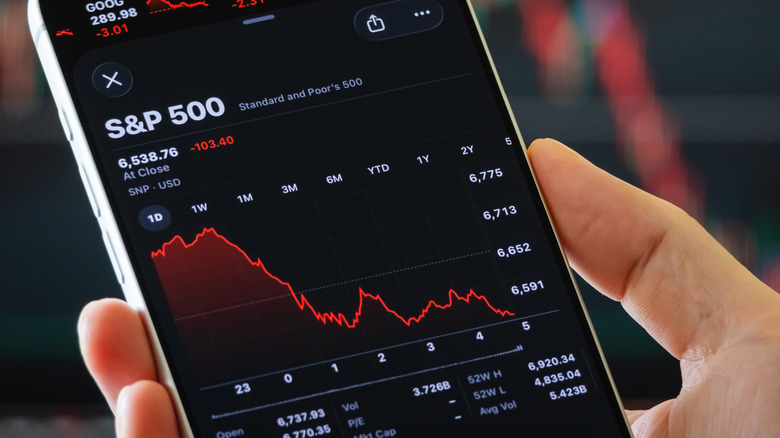
Opting to invest in index funds is one of the most common tips for beginner investors looking to build out their portfolios. Index funds often attempt to mirror the performance of a stock market benchmark, such as the S&P 500. To mirror the benchmark, the company offering the index fund would hold all the stocks that are part of it, adjusting the number of shares it has in each company to match market shifts.
Index funds offer low-cost investing and are easy to manage, making them ideal for someone who is just starting to invest in the stock market. An investor using them could potentially lose the initial investment, as they still carry the risk that comes with investing in stocks. However, compared to the potential risk of investing in an individual stock, they're considered to be far more stable.
The S&P 500's total return was 17.88% in 2025 and 25.02% in 2024. However, S&P 500 returns were extremely poor in the high-inflation era of the 1970s, making S&P 500 index funds far riskier at that time. Vanguard introduced the first index fund in 1976, right in the middle of a 14-year period of stagnation for the index during a significant bear market. It had a value around 108 in December 1968, and wound up in roughly the same range in August 1982. For comparison, from January 2011 to January 2025, the S&P 500's value climbed from over 1,200 to nearly 6,000.
Why investing in REITs is safer now than in the 1970s

Real estate investment trusts allow investors to buy into real estate without the capital required to purchase an entire property single handedly. Investors can either buy stocks from publicly traded companies that operate REITs, or invest directly into the company. REITs tend to own multiple properties, making them relatively safe for investors by generating revenue from a diverse array of holdings. They pay dividends, and offer more liquidity than investing directly in a piece of real estate, reducing the risk for investors. Some people consider them safer because they provide a shield against inflation and don't necessarily mirror what's happening in the stock market.
However, a major slump in the real estate market in the 1970s made REITs a highly risky investment. REITs from that era that relied on mortgages suffered severe losses when recession struck the U.S. economy in 1973. According to Forbes, roughly 66% of the REITs in existence at the time had to reorganize or file for bankruptcy. Since then, federal laws changed to give them some safeguards if market swings of that level occurred again. Such shifts help to make REITs a much safer investment today than in the 1970s.