

10 Items From The '70s That Could Make You Rich Today
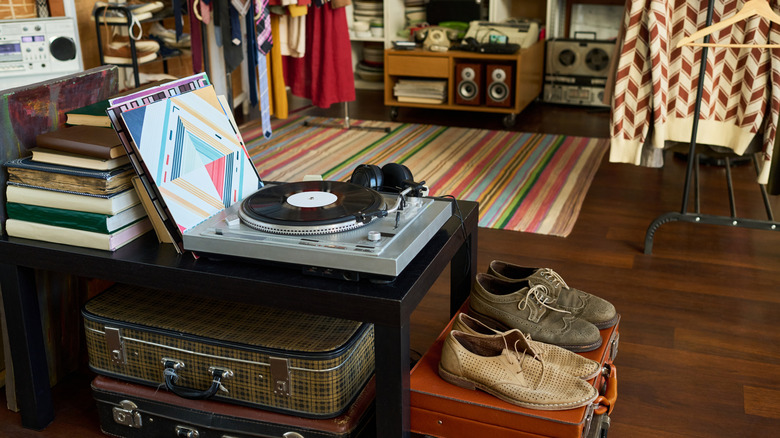
It's no secret that vintage collectibles can hide life changing financial value. The things from your childhood that sit boxed up silently in the attic or garage may hold immense resale value, and this odd nostalgia-infused quirk is true of virtually every generation. For '90s kids, perhaps the ultimate example is that of Pokémon cards that have accumulated huge value. Every decade has its fair share of valuable items still lingering around in storage and the collectors' marketplace, and the 1970s are certainly not unique in this regard. What is interesting about that period is its status as a time of great change. In the '70s, the first Apple computer was released, new media hit the silver screen and captured fans for life, and plenty of toys and gadgets stood at the precipice of the digital revolution.
There are many collectibles from this period of history that hold solid value for collectors who kept their youthful treasures, but some are more financially valuable than others. These 10 collectible items are perhaps sitting around in your basement or storage unit gathering dust. But they are imbued with extreme wealth generating potential. Most were commonplace in their heyday, but have become highly sought after commodities with the merging of time and scarcity. If you've got one or more of these items lying around, selling your find could make you rich.
1. An Apple-1 computer
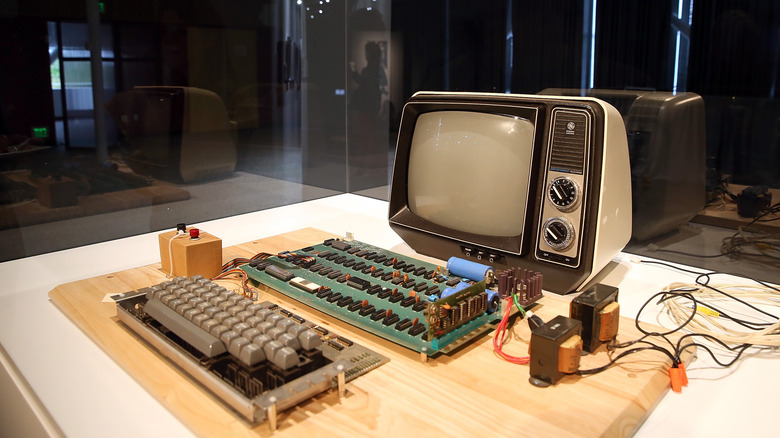
The Apple-1 computer wasn't the first computational tool on the market, but it was the first produced by the now-globally renowned brand Apple. The device started its life as a personal computer designed by Steve Wozniak so that he could play games and access the early internet (the ARPANET). It was built in 1975 and quickly became something that others sought for themselves. So, Wozniak and Steve Jobs launched Apple Computers and got to work building a commercial product. The Apple-1 didn't feature the same flashy, finished package that a modern device utilizes. Instead, it came as a single board that users would have to house themselves. The tool could connect to a keyboard and television screen to round out its use and immediately set itself apart as a novel leap forward in this arena. The computer sold for $666.66 when it was released in 1976. Roughly 200 of these devices were built and it's thought that 82 remain out there in the world today.
If you have an old Apple-1 device hiding in the attic or the depths of your closet, you're sitting on a goldmine. One sold on eBay for roughly $340,000 in 2022, and another earned its owner a payday of $905,000 at auction in 2014. This is a piece of computer history and development legend. Surviving Apple-1 models are supremely rare and valuable, and given Apple's continued prominence, the company's vintage equipment has a strong following of eager buyers. Even the iPhone, a far more recent development, gets attention when original models from 2007 hit the marketplace. An unopened original sold at auction for around $190,000 in 2023.
2. Sports cards
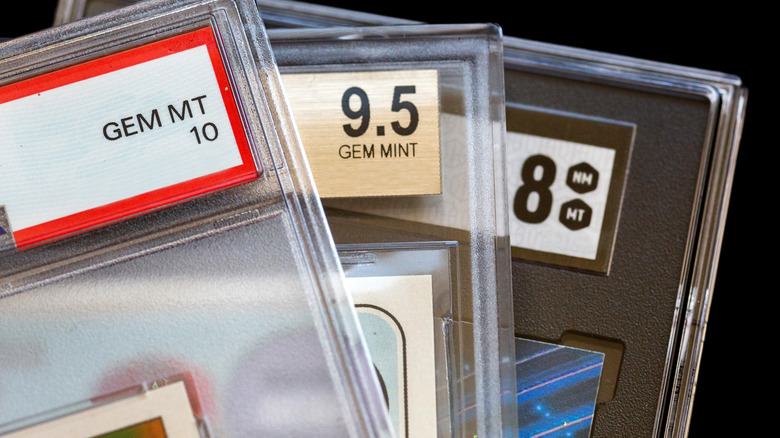
The collectible sports card started life in the 1860s and quickly came to serve primarily as inserts to protect cigarette packages. They continued to exist in varying formats until 1951 when Topps created the first set of baseball cards. Since then, sports cards of all varieties have been a key collectible item for generations of fans. Some of the most valuable baseball cards of all time can yield hundreds of thousands or even millions at auction. The most valuable ever sold was a 1952 Mickey Mantle card that netted a price of $12.6 million. The 1970s were a time of great excitement in the sporting world. Among baseball personalities, a 1971 Willie Mays card has been sold for $14,935, a 1978 Eddie Murray earned a sale price of $59,040, and a trio rookie card from 1973 featuring Ron Cey, John Hilton, and Mike Schmidt has sold for $317,200.
Other sports feature equally valuable collectibles. A 1979 rookie Wayne Gretzky card sold in 2016 for $465,000, for instance. The power of sport memorabilia is its universality. Sports fans are more likely than others to collect memorabilia of all types, but in a Cllct survey from 2024, the outlet found that 36% of the general population collects sports cards and other sporting memorabilia as a hobby (compared to 63% of "avid fans"). Strikingly, a significant percentage of people across the board saw collecting cards, game equipment, and other goods as a financial investment primarily or alongside the hobby element.
3. PEZ dispensers
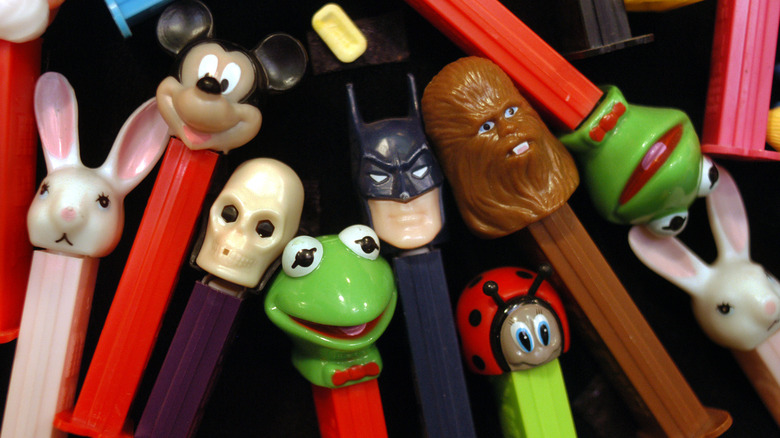
Another collectible item that might sit overlooked in your garage or shed is the PEZ dispenser. Every kid had at least one; more likely, this was a rotation of quirky dispensers with colorful headpieces shaped like beloved characters. Although it's since been disproven as a myth, it was long thought that eBay was created to help its founder Pierre Omidyar's wife collect PEZ dispensers. The candy container is delightfully fun, and the tool has been around since the 1930s, making it a historical item in addition to a children's toy that endures to this day.
Vintage PEZ dispensers are often worth a ton of money and are a highly sought after commodity. Collectors will go to great lengths to add even a single new item to their catalog. Many PEZ dispensers easily fetch prices over the $1,000 threshold. In 2023, a New Jersey man was entered into the Guinness Book of World Records for owning the largest PEZ dispenser collection in the world, with 5,548. It's not uncommon for collectors to break the 100-unit barrier, and if even a fraction of your collection is worth in the hundreds or thousands, you could easily be looking at a five-figure payday by liquidating the tiny candy containers. Of course, some of the most expensive options on the market are from the early days of the brand's history, but 1970s models are also quite lucrative. Some of the more valuable options from this decade include the Captain Hook "soft head" model ($1,000), Purple Headed Cow ($2,000), Indian Brave ($2,500), Muselix ($2,750), and Pineapple Crazy Fruit (up to $3,000).
4. Old vinyl records
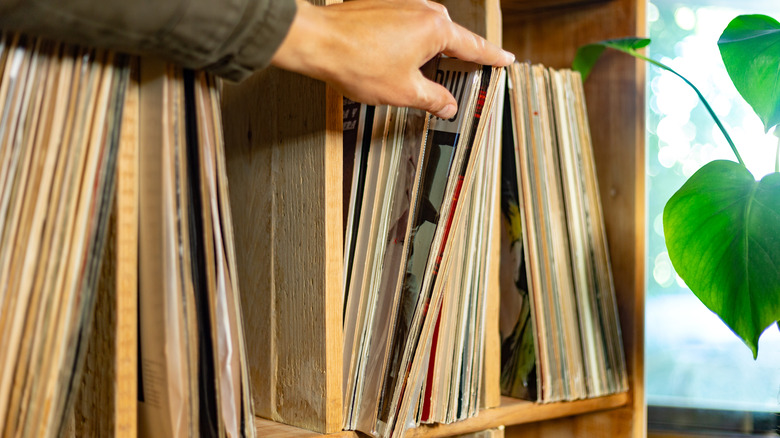
It's no secret that old record collections can be a goldmine. Even commonly produced titles like The Eagles' "Hotel California" or Fleetwood Mac's "Rumours" can fetch resale prices over $100 for opened, used examples. Sealed first pressings for both routinely go for $600 or more. The thing about vinyl collections is that second term: collection. No record buyer will have just one title hidden away in a box in the attic or sitting on the shelf. These personal catalogs tend to balloon over time, and many record owners will have hundreds or even thousands in their possession. Even just a few rare or otherwise expensive pieces can really thumb the scale for someone looking to sell their records.
Speaking of rare records, there are plenty of albums from the 1970s that sport unique artwork mistakes or shortened first run features that make them far more valuable. David Bowie's "Diamond Dogs" was quickly halted after the initial production run began to remove the genitals from the dog portion of the image, but some of them survive to this day, fetching resale prices of around $3,500 but they can reach as high as $7,500. AC/DC's first single is another valuable pressing from the decade. It's a 45 released in 1974 with a resale value pegged at $7,000.
5. Arcade game machines
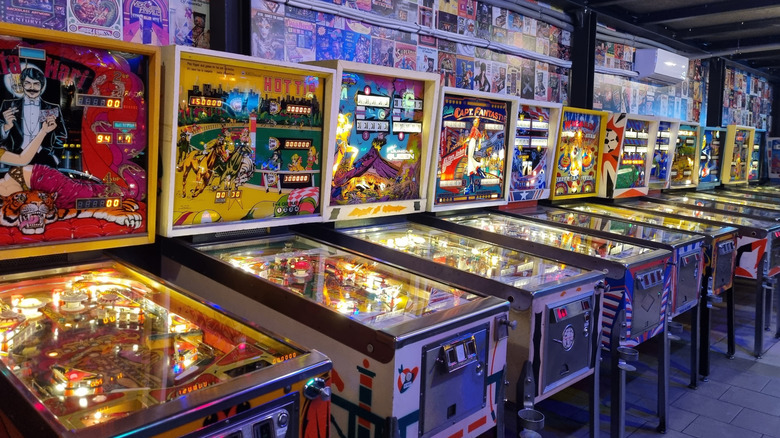
The arcade boom took off right around this time in American history. With an increase in computing power underpinning many staples of life, it's only natural that gaming machines would become a key area of entertainment for the era's youth. The 1970s kicked off what is known as the golden age of arcade games, and many machines from this time are particularly valuable within the collector market. To be clear, this is a tool that some collectors will seek to accumulate in high volume, but the size of the typical machine and its power requirements and mobility restrictions make arcade games less viable as a tool that might offer "stackable" value like baseball cards or vinyl. With that being said, even the cheapest machines from the era will generally go for around $1,000 in the modern marketplace, giving an owner with a single arcade game a tidy bit of change to support some other financial need in their life.
However, this is the bottom end of the spectrum, and owners of mid-tier machines or games with even a bit of collectible prowess can expect notably higher prices. Kong machines, for instance, can easily sell for $3,500. Similarly, the better the condition of the cabinet the more you can expect. Where the arcade game becomes exceedingly valuable is in the rarities. A well preserved Computer Space game from the early '70s can yield a payday of $15,000 or more, and one sold in 2024 for over $69,000.
6. Pennies with printing anomalies dated between 1970 and 1972
Pennies are an unassuming presence in the daily lives of virtually every American, even after the mint stopped producing new pennies in late 2025. This change may actually exacerbate an existing penny shortage that impacts consumers in numerous, unexpected ways. Still, it follows in the footsteps of many other countries around the world in shifting the smallest denomination to a 5 cent piece. The end of new pennies may also eventually make collections of the bronze coin more valuable, although certain collections are already surprisingly heavy on financial weight already.
The penny is nominally worth just a single cent, but through more than 200 years of penny production, plenty of interesting design quirks, printing errors, and other factors in the fabrication process have made certain pennies worth considerably more than their face value. The 1914-S penny carries a value as high as $105,800 in extreme cases of preservation. Similarly, pre-Lincoln pennies or "Indian Head" variants, can be extremely rare and valuable, with high grade examples going for over $100,000, as well.
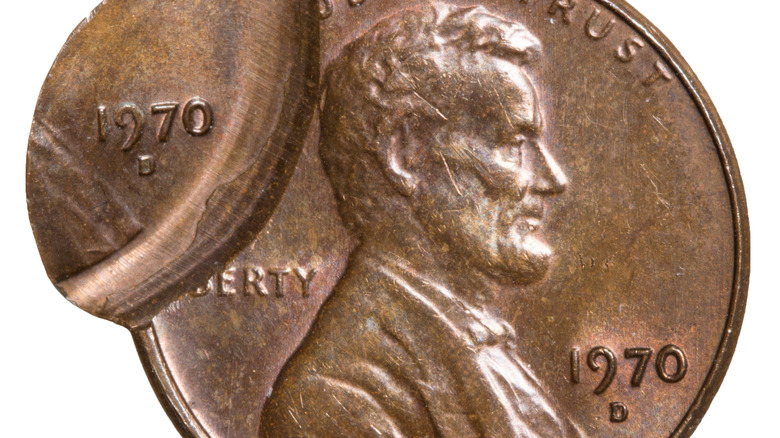
The 1970s saw three years of fabrication errors that elevate the value of collectible pennies. From 1970 to 1972, pennies saw a range of double-die issues where certain portions of the coins produced featured heavy impressions around the edges or on specific words, a result of being struck twice. Double-die pennies from 1970 can be worth as much as $20,000 and are the rarest of the bunch. Certain 1971-S proof pennies are valued at roughly $400 apiece, while other, less rare examples can fetch prices of around $100 per coin.
7. The Nike Moon Shoe
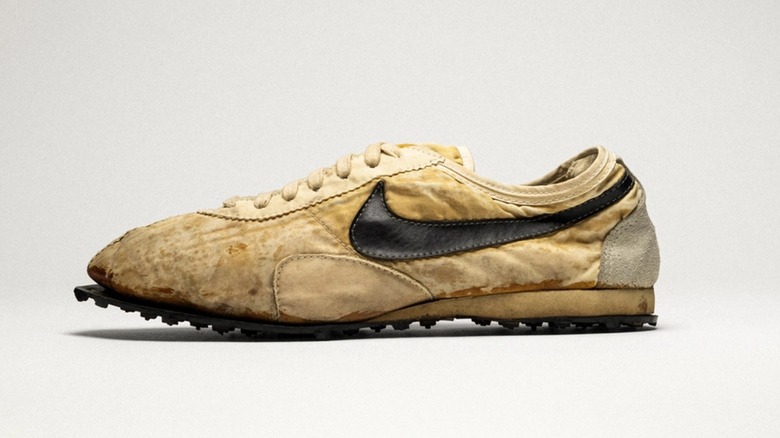
Nike has become a force in the modern shoe world. The partnership with Michael Jordan may have cemented the brand's staying power in pop culture, but the tool got its start as a runner's companion decades earlier. Nike's origins lie with Bill Bowerman, a track and field coach who began tinkering with track spikes in the 1950s and eventually crafted his own running shoes. The first iterations of the brand's own shoe model were known as the Moon Shoe, and in commemoration of the 1972 Olympic trials (which Bowerman participated in as the U.S. team's track coach) Nike prepared a special Shoe. The Moon Shoes were never mass produced for the wider market, and the brand released the Waffle Trainer the next year to great success. As a result, only 12 pairs of these iconic pieces of footwear were created, so they're not likely to be hiding in just anyone's closet or storage unit.
However, they remain a legendary piece of running history, crafted by the innovation of an equally mythic figure in the world of track and field. If you are somehow in the same orbit as a pair of original Moon Shoes, you may be looking at a payday somewhere in the range of a new home! A pair was sold at auction in 2019 for $437,500. It's worth noting that this is the only pair known to remain unworn and the eventual gavel price far surpassed the shoes' $160,000 sale estimate.
8. Original trilogy 'Star Wars' memorabilia
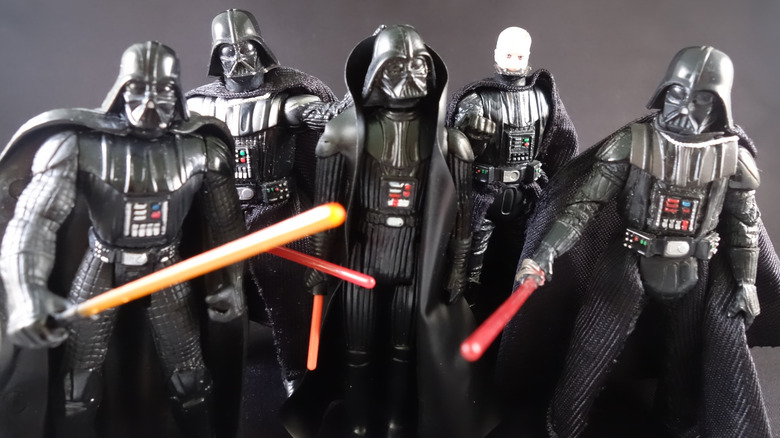
Most people with a TV at home will at least have a passing understanding of the "Star Wars" franchise. Relatively recently refreshed after the IP was purchased by Disney for a whopping $4.05 billion in 2012, Star Wars merchandise and storytelling beats appeal to a cross-generational audience since its original trilogy launched in 1977 and the follow up trios of mainline films began hitting theaters in 1999 and 2015, respectively. Countless young people saw Star Wars films in theaters across the generational divide, leading to a diverse fanbase with huge interest in collecting figurines, playing with plastic lightsabers, and even wearing clothing with the films' characters emblazoned on the fabric.
There's a mountain of Star Wars gear out in the world today, but the earliest memorabilia is the most valuable, and interesting, for a few key reasons. George Lucas famously traded his director's fee for the full merchandising rights on toys and other gear produced in coordination with the films and their characters. This trade minted Lucas as a bona fide billionaire. Kenner was contracted to produce the original toys, and in a single year after the first film's release the toys sold to the tune of $100 million. These examples are highly sought after, and a 1979 Kenner Boba Fett action figure sold in 2024 for $1.3 million at auction. Other toys, like a 1978 Ben Kenobi double-Telescoping lightsaber sold in 2025 for $105,000, and a 1978 "Artoo-Detoo (R2-D2)" figurine was sold in 2025 for $38,940 at auction.
9. Vintage film cameras
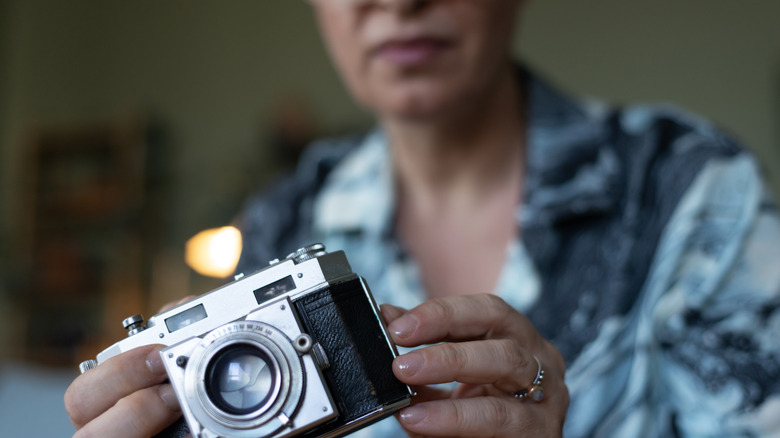
Old cameras are a throwback to a different era of image capture. Today, digital technology is often the dominant force in both amateur and professional photography, but there's a special quality that vintage film cameras bring into the mix, leading some to prefer these tools whenever they can swing it. There's a vibrant marketplace for old film cameras that are still in good working order, and this can lead anyone with an old model sitting in their basement or garage to a potentially lucrative payday.
Some cameras will yield payouts in the hundreds, so they aren't necessarily a golden ticket for owners who still have their old film models. The Yashica Mat-124G, for instance, delivers quintessential '70s energy and sells for roughly $250 for a model in good condition. A well preserved Polaroid SX-70, the first instant SLR camera and released in 1972, can go for over $2,000. Poor quality examples won't break the $100 mark, however. One model that does offer tremendous return potential is the Hasselblad 500C/M. It hit the market in 1970 and was even used by NASA during its lunar program. A camera in good condition can fetch a price of over $7,000, so one that's been pampered and well preserved can easily yield huge payout potential.
10. Hot Wheels cars
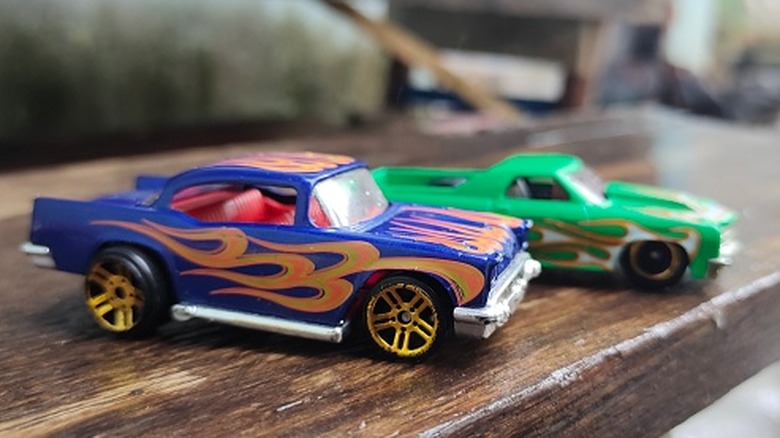
Every generation of kids has their own cultural phenomenon. In the '90s, kids collected Beanie Babies with fervor and played Pokémon on the Gameboy with impassioned zeal. The 1970s saw many similar phases of children's toys and crazes (like the Nerf ball that made its debut in 1969), but one toy in particular got lots of attention in the '70s after its release a few years prior. First produced in 1968, Mattel's Hot Wheels quickly became a hit. The die-cast car bodies brought custom vehicle designs to life for children to play with at home. The original lineup of 16 muscle cars are naturally some of the most expensive for collectors seeking vintage models today, but a range of Hot Wheels cars from the '70s are similarly pricey.
Condition plays a big role in the value that any vintage model brings to the table, obviously. As well, anyone who kept their Hot Wheels in the original packaging to admire the toys on a shelf instead of ripping them out to get playing will have a far more valuable commodity for the modern market. Today, the 1970 Mighty Maverick on a Mad Maverick base can see resale value at $15,000, and the 1971 Olds 442 is worth around $12,000. Perhaps the most expensive model you'll find is from 1969, however. The rear-loading Beach Bomb van in a pink livery is worth as much as $175,000. This is a rarity since Mattel quickly changed the vehicle's design to deliver better weight distribution.