

Why The Next Pick For Fed Chair Actually Matters More Than You Think
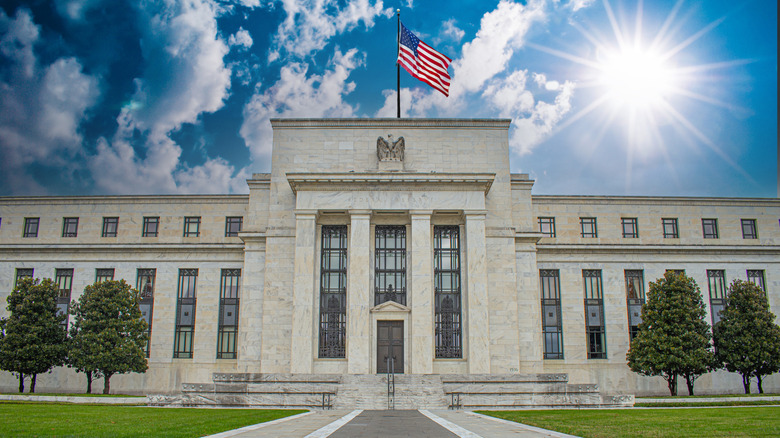
It is no secret that President Trump is not a fan of the current Federal Reserve Chair, Jerome Powell. Trump has repeatedly criticized Powell for not lowering interest rates at a fast enough pace for his liking. The friction has moved from rhetoric into policy and legal challenges. Trump introduced the idea of a 50-year mortgage loan, and the Department of Justice initiated a criminal investigation over Powell's testimony regarding the renovation of The Fed's headquarters — a move that Powell describes as political intimidation and a threat to the Fed's independence.
But as Powell's term comes to its end, President Trump has already announced the nomination of Kevin Warsh as the next Fed chair. Warsh is a former Morgan Stanley executive who served as a member of the Federal Reserve Board of Governors from 2006 to 2011. If confirmed by the Senate, Warsh will lead the Federal Reserve for the next four years and will direct U.S. monetary policy. However, the stakes surrounding Warsh's appointment are heightened, as many are concerned that he may succumb to the President's monetary policy wishes, leading to the Fed's loss of independence and economic uncertainty, which includes many grim predictions for the U.S. dollar.
What a new Fed chair means for interest rates and the economy
During his time on the board of Federal Reserve governors, which included the 2008 financial crisis, Warsh developed a hawkish reputation for his stance on inflation. At the time, Warsh supported higher rates as a means of curbing inflation. However, recent statements suggest he may align with President Trump on lowering rates and take a more dovish approach as the next Fed Chair. A dovish Fed chair would likely focus on lowering interest rates to stimulate the economy and boost employment.
This sounds like an ideal economy; however, when the borrowing rates are too low for a long time, consumer demand grows faster than the rate at which businesses can produce goods, causing prices to spike. And if a dovish monetary policy is implemented when other inflationary pressures like tariffs and unstable food and energy prices already exist, inflation could surge further. Lower rates could also weaken the U.S. dollar, as investors seek out other strong global currencies and inflation chips away at the greenback's purchasing power.
That said, Warsh's ability to lower interest rates would be limited due to the Federal Reserve's structure. The Fed operates through the Federal Open Market Committee (FOMC), which comprises 12 voting members. For the Fed to raise or lower interest rates, a majority of the voting members would need to approve the measure, and the head of the Federal Reserve gets a single vote. But still, a dovish Fed chair that bows to political pressure would ultimately mean a less independent Federal Reserve. This loss of autonomy could lead to long-term inflation and financial instability as investors lose trust in U.S. markets.