

5 Reasons Why Mortgage Rates May Stay Higher For Longer According To Economists

The sub-3% mortgage rates that defined much of 2020 and 2021 transformed the housing market. They sent an influx of buyers into the market, thereby shrinking inventory and causing home prices to surge. At the time, it felt like a win-win: Homebuyers and refinancers were able to lock in ultra-low rates while sellers benefited from bidding wars and soaring valuations. But nothing lasts forever. When the Federal Reserve began raising interest rates in 2022 – in an effort to tamp down on growing inflation — the housing market frenzy faded as mortgage rates rose. After peaking at 7.79% in 2023, rates have largely settled into the 6% range — a level economists expect will persist amid ongoing economic pressures.
While many house hunters and would-be sellers have been hoping for a meaningful drop in mortgage rates, it seems they may have longer to wait. In addition to the Fed's cautious stance on rates, economic indicators such as high inflation, a stable job market, and strong consumer spending suggest that the economy remains strong (which means rate drops are less likely). Plus, the country's high national debt is also expected to keep rates elevated for the foreseeable future. "The mortgage market is very complex," Charlie Dougherty, a senior economist at Wells Fargo, told CNN, adding, "Yes, the Fed plays a role, but the root causes of mortgage rates being elevated are inflation, prospects for growth, and fiscal pressures." If rates remain high, it may prompt more people to look for affordable housing alternatives to cut mortgage costs.
1. Inflation remains stubbornly high

Inflation measures how much the price of goods — including essential household items — and services increases over time. While inflation is not aggressively high in early 2026, by historic standards, it is still running hotter than the Fed would like — with the central bank's target being 2%. As of December 2025, the Consumer Price Index (CPI), a key gauge of inflation, reported a 2.7% increase over the previous 12 months. This followed November's Personal Consumption Expenditures (PCE) data — the Fed's preferred measure of inflation — which came in at 2.8%. These elevated inflation levels are a primary reason economists anticipate persistently high mortgage rates.
"Mortgage rates and inflation are inherently connected because inflation directly impacts the cost of borrowing," Lawrence Sprung, a wealth advisor, explained to Investopedia. "When the CPI comes in above expectations, it tells the market that inflation remains elevated, which often leads lenders and investors to demand higher returns, driving mortgage rates upward. Conversely, when inflation data shows signs of easing, it can relieve pressure on long-term interest rates and bring mortgage rates down."
2. Unemployment remains low

The job market is another factor that can affect mortgage rates. A healthy job market signals strength in the economy, which generally means that the Fed is less likely to lower interest rates. While mortgage rates don't technically directly follow the federal funds rate, they do tend to track the 10-year Treasury note rate — indicating that the Fed's stance does indirectly influence mortgage rates.
To be clear, the current job market is far from booming and has, in fact, been cooling as hiring has remained sluggish. However, unemployment remains low by historical standards. According to the Bureau of Labor Statistics, the December 2025 unemployment rate was 4.4% -– higher than pre-pandemic levels but still far below the record-breaking 14.8% peak in April 2020. Also, wage growth, which has trended downward since 2022, remains above pre-pandemic levels, and has even outpaced inflation over the 12 months between December 2024 and December 2025. These data points indicate the job market is stable, which is a big reason why economists think it's unlikely that the Fed will cut rates significantly anytime soon.
Jeff DerGurahian, chief investment officer and head economist at loanDepot told Bankrate, "With the Fed on hold and [Chairman] Powell emphasizing the unemployment rate as the key signal, 30-year fixed mortgage rates are likely to remain pinned near 6.0% to 6.1%, unless upcoming labor data shows unemployment rising meaningfully..." Of course, if the job market takes a turn and warning signs of a looming recession emerge, things could change in more ways than just mortgage rates.
3. Elevated 10-Year Treasury yields
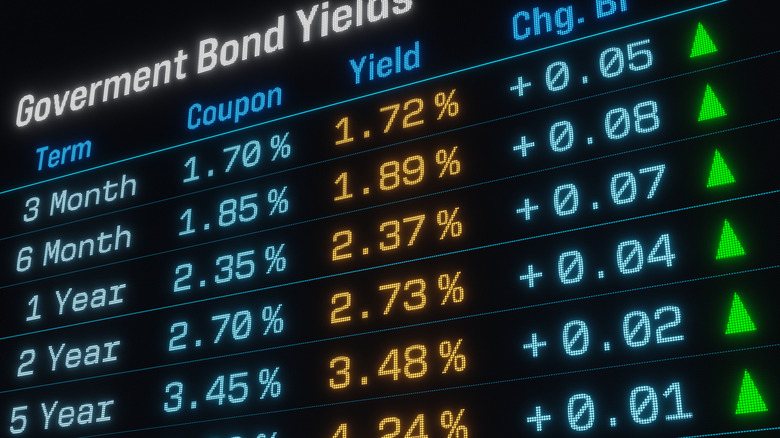
As previously mentioned, mortgage rates tend to move in tandem with the 10-year Treasury yield. Typically, they run about one to two percentage points higher, though in recent years the spread has been wider at times. As of early February 2026, the 10-year treasury yield was 4.18%, while the average 30-year fixed mortgage rate was 6.11%. Thanks to factors like general economic uncertainty, tariffs, the U.S. government shutdown, and even the increasing federal deficit (more on that later), investors continue to demand higher returns in order to hold long-term U.S. debt. This ensures that the rate on 10-year Treasury notes remains elevated — and, with this, so will mortgage rates.
However, the Congressional Budget Office expects the rate on the 10-year Treasury note to drop to around 3.9% by Q4 2026, and then remain relatively flat. In a December 2025 United States Economic Forecast report, Deloitte said it anticipated declines in short-term interest rates, but elevated long-term interest rates. In particular, the report predicted that the 10-year Treasury yield would remain over 3.9% through 2030. These expectations are largely behind mortgage rate predictions for the next five years that call for rates to remain near 6%.
4. High national debt
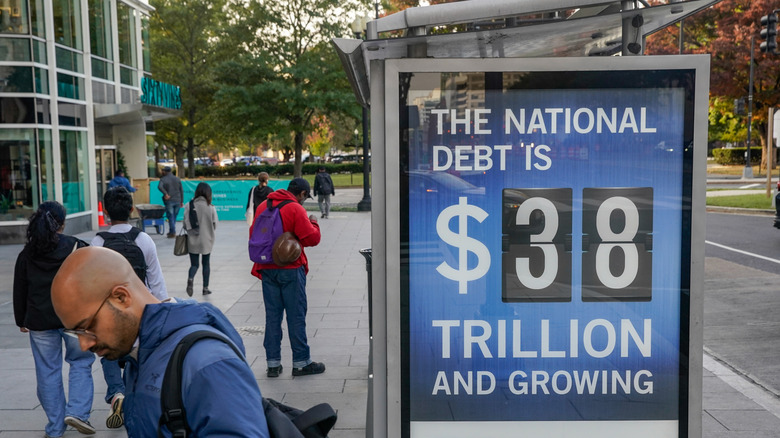
The amount of debt owed by the U.S. government is another factor preventing mortgage rates from dropping significantly. As of October 2025, the gross national debt hit a record $38 trillion. This matters because when the national debt is high, the government has to issue more Treasury bonds to borrow money. This increases supply, which pushes up yields on a 10-year Treasury note. This, as previously discussed, has the unfortunate consequence of moving in lockstep with mortgage rates.
Jeff Tucker, principal economist for Windermere Real Estate in Seattle, told Yahoo Finance, "The most relevant consequence of the higher national debt for the housing market, in particular, is higher borrowing costs in the medium- to long-term." While mortgage rates did hit a three-year low in January 2026, Tucker emphasized, "We're not going back to the world of 3% mortgage rates, pretty unlikely to get back to the world of 4% mortgage rates." In fact, he said "we're going to be in a world of higher interest rates for the medium- to long-term."
5. Consumers are still spending

Like the job market, strong consumer spending is another indication that the economy is strong. However, when spending is growing it reduces the chance that the Fed will lower rates — which in turn leads to higher mortgage rates. Despite the affordability crisis that many Americans are facing, consumer spending –which accounts for about 70% of the country's gross domestic product – has been on the rise. According to the Bureau of Economic Analysis, personal consumption expenditures (PCE) rose 0.5% in both October and November. This increase was driven largely by spending on services such as healthcare, financial services and insurance, and housing as well as higher spending on goods like gasoline, energy, and cars and car parts.
However, it's worth noting that the lion's share of this consumer spending is coming from wealthy Americans. According to the Morning Brief, those with incomes in the top 20% account for almost 60% of all spending — resulting in a K-shaped economy in which higher-income households continue to spend strongly while lower-income households face increased financial strain. Regardless, as long as consumer spending appears strong, mortgage rates will be affected.
According to Ksenia Bushmeneva, an economist with TD Bank, consumer spending is expected to remain solid in 2026. As a result, the company has revised its consumer spending forecast to be higher than previously estimated for the duration of 2026. This means that as long as spending continues at its current pace, Americans will face higher mortgage rates.