

How Much Does Letting Your Faucet Drip Cost?
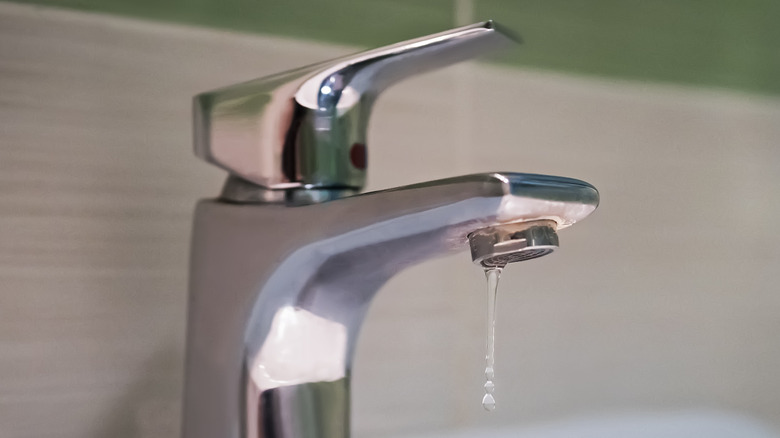
When extremely low temperatures arrive in winter, you might worry about problems occurring inside your house, such as freezing pipes that burst. You've probably heard that allowing a faucet to drip keeps the water moving in the pipes and relieves pressure, which prevents damage when the temperatures dip below freezing. As long as the faucet is far away from where water service enters your home, this trick should work to keep the water flowing through the entire system.
Needless to say, this trick comes with a cost by increasing your water bill. But is this increased cost enough to actually worry about? Leaving one faucet running with a drip every second would result in 86,400 drips over a 24-hour period, according to a U.S. Geological Survey (USGS) calculator. That equals about 5.7 gallons of lost water. If you live in a U.S. city with some of the highest utility costs and water bills, such as San Francisco, you would pay about 20 to 25 cents for the 5.7 gallons of water lost over 24 hours. That's significantly less than the $200 to $3,000 you'll pay to repair a burst pipe, as estimated by Angi.
Now, if you have a leaky faucet because you are delaying making basic repairs to your home, failing to fix a drip that occurs every second over an entire month could waste more than 170 gallons of water. This type of continuously leaky faucet could cost you around $6 per month in a higher water bill.
Hidden costs of allowing a faucet to continue leaking
Letting your faucet drip slightly increases your water bill. However, that might not be the only extra costs you incur with a drippy faucet. A constant drip may place extra stress on your supply and sewer pipes, potentially forcing you to call a plumber for repairs earlier than you would otherwise need to. A constant leak might also increase humidity levels in the room, raising the chance of mold and mildew formation that would cost money to remove or repair.
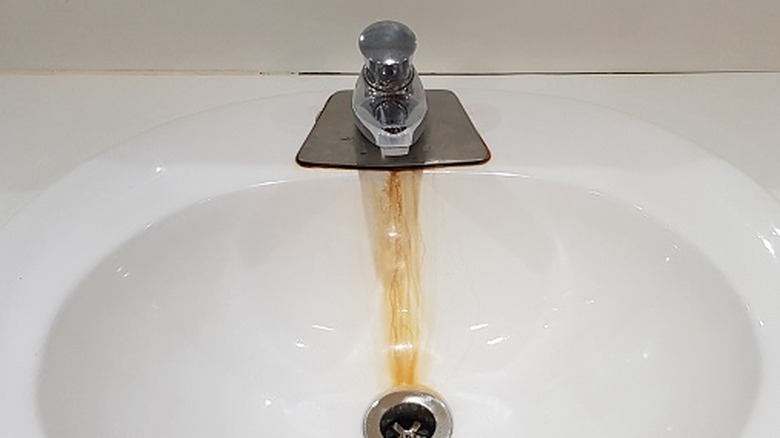
A leak can cause aesthetic issues, too. The constant flow of water might cause a rust stain to develop near the drain, especially if your water contains excess iron. You can usually clean these stains with normal household items or with a rust-cleaning product, but you'll have to invest some time and a little money into the process. Ultimately, fixing the leaking sink and stopping the constant noise of drips can make it easier to relax while you're at home, and it's hard to put a price on that.
Other options for keeping pipes from freezing
If you don't have a leak but are intentionally allowing your faucet to drip to avoid having a frozen pipe, try a different, free option to save money on utility bills and potential repairs. Water pipes running along exterior walls (these are often hidden inside a cabinet) have a high risk of freezing in extremely low outdoor temperatures. To protect those pipes, open the cabinets to allow warmer air from inside the home to easily circulate through the space and warm the pipes.
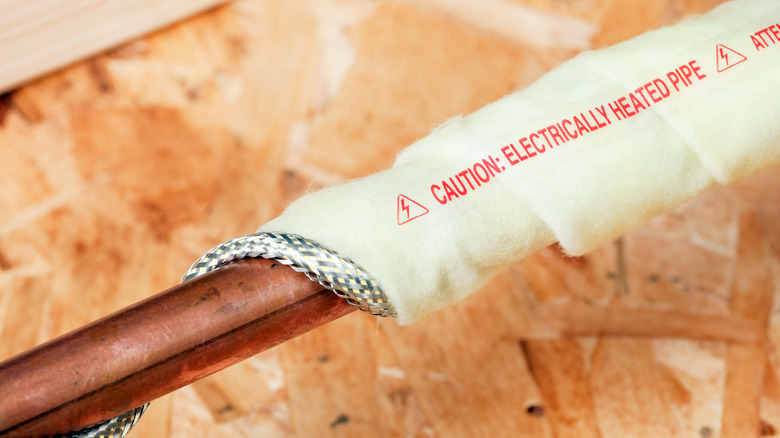
If you don't mind seeing your electric bill increase slightly, you could wrap susceptible pipes in heat tape. The tape is actually a heated cable that you would plug into an outlet. You'll have an upfront expense to purchase the heat tape — about $1 to $3 per linear foot. The cost of electricity to power 10 feet of heat tape constantly for an entire month is only about $4 to $6.
On particularly cold days, another option is to run a small space heater inside the crawlspace where the pipes might freeze. However, you might pay $4.80 for the electricity to run the space heater for 24 hours, which is far pricier than letting a faucet drip. If you are primarily focused on simple tricks to lower your utility bill in winter, you won't want to use this option for the entire month because it will significantly raise your electric bill.