

The Most Livable Metro Is Also One Of The Most Expensive
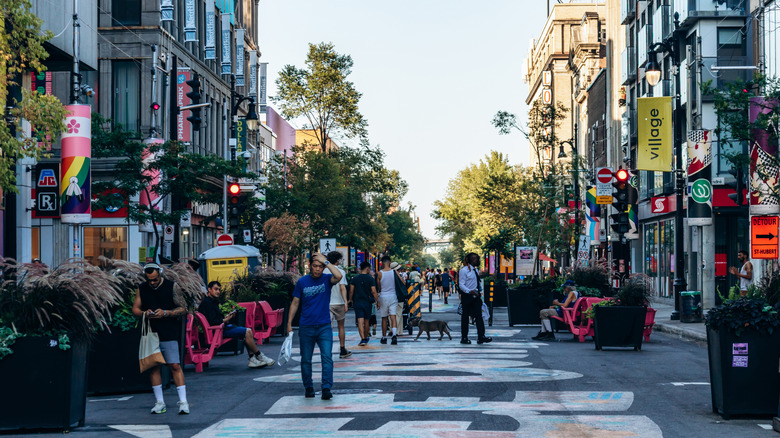
Today, Americans feel lonelier than ever before. According to the American Psychological Association's 2025 Stress in America study, up to 61% of adults feel isolated. Though it is a multifaceted issue, livable communities may be a suitable solution for the loneliness epidemic. Livable communities foster a feeling of safety among residents and enhance the quality of life through conveniences like public transit access, abundance of green spaces, and walkable neighborhoods. A good example is a place like Dunedin, which is one of Florida's most livable retirement communities. However, according to RentCafe, Washington, D.C. ranks as the most livable metro in the country.
To settle on Washington, RentCafe analyzed 149 metropolitan areas using 17 metrics, which centered on socioeconomics, location and community, and quality of life. Its analysis concluded that Washington was the most livable metro in the United States in 2025 largely due to its quality-of-life factors, which included high education rates, easy access to civic and social organizations, and short commutes. In the rankings, Washington beat out places like Kansas City, Missouri and Portland, Maine — the latter was RentCafe's most livable metro in 2024. But while the nation's capital may be the nation's most livable city, it has one major issue: affordability.
Understanding Washington's affordability crisis
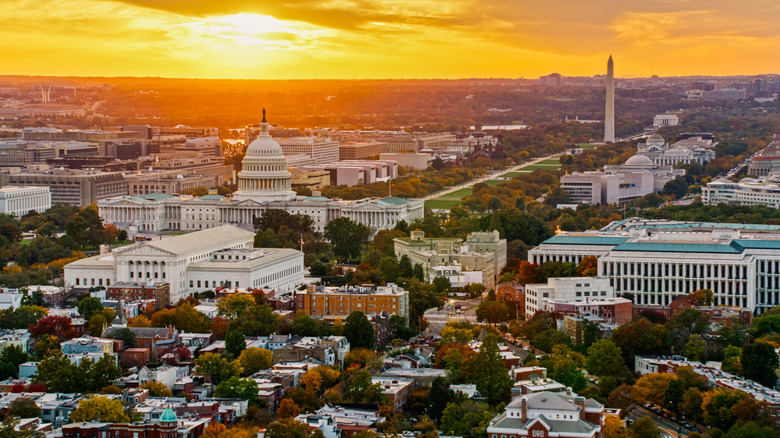
Despite having one of the highest unemployment rates in the nation, Washington is a desirable location for many. However, it will cost you a pretty penny to live there. Per RentCafe's data, the city's cost of living is 39% higher than the national average. Housing costs, which are 112% higher than the national average, are at the heart of the affordability crisis in the capital. In fact, according to SoFi, a person living in Washington can expect to spend anywhere between $1,643 to $3,137 per month on housing. All together, an individual would spend $93,713 annually to live the city, according to the Bureau of Economic Analysis' 2024 personal consumption expenditures data.
Washington's housing crisis stems from a shortage of residential units. The Height of Buildings Act of 1910, which restricts commercial and residential building height to maintain a European aesthetic, has limited the city's housing supply. In addition to the inventory shortage, Washington has a high concentration of wealthy individuals — in fact, it's one of the cities with the fastest-growing wealthy populations. These high-income individuals compete for the same limited housing supply, ultimately raising the costs for all residents.