

Smart Investment Tips Straight From A Baby Boomer

Just as spending habits vary by generation, the way people invest their money is often impacted by when they were born. Part of that comes down to life stage — investing looks different for someone early in their career than it does for someone already in retirement. But economic conditions and major financial events also shape how each generation approaches risk. Baby boomers, currently between the ages of 62 to 80, have spent decades building wealth and have lived through bull markets, financial crises, and periods of high inflation and double-digit interest rates.
Stuart A. Schiffman, MBA, CFP, ChFC, managing partner of Compound Wealth Advisors, and a baby boomer, has several tips garnered from his years of experience. Younger investors may be wise to heed these. From embracing opportunities and avoiding emotional moves to being wary of who you're taking advice from, boomers like Schiffman have seen what works; and following this advice, which he shared with GOBankingRates, can help future generations build sound investing strategies and grow long-term wealth.
When opportunity knocks, open the door
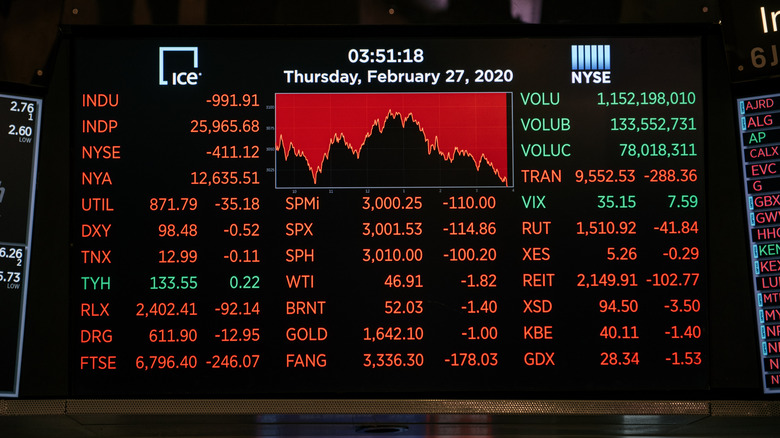
One such tip — given to Schiffman by a trader early in his career — is that you only get a few chances to make it big in the stock market, so when an opportunity presents itself, go all in. Schiffman explained that "... the market will take a nosedive four or five times or about once every 10 years for any one of a number of different reasons," adding that after the market crashed in 1987, "one fellow I knew took his entire life savings and invested in the market the day after Black Monday ... Within a week, the market recovered."
History has shown that when the stock market crashes or experiences large dips, in most cases, it surges within a year — and often posts triple-digit percentage gains after five years. For instance, after falling 9% on Oct. 15, 2008, the market had a return of 24% after one year and a whopping 109% after five years. There are plenty of examples of similar market patterns; and in many of those cases, savvy investors such as Warren Buffett, Jamie Dimon, and Carl Icahn were able to make huge profits by taking advantage of the market pullbacks.
Be careful who you listen to

When deciding whether to act on information you've heard, Schiffman said, it's important to consider how close your source is to the information. There's a big difference between a source who has a front-row seat to the news and one who is passing on second or third-hand information. If it's the latter, he said, "The information by now is fully baked into the price, and these investors are the most likely to lose money by acting on news they think is timely." This is the case in most instances. As the efficient-market hypothesis suggests, available information is almost instantly priced into the market.
One information source that investors should exercise extra caution with is the so-called "finfluencers" — social media personalities who dole out financial advice. While influencers can be credited with generating more interest in investing among younger generations, some of the worst money advice is coming from TikTok and other social media platforms. Finfluencers are widely disseminating information so even if they had a new tip, it would be priced in immediately. An even bigger problem, however, is that they aren't held to the same standards as financial advisors, so it's easy to spread misinformation and use sensational tactics that are focused more on getting clicks than on helping investors.
Don't get emotional

Ignoring your emotions is among the most valuable investing lessons that Schiffman bestows on younger investors. "Humans are not wired to be investors," he said. "Our animal spirits tell us to buy when prices go up and sell when prices go down." However, selling your investments in a panic is something you should never do when the stock market is crashing. "Waiting for those big pullbacks are often the best trades you will ever make," he said.
Boomers are less likely than other generations to make emotionally driven investment decisions. This may be the result of the insights they've gained having lived through so many bull and bear markets. According to a 2021 survey by MagnifyMoney (via PR Newswire), of the 66% of investors who have made emotional investing decisions they later regretted, boomers made up only 54%. Other generations, however, have not fared as well. While Generation Xers were slightly higher at 60%, millennials and Generation Zers reported significantly higher rates of impulsive investment decisions — 73% and 85%, respectively.
Consistency is key

One of the biggest mistakes investors can make is trying to time the market, Schiffman said, adding, "No one has tomorrow's newspaper." It's impossible to predict when the market will have its best days, especially since those often happen when investors least expect them. According to Hartford Funds, 78% of the best stock market days occurred either during a bear market or within the first two months of a new bull market. If you try to time the market and miss out on these days, chances are you'll see poorer returns. "Historically, if you miss the best up market days of the year, you probably have missed the majority of this year's market returns," Schiffman said.
The data backs this up. According to Financial Enhancement Group's analysis of S&P 500 performance over the past 30 years, those who were fully invested in the market every day had an average annualized return of 8%. For those that were intermittently invested and missed the best 10 days, returns decreased to 5.3% per year. Investors who missed out on the 20 best days had an even lower annualized return of 3.4%. Meanwhile, those who missed the 50 best days ended up with negative returns of 0.9%. That's why staying consistently invested in the market is one of the best tips for investing in stocks as a beginner and one of Schiffman's tips for younger generations. "Staying invested through the ups and downs of the market will be your best way of earning stock market returns," he said.
Let it grow

One of the easiest ways to generate wealth is through compounding, and it's one of Schiffman's top lessons for investors. Rather than withdrawing the earnings or interest that your portfolio generates, reinvesting that money allows those earnings to multiply, or compound, over time. For example, if you invested $5,000 earning 5% each year, after one year you would have earned $250 in interest. If you withdrew that sum every year, after 25 years, your withdrawals would amount to $6,250. However, if you were to let the interest compound, after 25 years, the total holdings would grow to more than $16,930 — with $11,930 in total interest earned. Compounding is the reason your net worth will go crazy once it surpasses $100,000.
Schiffman said that if you're not touching your profits, "... your investments will grow geometrically over time. It may not seem like a lot the first few years, but if you are patient, your money will soon double." The 8-4-3 rule illustrates how compounding accelerates over a 15-year period. Typically, growth is slow and gradual growth during the first eight years before starting to ramp up in the following four years. Then, during the final three years, it becomes exponential. Schiffman added that a simple way to determine how long it will take for an investment to double is to divide 72 by the expected annual growth rate. "For example, if you expect 8% per year growth, it will take 72 divided by 8, or nine years for your investment to double."