

The Minimum Savings You Need To Retire At 65 In These 14 Southern States

The Southern part of the nation has many appealing features for retirees, including warm year-round weather, states with tax advantages, and areas with a lower-than-average cost of living. For decades, Florida has been heralded as the paragon of golden-year allure, with one of the most consistently hot and sunny climates in the country and plenty of infrastructure for its considerable elderly population. Florida is joined by Texas and Tennessee as states with no income tax in the Southern region of the country, another major incentive for seniors looking to get the most bang for their retirement buck. Georgia has been a rising contender for the relocating retirees, offering beachfront views, low income tax, and an affordable cost of living.
The Bureau of Economic Analysis tracks regional price parities to compare living expenses across the country, and Southern states routinely fall below the national norms. For instance, Texas, North Carolina, South Carolina, Tennessee, Missouri, and Kentucky all fall below the average cost of living in the U.S. Furthermore, Alabama, West Virginia, Louisiana, Oklahoma, Mississippi, and Arkansas are among the most affordable states in the country, highlighting the concentration of affordability in the South.
With a staggering 62% of U.S. adults falling behind on their retirement savings goals, according to an Allianz survey, it is understandable that many seniors consider relocating to one of these affordable states to stretch their nest egg. Instead of wondering how much money is needed to retire rich, most people are concerned about having sufficient funds to support their golden years. Breaking down the costs of these various Southern states can help give retirees a more accurate idea of their economic accessibility. Here are the minimum savings you need to retire at 65 in these 14 Southern states.
1. Oklahoma

Oklahoma is consistently mentioned among the more affordable places to live in the U.S. In fact, it's one of the rare places with cities where owning a home is cheaper than renting. According to the Missouri Economic Research and Information Center (MERIC), the cost of living in the state is 84.4, compared to the national average, which is represented as 100. From this number, GoBankingRates took average spending data for people 65 and older from the 2024 Consumer Expenditure Survey to determine the annual cost of living for seniors. In Oklahoma, that annual rate reaches $51,848.61.
Subtracting the amount retirees can expect from Social Security, residents are left with an annual bill of $29,411.37. Using the commonplace 4% annual withdrawal rule, a widely applied retirement planning rule of thumb, seniors require about $735,284 to retire in the Sooner State. For perspective, the state's real estate and long-term care costs — two of the largest expenses for retirees — are competitively priced. The average home is $214,507, according to Zillow. CareScout shows that assisted living communities and nursing homes cost $4,823 and $7,604 per month, respectively.
2. Mississippi

Mississippi might be one of the worst states to work in, but retirees don't have to worry about the state's labor force. With a cost-of-living index nearly 15% cheaper than the national average, settling down in the Southern U.S. is appealing. The typical Mississippian spends about $52,524.36 per year, but retirees would only have to put up $30,087.12 after Social Security payments supplement their spending. Assuming typical withdrawal patterns, retirees would only need about $752,178 in savings to live comfortably in Mississippi. That may seem like a lot as a lump sum, but other states require considerably more in the bank.
For perspective, the real estate market is one of the more reasonably priced on this list. The average home goes for $186,256, far below the national average of $357,275. Long-term living costs, which retirees may not want to think about but certainly need to plan for, see similarly decent rates. A month in an assisted living community runs $4,445. When a little more hands-on attention is required, a private room in a nursing home is $9,885 monthly. You might not want to work in the Magnolia State due to low wages, but retiring in the state after earning higher pay in another is classic retirement arbitrage.
3. Alabama

Alabama is another Southern state with a low cost of living that makes it an appealing location for retirees looking to maximize affordability. In fact, a salary of $95,000 is considered upper middle class in the Yellowhammer State, highlighting how much further money can go compared to more expensive regions of the nation. The state's cost-of-living index is pegged at 87.9, meaning residents tend to spend about 12% less than the nationwide standard. That shakes out to a yearly expenditure of $53,998.73. Since seniors receive Social Security in retirement, their annual living costs are slightly lower, landing around $31,561.49. In total, you would need $789,037 in the bank to retire comfortably in Alabama.
Similar to the other Southern states requiring the least amount of savings from retirees, Alabama's housing stock is much more accessible than the rest of the country. The typical home goes for about $229,368, considerably lower than the U.S. average. On a monthly basis, retirees spend $4,573 on average for assisted living communities. A private room in a nursing home is much more expensive at $8,517 per month. Of course, these specific costs will vary based on where retirees decide to spend their golden years in Alabama.
4. West Virginia
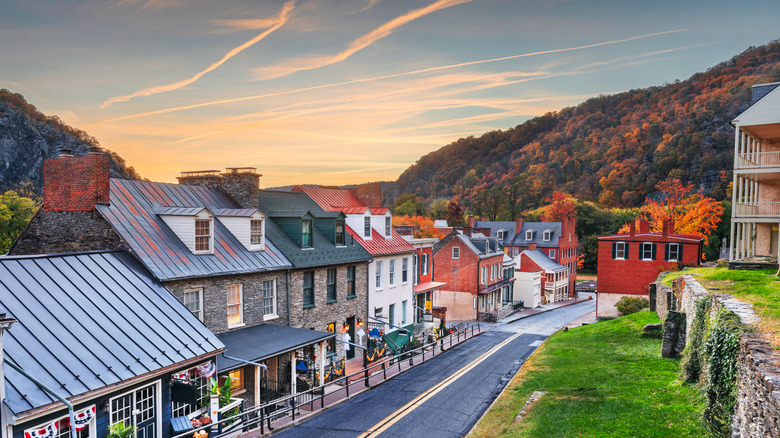
If you're looking for a mountainous retirement scene with access to some of the Southern U.S.'s most stunning landscapes, West Virginia may be calling your name. The cost of living on an annual basis rests at $54,121.59, with a cost-of-living index at 88.1, compared to the rest of the country. Retirees can get by spending even less once Social Security payments kick in. After accounting for these disbursements, seniors only need to spend $31,684.35 per year. Thus, a savings of $792,109 should suffice to retire comfortably there.
West Virginia's reduced cost of living extends to its housing market, helping residents achieve the highest home ownership rate in the country. Nearly 80% of residents own their home, which bodes well for retirees looking to extend their nest egg. With an average home price of $168,655 — the lowest on this list and among the most affordable in the country — you can see why seniors are attracted to this Southern belle. Your retirement savings won't take much more of a hit from long-term care expenses, either. An assisted living community in the Mountain State costs $5,600 per month. As is the case with every locale, a private room in a nursing home is more expensive, costing $12,866 per month.
5. Arkansas

Understandably, Arkansas's lower-than-average living expenses come with one of the lowest median salaries in the country. Of course, this doesn't impact retirees who are out of the workforce. If you move to this Southern hotspot of affordability, you only need to budget for $54,858.78 per year. The cost-of-living index hovers around 89.3. Naturally, seniors get a major break with Social Security payments, cutting their annual spending in Arkansas to about $32,421.54. Altogether, $810,358 should be enough to retire peacefully in the Natural State.
Retirees looking to buy a home in Arkansas will be pleased to find a reasonable real estate market. The average home price is a modest $216,491, considerably more affordable than the national average. These moderate prices continue as seniors seek out long-term healthcare in their later years. An assisted living community in Arkansas is usually around $4,724 per month, while a private room in a nursing home costs $7,711 — among the more economical in this list of affordable Southern states to retire in.
6. Tennessee

Tennessee's latest tourism boom might surprise you as more people flock to the Southern state for the nightlife, nature, and history. However, that's not where the state's appeal ends. With a cost-of-living index at 90.3, budget-conscious Americans also seek out Tennessee for its economical costs. With living expenses around 10% below the national average, your money can go much further. The annual cost of living hovers around $55,473.10. For seniors receiving Social Security payments, their effective annual expenses slump to $33,035.86. In total, you would need about $825,896 in savings to retire comfortably at 65 in the Volunteer State.
The typical home in Tennessee isn't far off from the U.S. average, landing at $323,808, without much change from the prior year. When seniors transition to prolonged healthcare, the expenses aren't too punitive either. For $5,358, you can secure a spot in an assisted living community. The same amount of time in a private room of a nursing home is $9,855. All in all, Tennessee offers an affordable place to retire for seniors looking to protect their nest egg while maintaining a high standard of living.
7. Texas

Think everything is bigger in Texas? Well, apparently not the living costs for retirees. The Lone Star State's cost of living is more than 9% lower than the U.S. average. Residents tend to spend $55,780.26 per year, although seniors average $33,343.02 in annual expenses after Social Security is received. In total, a nest egg of $833,575 can cover your retirement in Texas. Second only to Florida, Texas offers the longest coastline of states on this list of affordable Southern retirement destinations. According to the National Oceanic and Atmospheric Administration, the Lone Star state has 3,359 miles of beachfront property.
Despite this plentiful prime real estate, home prices remain below the national average. Most homes in Texas are valued at $294,444. The state's property costs are on their way down from recent highs, falling 2.4% from the previous year. In terms of extended healthcare expenses, retirees are looking at $5,250 per month for assisted living and $7,087 per month for a nursing home. Although this all sounds enticing, keep in mind that there are some reasons retirees regret moving to Texas.
8. Georgia

The real value of $100 in Georgia might surprise you. Believe it or not, a typical $100 actually gives you $103.30 worth of buying power. How is that possible, exactly? Well, Georgia enjoys a lower cost of living than the rest of the country.
To be sure, the Peach State maintains a cost-of-living index of 91.8, meaning it's more than 8% more affordable than the U.S. average. Thus, residents can skirt by spending less than usual. Often, Georgians do just fine over the course of a year by putting up only $56,394.58. When you calculate the Social Security payments retirees receive, their effective annual living expenses in the state are just $33,957.34. That results in a required savings of $848,933 for those who want to retire in Georgia when they're 65.
For added context, the average home price in the Peach State is $325,887, around the country's average. However, seniors get a decent deal on long-term care costs. A month in an assisted living community costs $4,940, while a month in a private room in a nursing home is $9,429. With a populous capital and a Southern coastline, there's plenty of space for retirees to find something that matches their goals.
9. Kentucky

Kentucky is one of the states with the highest unemployment rates, as a sober reminder that some of the places requiring the least amount of retirement savings don't offer the best working opportunities. The Bluegrass State boasts an annual cost of living about 8% lower than the national average, costing residents around $56,456.01. Once you factor in Social Security payments, seniors in Kentucky can get by spending $34,018.77 annually. That works out to roughly $850,469 in required golden-years savings.
Retirees will find the real estate market in Kentucky moderately priced compared to many more heavily populated areas of the country. The average home is only $224,082, despite being up nearly 3% from the prior year. When you transition to long-term care, the prices remain pretty reasonable. A month in an assisted living community costs around $4,900. Even a private room within a nursing home is lower than in other states on this list, standing at $9,946.
10. South Carolina

One of the telltale warning signs you shouldn't retire yet is not having enough stockpiled to handle the U.S. average cost of living. However, those looking for an oceanfront view for their golden years while still paying less than the national norm should consider South Carolina. The state's cost-of-living index is only 92.5, meaning it's about 7.5% cheaper to live there on average. Residents pay about $56,824.60 annually on average, but those yearly expenses fall to $34,387.36 for retirees getting Social Security income. Overall, you only need about $859,684 in your nest egg to comfortably call the Palmetto State home.
The Census Bureau recently crowned South Carolina its fastest-growing state, with a population boom of nearly 80,000 between 2024 and 2025. Despite this popularity, housing prices remain below the national average, sitting at just $296,981. When the time comes for seniors to seek out long-term healthcare options, they'll find equally moderate prices. For $5,200 per month, residents can access an assisted living community. The per-month cost for a nursing home is higher at $9,536.
11. Louisiana

There are many reasons Americans delay retirement, and a rising cost of living is among the most impactful. Between 2021 and 2025, cumulative inflation reached over 20%, according to the Bureau of Labor Statistics, eroding Americans' savings, pushing retirement further away for many. Even in the aftermath of this considerable inflation over the past five years, Louisiana has still maintained a cost-of-living index more than 7% lower than the national average. Yearly, residents only need to spend about $56,947.46 on average. When you account for the Social Security payouts for seniors, retirees only need to factor in the annual costs of $34,510.22. Altogether, this means Louisiana demands $862,756 in savings for a comfortable retirement.
Real estate is one of the areas where retirees can save the most in the Pelican State. The typical home is sold for about $206,193, far below the national average. Plus, the prices are continuing to drop. Long-term care is also reasonably manageable in the state. An assisted living community tends to cost $5,100 monthly. Nursing homes are slightly costlier, with a monthly bill of $7,604.
12. North Carolina

North Carolina is beaten out by its southern counterpart, with a cost-of-living index about 5% higher. Still, retirees can get a 3% break on living expenses compared to the U.S. average. Residents spend about $59,834.77 per year. With seniors receiving Social Security disbursements regularly, their cost of living is much lower, at around $37,397.53 in the Tar Heel State. When tallied up across retirement, and assuming a normal withdrawal rate, seniors should budget $934,938 in their savings to call North Carolina home in their golden years.
The typical home in the state is priced at $327,663, a solid $50,000 below the national average. As seniors age, long-term care costs begin to rival property expenses. Those residing in North Carolina should plan to spend about $6,354 per month for an assisted living community and $9,885 for a private room in a nursing home. Whether you're sticking to the capital, venturing off into the countryside, or hitting up North Carolina's seafood capital, you'll find a manageable cost of living in this Southern state, requiring reasonable savings.
13. Florida

The Sunshine State is often cited as the quintessential retirement destination due to its sandy beaches, welcoming climate, affordable costs, and senior-focused communities. As a reflection of the state's popularity among seniors, Florida boasts the second largest concentration of Americans 65 and older in the U.S., only behind Maine. Over 21% of the population is a senior, according to the Population Reference Bureau. Although this increasing popularity among retirees has upped the state's cost of living, it still rests below the national average, albeit by less than a single percent. A 99.5 cost-of-living index translates to an annual living expense of $61,124.84. After Social Security, seniors should expect to spend about $38,687.60 annually. This translates into a required savings of $967,190.
Another symptom of Florida's surging popularity is the rise in housing costs. The average property sells for $369,996, and that's already down more than 5% from the prior year. To make matters worse, Florida is the most rent-burdened state in the country, with nearly one-third of renters spending more than 50% of their income on monthly rent.
Long-term care costs are a mixed bag in the Sunshine State, with some expenses costing much more than others. Seniors usually spend $5,324 for a spot in an assisted living community per month. On the other hand, retirees require about double that amount for a private room in a nursing home, where the bill is typically $11,558 monthly.
14. Virginia

As with all states, there are reasons retirees regret moving to Virginia, but a lack of affordability typically isn't one of those factors. Virginia may require the most savings for retirees compared to the Southern U.S., yet it's still more accessible than many parts of the country. The cost-of-living index is one-tenth of one percent higher than the national average, meaning retirees are spending on par with the countrywide standard. This places the yearly living expense of the typical resident at $61,493.43. Factoring in the state's typical Social Security payout, retirees need to budget about $39,056.19 annually. This requires a total of around $976,405 in savings, assuming a usual withdrawal rate.
Notably, the average home price in Virginia is above the national average, sitting at $400,622. That's already up 1.6% from the year prior. In terms of long-term healthcare costs, residents don't have to pay much more than in other states on this list. A month at an assisted living community runs $6,513, and a private room in a nursing home costs $9,825 — not the cheapest, but not the most expensive either. If you have enough savings, the Old Dominion might be calling your name as an affordable place with a high standard of living.