

11 Reasons Retirees Regret Moving To California

California is home to the largest population of seniors in the entire United States. Nearly 6 million Americans 65 years and older call the Golden State home, according to the Population Reference Bureau. Measured another way, over 15% of the population are seniors. That figure expands to 9 million people when looking at those 60 and older, as reported by the California Department of Aging. The agency expects the elderly to represent an increasingly large portion of the population, too. In fact, seniors could eclipse residents under 18 by 2030, highlighting the country's shifting demographics. The Public Policy Institute of California expects the elderly's share of the state's inhabitants to balloon to 22%, putting it on par with senior hubs, such as Florida.
On its face, California might appear as a paradise for this rapidly growing number of retirees. After all, with diverse landscapes, high living standards, hundreds of miles of beaches, and a warm climate, what could be better? In reality, the Golden State has been battered by a long-running cost-of-living crisis that disproportionately affects the elderly. The U.S. Bureau of Economic Analysis (BEA) reports that the cost of living in California is 12.6% higher than the national average. That means seniors in the state lose more than $0.12 in spending power on every purchase compared to the national norm.
Although there are several factors to consider, this punitive expense burden fuels many of the reasons retirees regret moving to California. Even if you pick the most affordable places to live in California, you may have a tough time avoiding these. The sunny and warm state of California reminds retirees that everything that glitters is not gold when it comes to retirement planning. Sometimes, economic considerations outshine idealistic ideas of the golden years.
1. Elevated housing and rental prices
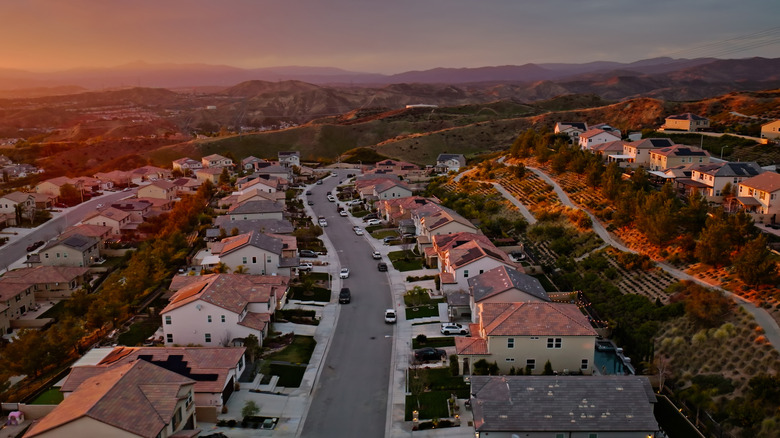
California is home to many of the worst places for a retiree with no savings, and the state's exorbitant real estate prices are largely to blame. According to Zillow, the average home costs a ruinous $755,330, and that's already down more than 2% from the prior year. For reference, the average house in the U.S. is pegged at $357,275, almost $400,000 below that of the Golden State. Redfin reports that California's real estate market is the most unaffordable in the entire country, even exceeding expensive destinations, such as Hawaii and Massachusetts.
Retirees who plan to rent instead of buying a property wouldn't get off much easier than those buying outright or taking out a mortgage. The BEA reports that housing rents in the state exceed the national average by 57.8. Once again, these represent the highest in the country. Retired residents most likely won't see any relief from sky-high real estate prices anytime soon, with house prices expected to jump by 1.2% and rents by 2.2% over the next year, according to Zillow. A recent report by the California Association of Realtors predicts that the state's median home price will reach a record of $905,000 within 2026.
2. High property tax burden

California isn't among the states with the absolute highest property taxes. To be sure, residents only face a 0.70% effective property tax rate, according to the Tax Foundation. For perspective, Illinois, and New Jersey — the two most punitive states in this category — implement rates of 1.83% and 1.77%, respectively. At first blush, these rates look compelling, especially compared to the rest of the country. However, looking at these base figures alone risks overlooking the total annual bill homeowners face in California. The real financial impact of these local surcharges only comes to light when assessing the value of a home. After all, states use assessed home values to provide the base against which property taxes are calculated.
Plugging in those numbers makes the 0.70% rate look much less appealing. Let's look at the average home price in the Golden State for simplicity. A resident paying 0.70% on a property worth $755,330 is facing an annual bill of $5,287. The Tax Foundation estimates that the average property tax payment in the U.S. was just $1,889, dramatically higher than that of California's. Unlike mortgage payments, which end once ownership is established, property taxes are a permanent financial burden for homeowners. This unforeseen housing expense is a serious consideration for retirees who consider moving to California.
3. Progressive state income tax
There are many reasons retirees regret moving to Florida, but the state's lack of income tax remains an appealing draw. The opposite is often true about California. Many seniors second-guess their transition to the Golden State due to its aggressive tax structure. Unlike many states that apply a flat income tax across income brackets, California implements a progressive system. Generally, the more income you earn, the higher your tax burden as a percentage of your earnings. Taxes start at a mere 1% for those earning less than $10,756, but stretch to 13.3% for those earning over $1 million.
This upper end of the spectrum may leave some retirees, even those remaining in the labor market, to shrug off the tiered tax system, assuming such elevated tax levels wouldn't affect them. Even average earners may be looking at a higher tax burden than in another state. The Census Bureau estimates that California's median household income is $96,334. This income would place single filers into the 9.3% tax bracket, and joint filers into the 6% segment. Against that level of income, single retirees in California would be looking at an annual state income tax bill of $8,959. For married couples, that figure would be $5,780.
4. Taxes on retirement distributions

Not only does this graduated tax system penalize high-earning retirees, but it also considerably complicates tax filing. If you're not worrying about these above-average state income taxes because you're out of the workforce, the Golden State won't let you off that easily. As is common in many states, there are many forms of retirement income subject to the state's income tax structure. The California Franchise Tax Board clarifies that distributions from various forms of retirement plans, pensions, and annuities are classified as income in the state, and, therefore, subject to the state's progressive income tax structure.
Fortunately, Social Security is exempt from these state-level taxes, allowing retirees to keep more of their nest egg intact. These exclusions extend to other forms of Social Security payouts, too, including survivor benefits, supplemental security income, and disability insurance. Interestingly, the Golden State is among a small fraction of states that don't tax any forms of Social Security income. In that regard, those seniors relying nearly exclusively on their Social Security payouts get a decent bang for their retirement buck in California.
5. High sales tax

Some retirees purposefully target states where they don't have to pay sales tax to augment their retirement savings. Unfortunately, California doesn't fall into this bucket of sales tax exemptions. In the Golden State, most products and services are slapped with a flat sales tax of 7.25%. Effectively, everything retirees buy is increased by this percentage. Of course, local governments apply their own sales tax, which can hover between 0.10% and 2.00%. Thus, the effective sales tax rate in the state can reach up to 9.25%.
California's base sales tax rate is the single highest in the entire country, although many states top the leaderboard when it comes to combined local and state sales tax. A higher-than-normal sales tax rate alone might not be enough to convince seniors to think twice about retiring in California, but this surcharge is yet another penalty in a long list of excessive taxes. Between a graduated state income tax and extreme annual property tax payments, a high sales tax rate cannot be ignored. There are exceptions, as in many states, for essential medicines and groceries, but these percentages add up dramatically over time, taking away money that could have gone towards reinforcing your nest egg or taking a trip.
6. Fuel costs and taxes

Numbers fluctuate throughout the years, but California is regularly among the states with the absolute highest gas prices. According to AAA, the nationwide average price of gasoline is $2.87. In California, seniors are paying $4.27 per gallon of regular gas. For reference, that number jumps to $4.69 for premium gas and $4.92 for diesel fuel.
Let's see how that per-gallon price difference averages out for seniors. The Department of Transportation's Federal Highway Administration estimates that those 65 and older drive around 7,646 miles per year on average. Furthermore, the Environmental Protection Agency suggests the average fuel economy for U.S. vehicles is 27.1 miles per gallon. Thus, the average senior in California pays $395 more per year than retirees in other states.
One of the hidden drivers of California's towering gas prices is state-implemented fuel taxes. The Energy Information Administration highlights that Californians are taxed the highest at the pump compared to the rest of the country, with a $0.90 per gallon surcharge. This figure includes federal, state, and municipal energy taxes, but the federal taxes only comprise $0.18 of that amount. The rest is fully accounted for by state and local penalties. Retirees don't actually have to pay these premiums on top of the per-gallon price they see at the pump since these taxes are already baked into fuel costs. However, it's crucial to see how California's high taxes across the board can inflate everyday expenses.
7. Rising insurance premiums

Retirees already have to keep an eye out for sneaky reasons their property insurance rates rise. Living in California only complicates that budgeting process since residents pay considerably for various forms of insurance coverage, including home and vehicle. UC Berkeley's Terner Center for Housing Innovation reports that some of the state's largest insurance providers implemented a 10% increase in their policy premiums within the past year alone. This decision was driven by the heightened risk insurers face from a growing prevalence of extreme weather events associated with climate change.
Bankrate estimates that the average homeowner pays $1,641 annually for property coverage. However, more expensive areas result in extraordinary insurance costs. For example, those living in Hollywood see an average annual insurance bill of $11,250. Generally speaking, the more expensive the real estate, the higher the insurance coverage.
Retirees won't see much of a break on their car insurance, either. Bankrate reports that the average driver pays 16% more on their vehicle insurance premiums than the national average. These elevated costs are attributed to the state's excessive living costs, congested urban areas, prevalence of natural disasters, and legislative complications. On an annual basis, retirees would need to set aside $3,119 for their vehicular insurance alone.
8. High healthcare costs

There are many healthcare cost surprises that sneak up on you in retirement, but moving to a state with more expensive medical expenses is an unforced error. You've already seen plenty of areas where the cost of living is considerably higher in California than in the rest of the nation, and these elevated costs seep into the healthcare sector, too. Alarmingly, these steep costs prevent many Californians from obtaining care altogether. The American Medical Association's JAMA Network reports that almost half of residents pushed off or avoided healthcare attention because of the expense. This number jumped to two-thirds among low-income individuals, highlighting the disproportionate effect of these higher-than-average medical costs.
A Genworth and CareScout Cost of Care Survey reveals how long-term care was especially hit hard by California's rising healthcare costs. The report indicates that long-duration care in the Golden State is higher than the national average and outpaces inflation. For instance, a home health aide costs retirees $89,232 annually, up 5% from the prior year. Moving into an assisted living community shares a similar price tag of $88,200. However, this service skyrocketed by 18% year over year. Among the more expensive long-term care costs is a private room in a nursing home, which runs $182,135 per year, up 15% from the previous year. The only senior care service that sits below the national average is adult day care, which costs $23,400.
9. Lofty HOA fees

Homeowners associations (HOAs) may be another reason retirees end up regretting their move to California. These resident-led groups are intended to maintain neighborhoods and communities by preserving shared spaces, paying contractors, and maintaining certain standards. While these groups come with some advantages, the drawback for many residents is the additional monthly costs. First Service Residential posits that the average HOA fee sits between $300 and $400 monthly, which adds up to $3,600 and $4,800 annually. Yet, seniors living in high-end communities could see these fees rise to $500 monthly, which is a wallet-crushing $6,000 annually. This extra burden, although a small portion of overall housing costs, represents another unforeseen cost in an already overly expensive real estate market.
If HOA fees are so high, why not just buy a property in an area without these groups? Well, that's easier said than done. The California Association of Homeowners Associations estimates that over 50,000 HOAs operate in the state. Furthermore, about 65% of home-owning residents are subject to one of these groups. Put another way, more than 14 million Californians are part of them. Thus, the chances of finding an affordable home without these monthly fees are considerably more difficult than in other states. Besides, successfully buying a home without an HOA doesn't preclude the community from adopting one in the future.
10. High opportunity cost

California's lofty cost of living not only dips deeper into the savings of retirees. It also eats away at potential long-term wealth accumulation gains by diverting would-be investments toward a more expensive house and above-average daily costs. This expensive opportunity cost is perhaps the most unrecognized yet corrosive financial repercussion of retiring in the Golden State. Even if you have enough money in savings to retire rich, overspending in a cost-prohibitive state still slashes your nest egg more than necessary. Applying real numbers can help demonstrate those losses.
Since homes tend to represent the single largest investment for retirees, let's see how the price premium in California can erode a nest egg. As mentioned before, the Golden State's average home price is $755,330, which is $398,055 more than the national average of $357,275. Over the past 100 years, the S&P 500 has returned about 10% annually on average. Applying that rate of growth to the $398,055 seniors could keep invested — when not buying a home in California — the return is a welcome $39,805. This opportunity cost applies to every dollar you'd have to spend extra in retirement on the Golden State's higher cost of living.
11. Home maintenance costs

Believe it or not, there's yet another home-related reason retirees regret moving to California. In reality, most of these house-associated costs are higher than average by virtue of the state's housing stock being so inflated compared to the national average. Perhaps the last surprise cost new homeowners in the Golden State experience, although it's among the most costly, is maintenance costs. This can include anything from routine gutter cleanings and general lawn care to major projects, such as roof replacements and driveway repaving. The financial challenge is that these costs aren't only fixed and unavoidable, but they can also increase over time with inflation.
According to the Federal Reserve Bank of Minneapolis, expenses unrelated to mortgage payments are often the main drivers of overall housing costs, with general upkeep comprising a decent chunk of that. Over a recent three-year period, maintenance costs rose more quickly than general inflation, rising by 15%. A Bankrate assessment of hidden home costs found that the average household spends $8,800 annually on repairs. Regrettably, these costs more than double for homeowners in California, extending to $17,338 yearly.
When you add up these routine and hidden real estate costs on top of the state's extraordinary average home price, the equation quickly highlights why so many seniors find retiring in California not worth the price tag.