

The 11 Top-Selling 'As Seen On TV' Products Of All Time

We may receive a commission on purchases made from links.
If you're a boomer, Gen Xer, or millennial, there's a good chance you're old enough to remember waking up in the early hours of the morning to a random infomercial for something like fat-burning exercise equipment or a supposedly magical cleaning solution. Either way, some of these items left such a strong impression that kids would run to their parents in an attempt to convince them their family absolutely needed a Magic Bullet or Snuggie. The funny thing is, a handful of these inventions turned out viable enough that they transcended the "as seen on TV" world and managed not to fade into the background of '90s and early 2000s nostalgia.
In the decades since Americans were first introduced to the idea of buying specialized products directly through these infomercial ads or outlets like the Home Shopping Network, some of these items went on to move millions of units or become cultural mainstays that have since generated billions of dollars in revenue. Now, it's easy to walk past some of these products in stores without even noticing that they were once the same goods overly enthusiastic infomercial pitchmen would peddle on daytime TV. Those that stood the test of time became the best-known and best-selling "as seen on TV" products ever.
Ginsu Knives
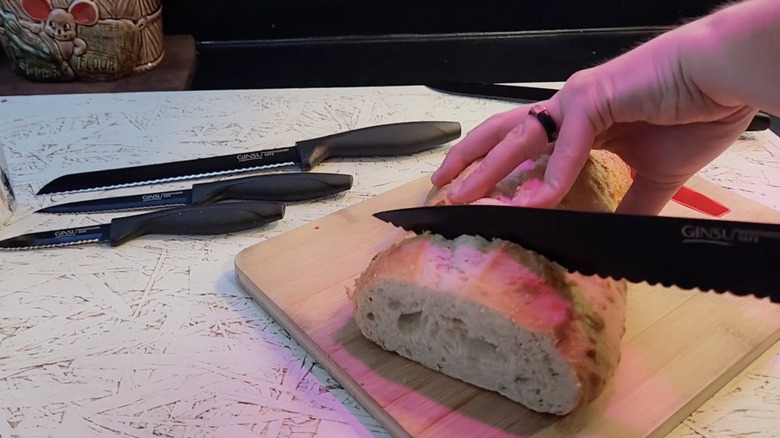
What makes an "as seen on TV" product memorable or enduring doesn't always come down to accurate usage. Often, success comes from the highly gimmicky and over-the-top ways in which pitchmen demonstrate just how effective the item is. There's no logical reason you'd need a knife simply because it could cut through a tin can or water hose, but those exaggerated gestures helped convince millions of people to buy Ginsu knives after they were first unveiled in 1978. Using classic infomercial sales techniques like offering no-money-down free trials and bundling free extra items with many of its flagship products, Ginsu carved itself a place in culinary history and remains popular today.
Though Ginsu knives were heavily marketed as Japanese inspired, the men behind the infomercials, Barry Becher and Ed Valenti, actually got their start in Warwick, Rhode Island. According to the New York Times, the self-proclaimed "Ginsu Guys" successfully sold over 3 million sets of knives and earned around $30 million by 1985. The company was then acquired by Warren Buffett's Berkshire Hathaway — a strong indicator of any private enterprise's success.
Today, you can easily find and buy Ginsu knives from retailers like Walmart. While there are lots of kitchen gadgets you should stop buying to save money, few people would judge you for investing in a Ginsu product just to see if it really can cut through both a steel nail and a pineapple.
P90X

The promise of P90X is in the product's name: In just 90 days, the workout program will supposedly get you into shape and fundamentally change your approach to fitness. To many, P90X made for a viable way to avoid gyms and the sneaky ways they trick members into spending money. Additionally, the Power 90 Extreme DVD fitness program offered self-conscious consumers and reformed couch potatoes a chance to makeover their bodies safely at home.
P90X left enough of a mark after its initial early-2000s release to inspire the follow up P90X2 program, which dropped in late 2011 ahead of the New Year fitness rush. Tony Horton, the man behind P90X, wasn't always the aspirational fitness guru that many know him to be. He grew up scrawny and bullied, and didn't get into lifting weights until college. He ultimately moved to California to pursue acting, but wound up pivoting to personal training before getting into the world of workout videos.
In addition to launching the wildly successful P90X system, Horton would become a reputable celebrity fitness trainer, helping to get big names like Annie Lennox, Bruce Springsteen, and Usher into top shape. As of November 2024, Storytelling for Entrepreneurs reports P90X sold 4 million DVD copies and generated $700 million in earnings.
Total Gym
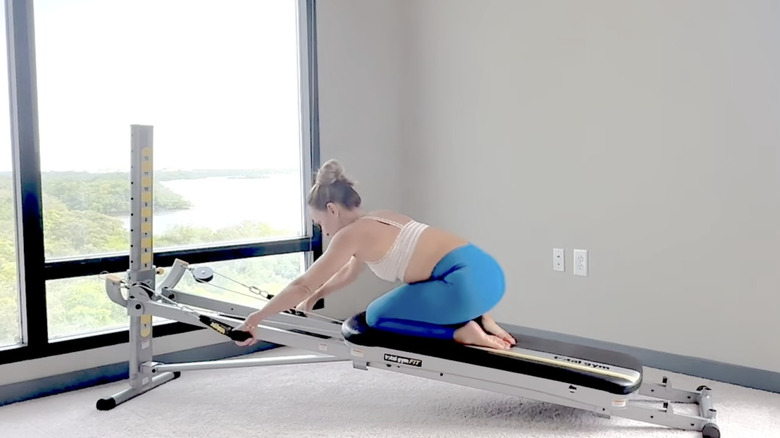
If you didn't grow up in the 1990s, it might be hard to understand just how popular martial artist and actor Chuck Norris was. Before he became the ultimate "tough guy" meme, Norris had the average American household in a figurative chokehold thanks to his hit series "Walker: Texas Ranger." And if you didn't see him on that show, there's a very good chance you knew him through his ceaseless promotion of Total Gym, a versatile home workout apparatus made popular through a series of infomercials featuring celebrity-endorsements from the likes of Norris and model Christie Brinkley.
According to the official Total Gym website, CEO Tom Campanaro developed the first Total Gym prototype back in 1974 before starting to market it 1976. It wasn't until the 1990s that Campanaro teamed up with American Telecast Products (ATP) to produce the first of many iconic infomercials. From there, the Total Gym was an instant success thanks to both the variety of exercises it allows and the fact that it can be easily folded up and stored.
Total Gym's website reports the product has sold over 4 million units across 85 different countries. By 2004, a company representative told Smart Business the product had brought in over $1 billion — and it's still selling today.
Magic Bullet
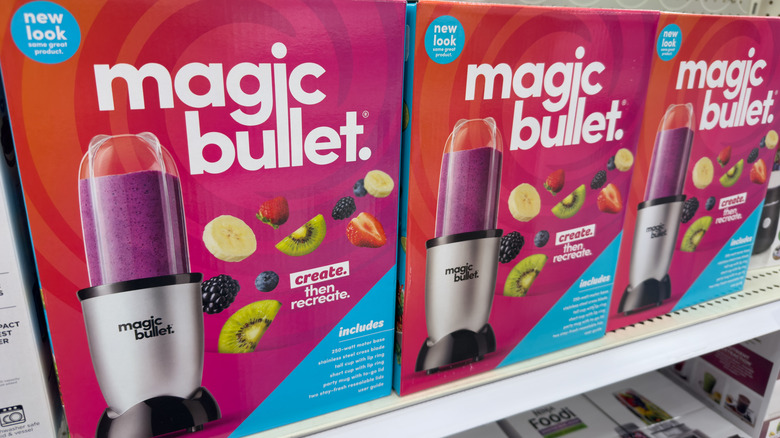
When Alchemy Worldwide first released the Magic Bullet blender in 2003, the brand likely had no idea how big of a hit it would prove to be. The product kit came with a variety of dishwasher-safe cups and mugs and was notable for its small and convenient size, a powerful motor, and razor-sharp blades. Altogether, the Magic Bullet is a machine capable of creating everything from salsa and nacho cheese to ice cream and sorbets.
The Magic Bullet became one of the most successful "as seen on TV" products very quickly, and soon gave way to the NutriBullet and other updated takes on the innovative blending technology. Unfortunately for Alchemy Worldwide, that also meant going to court to fight a crop of knock-offs that hit the market in an attempt to capitalize off the product's success. The Los Angeles Business Journal reports the company spent at least $2 million to keep counterfeiters at bay, and it's also been the target of lawsuits related to those famously sharp blades and at least one exploding NutriBullet.
Despite the legal turmoil, the Magic Bullet's success was likely worth the fees: By 2006, the Los Angeles Business Journal reports the blender moved 7 million units and earned over $250 million. According to the brand's LinkedIn page, that figure has since grown to over 60 million products sold — and you can still purchase the Magic Bullet from major retailers today.
Ronco Showtime Rotisserie
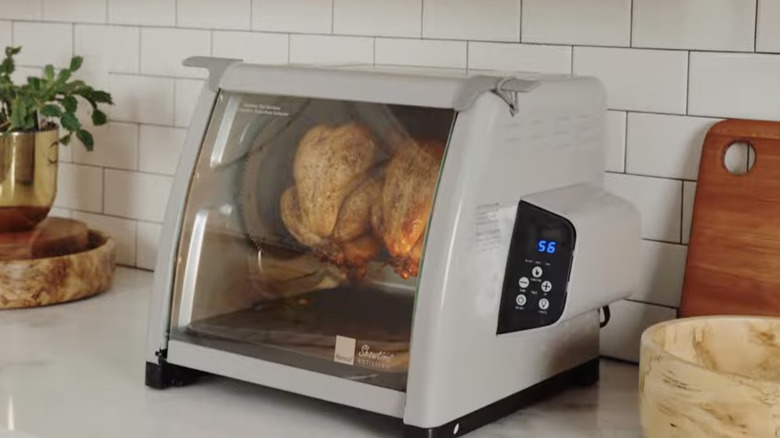
It used to be that if you wanted to enjoy a juicy and delicious rotisserie chicken, you would buy them pre-cooked at a local grocery store. Then, in 1998, Ron Popiel, the inventor and founder of the Ronco brand, introduced the world to the Showtime Rotisserie & BBQ oven alongside now-iconic catchphrases like "Set it, and forget it!" and "But wait, there's more!" The compact appliance promised a succulent rotisserie chicken alongside a 100% satisfaction guarantee.
The marketing was convincing. Not only did the infomercial reveal Ronco's Showtime Rotisserie cost less than $100, but as was the case with many products of the infomercial era, you could also buy it on a payment plan. In the Showtime Rotisserie's case, only needed to make five payments of $19.99 each. American consumers loved the concept and the friendly pricing structure, and the Showtime Rotisserie became a hit. The company ultimately went on to make multiple variations, all of which remain available for purchase.
The Showtime Rotisserie's legacy has never gone away, and it's sold around 8 million units to date. All told, Ronco's website boasts it's made over $2 billion in revenue.
PedEgg
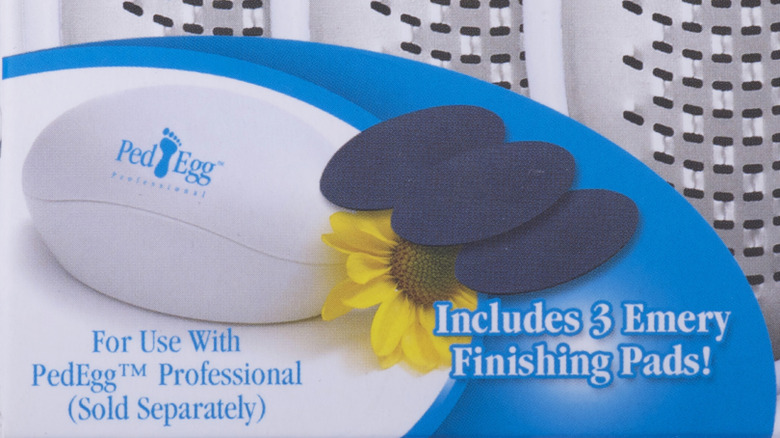
Cracked and dry heels are the bane of many a woman's existence, especially during the warm months where wearing sandals on the beach or peep-toe stilettos on a night out becomes the norm. What separates the PedEgg foot file and callus remover from much of its competition is its ergonomic design and the fact that the dead skin it scrapes away gets neatly stored inside the product instead of scattering all over the floor.
Thanks in part to getting featured on ABC's "The View," the PedEgg was massively popular in the early 2000s. There are millions of confirmed sales of the original PedEgg, with some saying that TeleBrands, the product's manufacturer, moved as many as 50 million units of various related products. Though recognized as an "as seen on TV" company, TeleBrands revealed to ABC News that upwards of 90% of its product sales came from physical stores like Walmart.
Though it's a popular product, the PedEgg still managed to court controversy: Unhappy models have sued over their commercial appearances and even alleged the product doesn't really work. Meanwhile, some medical professionals worry the file might work so well that it could potentially harm users. Even so, the iconic foot file remains for sale in stores and through online retailers like Amazon.
OxiClean
Depending on your age, you have probably heard the phrase, "Billy Mays here!" at least a few hundred times while clicking through TV channels. Mays was perhaps one of the best-known pitchmen of the "as seen on TV" era, and his distinct voice and intense enthusiasm somehow managed not to turn viewers off the way some of his fellow product spokespeople did.
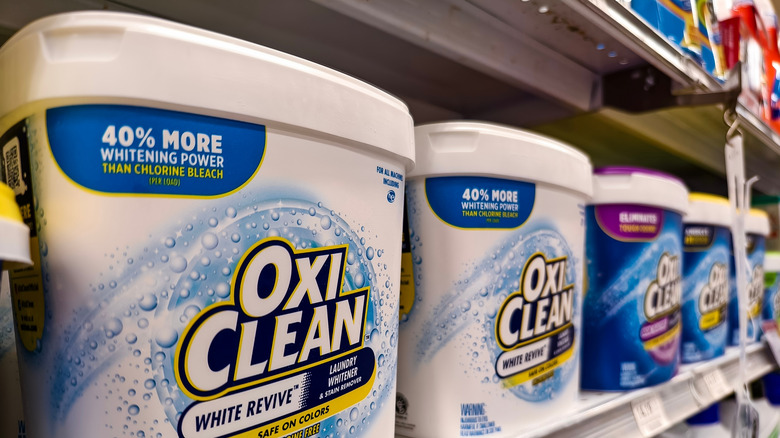
It was Mays' ability to sell that helped OxiClean bridge the gap between passing fad and reputable mainstay. The laundry stain remover impressed American customers due to how well it did its job. In fact, OxiClean was so successful it eventually found its way into other products made by big-name laundry brands like XTRA and Arm & Hammer. Granted, the fact that all three of those brands are owned by the same parent company, Church & Dwight, may have also played a role in that particular development for the product line. But while some insider action may have informed the wide reach OxiClean has today, it's worth noting that the product was viable enough on its own that the parent company initially spent $325 million to buy it.
Because of its sheer popularity and inclusion in so many products, it's not clear exactly how many units OxiClean has sold to date. However, the combination of direct sales via infomercials, the Home Shopping Network, and retail availability is estimated to have generated over $5 billion in earnings — that's not bad for a product reportedly first launched out of a garage in the '90s.
Flex Seal
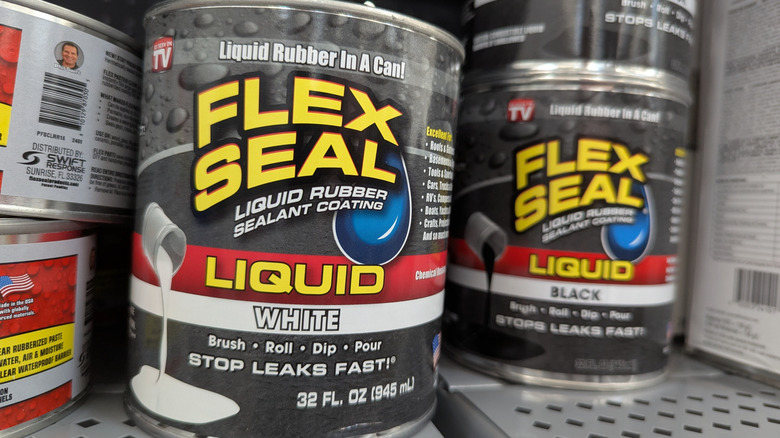
Flex Seal stands apart from many of the other "as seen on TV" products to achieve lasting fame. First released in 2011, it came to be near the end of the era most commonly associated with TV infomercials and right around when social media was becoming the dominant method for word-of-mouth advertisement. The brand deftly navigated both worlds, and the outrageous antics CEO and co-founder Phil Swift employed to market the liquid rubber and tape helped Flex Seal become an enduring (and profitable) meme.
In a way, Swift and Flex Seal represent the end of traditional "as seen on TV" marketing. Swift has fully leaned into the concept of digital visibility, and has continued actively promoting his products on platforms like YouTube and TikTok into 2026. Yet, the over-the-top nature of Flex Seal ads taps into the true spirit of the cheesy '80s and '90s infomercials that older generations grew up with.
Flex Seal's ongoing popularity helps it maintain reported annual earnings of around $16 million according to CompWorth. Meanwhile, Forbes alleged the product's success also helped Swift afford a $20 million mansion in South Florida.
Proactiv
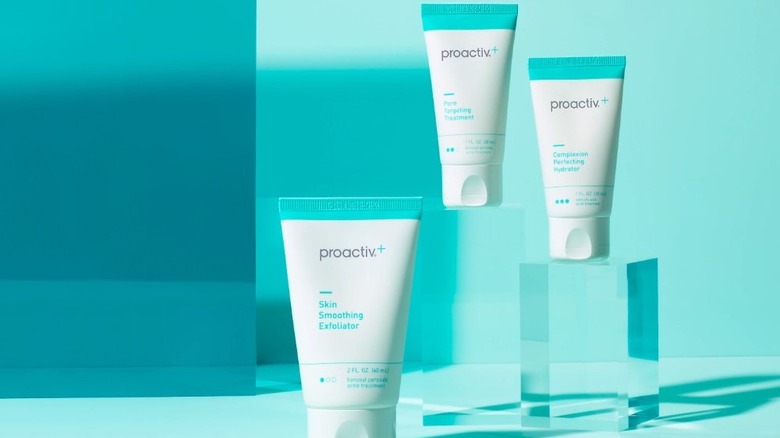
Proactiv wasn't just one of the top-selling "as seen on TV" products of all time, it was a beacon of hope for generations of teenagers struggling with facial acne. Although the brand was officially launched in 1995, it took nearly a decade for it to really get off the ground. But thanks to a series of successful ad campaigns featuring the likes of Jessica Simpson, Avril Lavigne, Jennifer Love Hewitt, and Justin Bieber, Proactiv was a household name by the early 2010s.
A combination of those high-profile endorsements and relatable success stories made Proactiv a force in the skincare industry. According to Yahoo Finance, the company generated nearly $2 billion in sales between 2014 and 2015 alone. It then partnered with Nestle in 2016, before ultimately getting bought by Taro Pharmaceutical Industries in 2022. That same year, Proactiv rebranded itself to Alchemee in an effort to regain a competitive edge. According to a press release from that time, the brand revealed it had successfully sold products to over 20 million customers since its inception (via PR Newswire). It may not be as popular as it once was, but Proactiv will continue to live on in the hearts of the millennial and Gen-Z generations, even as they're crushed by money-phobia.
Snuggie
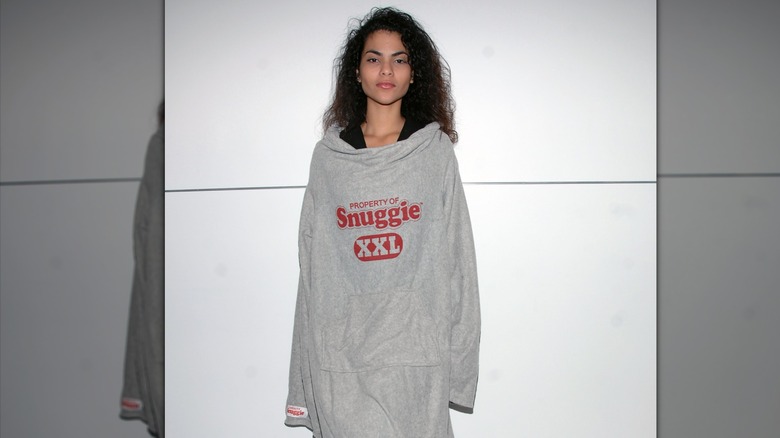
The success of the Snuggie is what happens when perfect timing meets the ability to lean into the joke. The Snuggie was first released in 2008, during the waning years of "as seen on TV" advertising. Snuggies actually weren't the first blankets with sleeves to be sold, but the brand's unapologetically cheesy and iconic infomercials helped the product go viral in a way none of its competition ever would.
Somehow, at a time when the "as seen on TV" concept was losing its luster, Snuggies were able to push through infomercial weariness and garner a massive following. Within its first five years of availability, Yahoo Finance reports consumers purchased more than 30 million Snuggies and the brand earned over $500 million in revenue. The runaway success of this simple but brilliant invention made it one of the biggest successes from the "as seen on TV" era.
Despite the fact that quite a few people were no longer looking to TV to purchase such products, Snuggie might ultimately prove to be an important lesson in what can happen if you aren't afraid to seize the moment and embrace the cringe.
George Foreman Grill
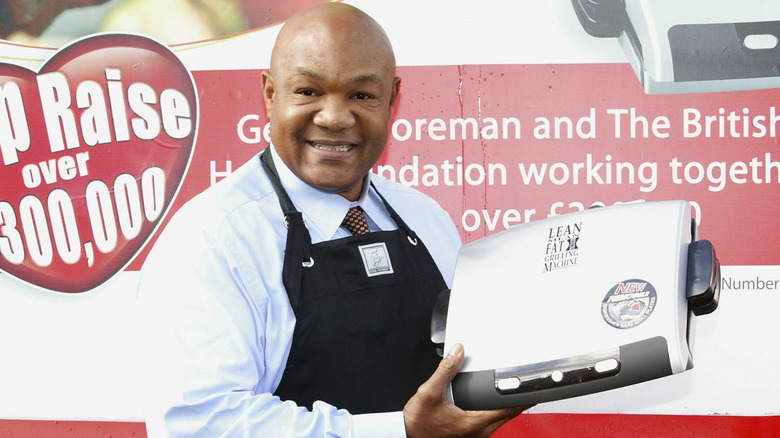
The George Foreman Grill, also known as The Lean, Mean, Fat-Reducing Grilling Machine, might be the top-selling "as seen on TV" product of all time. If nothing else, it was instrumental in crafting the legacy of its namesake boxer.
George Foreman surprised everyone when he defied all expectations and became a champion boxer at age 45. And yet, Foreman managed to top even that monumental achievement by pivoting to the world of infomercials. In 1994 — the same year he won the championship — Foreman attached his name to a tabletop grill that reportedly allowed consumers to prepare their favorite foods without nearly as much grease as other cooking methods.
Perhaps it was the glow of his storybook comeback or his Texan accent, but it was the man as much as the product that charmed American consumers. Over the course of 15 years, he helped sell 100 million units. When Foreman opted to sell the rights to the product that bears his name, the profits only kept coming: He was ultimately paid over $100 million in cash and $10 million in stock for the transaction. With earnings that sizable, Foreman surely had no trouble affording luxuries comparable to the $2.2 million gold bathtub fellow boxer Mike Tyson bought. Though George Foreman himself passed away in March 2025, the legacy of his unlikely success in and out of the boxing ring will go down in athletic and entrepreneurial history forever.