

5 Safety Features That Could Save Seniors Money On Car Insurance

Many people see 65 as the age at which you truly become a senior citizen, because that's around the standard retirement age for many Americans. It was the original full retirement age (FRA) when the Social Security program first launched, and it still remains the age at which you can begin to receive most Medicare benefits. However, it's also the age where car insurance costs may begin to rise again after seeing steady drops over the course of your life.
According to CarInsurance.com, the average car liability-only insurance rate goes up from $775 to $831 from ages 65 to 70 and up to $917 by the time you turn 75 years old. The patterns are also similar for other categories of auto insurance, with the rates becoming similar to what reckless teens would pay as drivers get older.
But unlike teens, seniors have a lot of responsibilities and retirement lurking around the corner, if they aren't retired already. As costs go up and finances become top of mind, retirees should rethink certain bills to save money. And you could definitely do so by getting a car with all the right features. Part of saving money on car insurance as a retiree depends on how safe your car is; with the proper features, like anti-theft systems and anti-lock brakes, you could be saving a lot of money.
Anti-theft systems, immobilizers, and GPS tracking
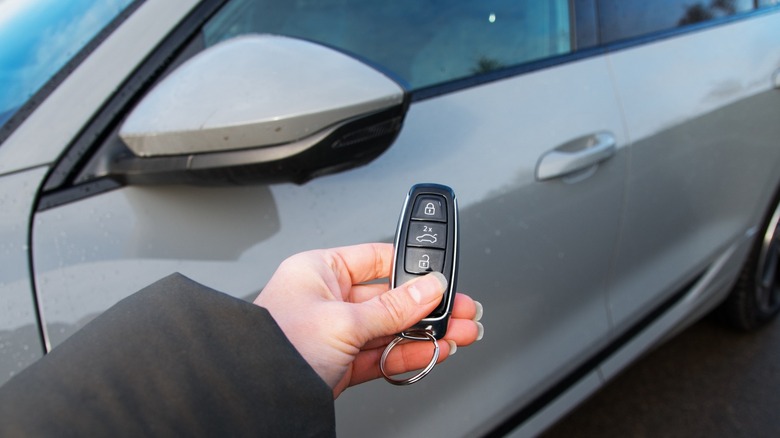
One of the most effective ways to protect your car is to ensure that it's harder to steal. Insurance companies acknowledge this, and according to Forbes, you can get a discount between 5% and 25% on a full coverage policy depending on your insurer and what types of anti-theft systems you have in the car. Geico, for instance, offers 23% maximum potential savings for a car with an anti-theft system — though it doesn't specify exactly which features would earn you the maximum discount.
Many modern cars already come with a suite of anti-theft and GPS tracking features. Anti-theft features like alarms, transponder keys, kill switches, GPS car trackers, steering wheel locks, vehicle recovery systems, automatic door locks, and others often come equipped in modern cars.
When choosing your car, you should go for one that has as many anti-theft features as possible to maximize your insurance savings. Many car brands have GPS tracking systems; General Motors has OnStar, Toyota has Toyota Connected, Nissan has NissanConnect Vehicle Finder, and the list goes on. For this reason, it's probably wise to avoid older Kia and Hyundai cars, as these brands have had to recall and pay restitution for poor anti-theft systems and a lack of immobilizers. That's also why Kia and Hyundai models rank among the cars most likely to be stolen.
Airbags and automatic seat belts
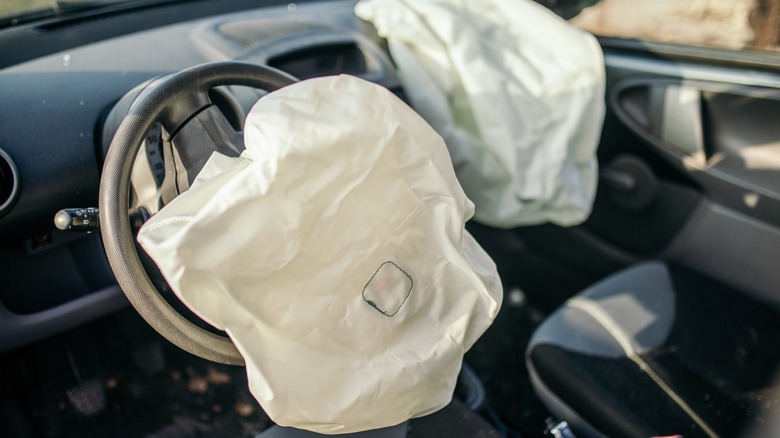
Passive restraints are safety features in a car that protect you automatically in a crash without any action from you as the driver or passenger. In modern cars and insurance speak, this almost always means airbags. Even though seatbelts can restrain you during crashes, they still have to be buckled manually, which means they might not count toward all discounts provided for "passive restraints." In New York State, for instance, the Department of Financial Services mandates discounts on no-fault premiums for cars with automatic seatbelts.
But note that these features typically have to be factory fitted, as insurers are usually skeptical of any third-party safety fittings. Also, some insurers, like Geico, don't treat anti-lock braking systems (ABS) or other crash-avoidance systems as passive restraints, so they might not earn you any "passive restraints" discount points. Although those may count in other standalone safety discount categories.
Lastly, these passive restraint discounts usually only apply to medical-related coverage or the personal injury portion (PIP) of your coverage. State Farm specifically says that you can get up to 40% less on medical-related coverage, and Geico offers up to 23% less on medical payments or PIP.
Daytime running lights
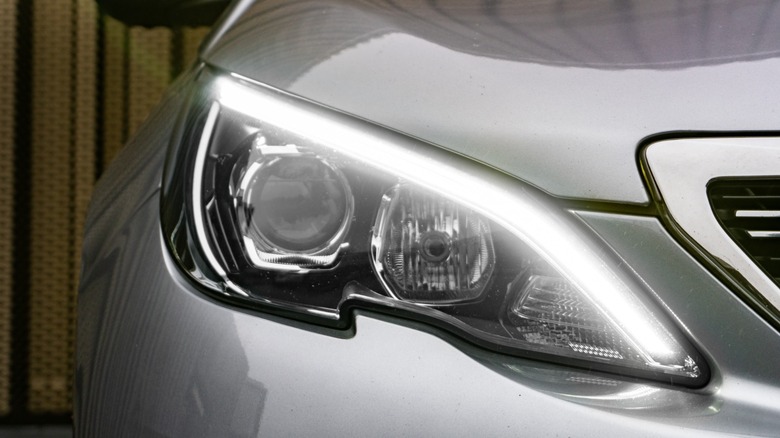
Not to be mistaken for nighttime headlights, daytime running lights (DRLs) are those exterior lights that turn on automatically when a car is running. They are usually not as bright as the regular headlights and are mounted on the front of vehicles. For most modern cars, these are LED strips above or below the headlights, but some older cars just use dimmed headlights. These lights help make the car more conspicuous; since moving objects without light may blend into the background, a vehicle with DRL stands out sooner for pedestrians and motorists alike.
How much it really increases safety compared to non-DRL cars is debatable. But a 2002 study by the Insurance Institute for Highway Safety (IIHS) revealed that vehicles with DRLs were in 3.2% fewer multiple-vehicle accidents. Unfortunately, though, many insurance companies don't offer DRL discounts on coverage or even post-liability premiums. New York seems to be the only state that mandates discounts on the premiums for your liability, collision, No-Fault, and medical payments coverages. Therefore, the New York page for State Farm's discounts lists daytime running lights, but it doesn't say how much and it doesn't seem to extend to other states. Geico is one of the only major insurance companies that offers discounts for DRLs, but the most you'll save is 3% — not much, but it could make a difference in the long run.
Anti-lock brakes

Have you ever braked sharply while driving and noticed a grinding or pulsing feeling from the brake pedal? That's the anti-lock brake system (ABS), and it's designed to keep the tires spinning so that your wheels don't completely lock and cause you to skid or lose control of the vehicle. As long as your wheels keep spinning, you should still have some traction and better control of the stopping vehicle. This extra layer of stopping control makes ABS great for driving when the roads are wet or icy.
Cars from the last decade all come with ABS by default, thanks to the electronic stability control (ESC) regulation the federal government mandated in 2011. While many pre-2011 21st-century cars have ABS and ESC features, some of them — especially base trims — might not, and that could affect your auto insurance. The 2010 Chevrolet Cobalt and 2007 Hyundai Accent GLS are examples of such cars that came with optional ABS packages.
The discount for ABS is usually less than 10%: NYCM Insurance offers 7%, Geico offers 5%, and Mercury Insurance about 1%. Other insurance companies like Allstate and State Farm also offer discounts, but don't publish how much. However, the New York Department for Financial Services mandates discounts on the premiums for liability, collision, No-Fault, and medical payments coverages if your car comes with factory-fitted ABS.
Advanced Driver Assistance Systems
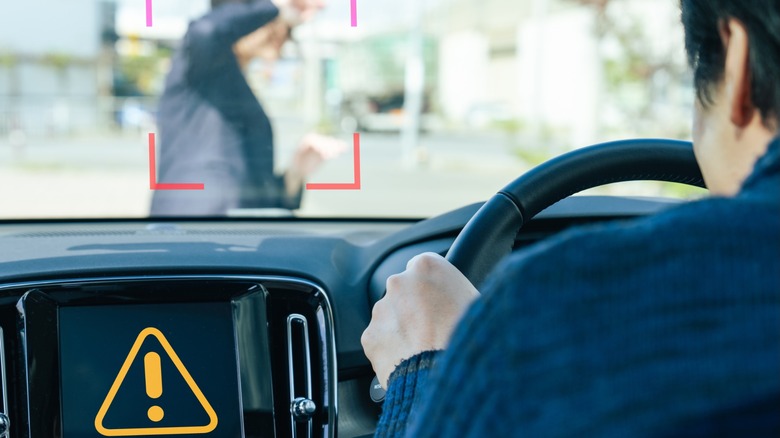
Advanced Driver Assistance Systems (ADAS) aren't really one feature. Instead, they're a group of systems that use cameras, radars, and sensors to warn you about hazards and sometimes step in to avoid or reduce a crash. Common examples include forward collision warning, blind spot monitoring, lane departure alerts, and emergency braking systems.
More and more, modern cars come with such an array of built-in systems and many of them are becoming compulsory safety features car manufacturers must add either by legislation or market demands. Therefore, if you're buying a car from 2020 or later, you'd likely get one with a good chunk of these features — especially on higher trims.
Insurers like NYCM, Mercury Insurance, and Liberty Mutual Insurance offer discounts on insuring cars with ADAS features. However, they may be in the minority since there are debates on how repair costs for all these safety systems negate the insurance safety savings. In any case, seniors could benefit from ADAS since it makes driving more forgiving when reflexes aren't as sharp as they used to be. Fewer safety incidents could mean more savings on insurance.