

The Tax Refund Change Most Filers Will Face In 2026
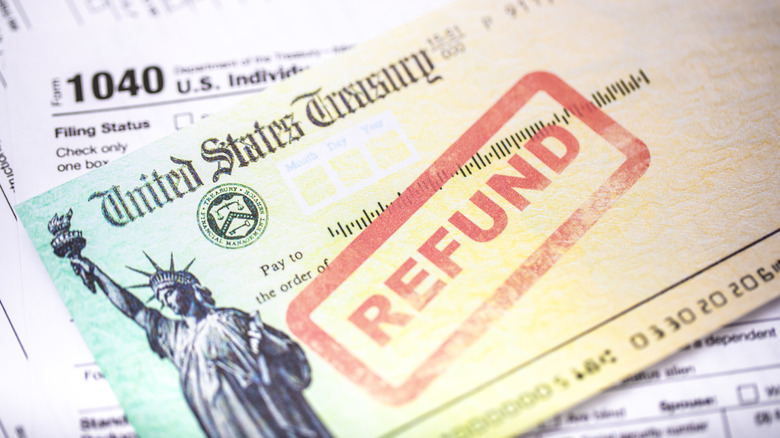
For most people, receiving mail from the Internal Revenue Service (IRS) can be nerve-racking. That is, unless the envelope contains a refund check. Unfortunately for anyone who's grown accustomed to that moment of satisfaction, it's coming to an end as the government phases out paper checks in favor of direct deposit.
In an executive order signed in March 2025, President Trump ordered the change, citing costs, delays, increased risks of fraud, lost payments, theft, and inefficiencies stemming from paper-based payments. In discussing costs, the order said, "Maintaining the physical infrastructure and specialized technology for digitizing paper records cost the American taxpayer over $657 million in Fiscal Year 2024 alone." The statement went on to address other issues, adding that checks sent by the Department of the Treasury are 16 times more likely to not reach their recipient successfully than an electronic funds transfer. The order also pointed out that the volume of complaints arising from issues with paper check delivery has increased dramatically since the COVID-19 pandemic.
The change is expected to speed up the time it takes to receive refunds. According to the IRS, refunds made by direct deposit should be deposited into bank accounts within 21 days — making this the fastest way to receive the refund. The gradual phase-out of paper payments, which began on September 30, 2025, also applies to any tax-related payments being made to the IRS.
Missing direct deposit info could lead to frozen refunds
With limited exceptions, which minors and international and decedent taxpayers, most Americans who file tax returns will be expected to submit their direct deposit information to the IRS. This can be done when filing your return or through the IRS's online portal. Because the vast majority of people already use direct deposit, the new rule isn't likely to have an impact on most Americans. However, those who still rely on paper checks should understand what happens if they don't set up direct deposit.
If you file your return without including direct deposit information, it will still be processed; however, the payment will be frozen until the IRS receives the deposit information, or you make a request for a paper check. The IRS will also freeze the refund if the payment into your direct deposit account is rejected. In the event that your refund is frozen, the IRS will send you a notice by mail, requesting a response within 30 days. If there's no response after six weeks, the agency will issue a paper check.
The IRS is working on solutions for taxpayers who currently don't have access to direct deposit. These include helping open free or low-cost bank accounts or using other electronic payment methods, such as prepaid debit cards, to facilitate refunds. As of now, taxpayers can request a paper check waiver if they don't have access to direct deposit. How long it will take to get your tax refund without direct deposit? Be prepared to wait at last six weeks. Once the check does arrive, though, it's a good idea to look into the best ways to use your tax refund for maximum financial gain.