

These 5 Luxury Brands Are Quietly Losing Value Faster Than Ever
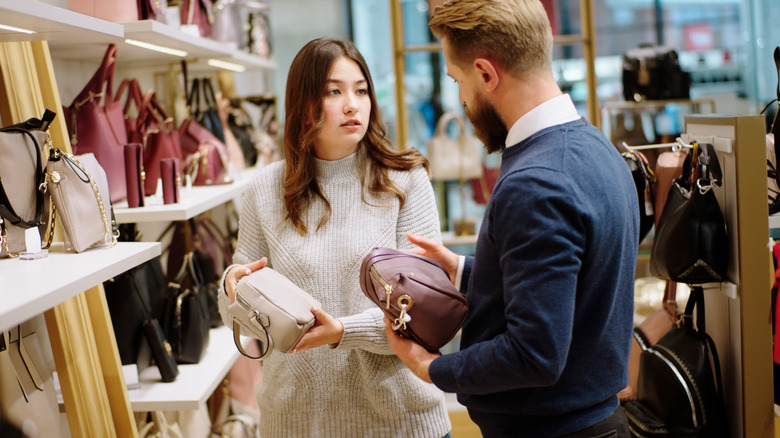
Personal luxury brands like Chanel, Gucci, Burberry, and Louis Vuitton had once seemed hard-to-beat in an industry that thrived on exclusivity, scarcity of products, exceptional craftsmanship, and detailed customer service. More affluent customers gladly paid just to buy logos of premium brands, whereas the aspirational middle class saved for months to purchase its first luxury item. The trend continued even during the pandemic, even more so as buyers honed down on "revenge shopping". The strategy of endlessly raising prices seemed to be working endlessly as well — until it didn't.
In a significant downturn led by overpricing, mass production of "luxury" goods, and a new price-sensitive Chinese market, several popular luxury brands have been losing steam for the last couple of years. Gucci's parent company, Kering, faced its lowest valuation in seven years; LVMH (the conglomerate that owns brands like Dior and Louis Vuitton) fell 9% in stock prices; and Burberry got kicked out of FTSE 100 for a full year after 15 years. In what has been just the third such instance in three decades, the global luxury industry has lost revenue for two consecutive years.
"Luxury is in a death spiral," fashion editor, Katharine K. Zarrella, had mentioned back in 2024 in The New York Times. "After a decade of nearly unfettered growth, the sector is bombing across the globe. Analysts point to less-affluent buyers reining in their spending and slowing demand in China." Consumers are also shifting towards "quiet luxury" brands, like Hermès, which focus more on real craftsmanship, sustainability, and uniqueness instead of relying on hype and loud logos. As a result, brand value of major luxury brands is plummeting — on paper, as well as in the eyes of the consumers.
1. Gucci
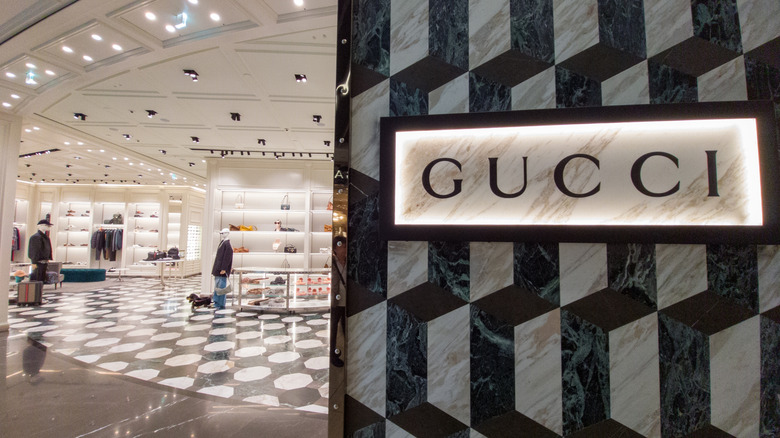
In a year that saw major headwinds in the luxury sector in general, Gucci lost the most value among all luxury brands, per Interbrand's 2025 Best Global Brands report. According to Kering's company website, revenue figures for Gucci dropped by 25% on a comparable basis in the first half of 2025. The drop in wholesale revenue stood at 42%, while sales from retail stores fell by 24%. Despite being one of the biggest brands that the "upper class" millennials spend their money on, Gucci seems to be struggling with a severe identity crisis, where it has failed to maintain its usual bold narrative.
The shift from exclusivity to volume-centric expansion has also led to the brand's downfall after some short-term gains, especially once it abandoned its bold storytelling. "I think of what a fashion editor is wearing — it's not Gucci," Lindsey Solomon, a fashion publicist, had told Business Insider in May 2024. Gucci stock prices hit seven-year low a couple of months after. The appointment of a new artistic director in 2025, Demna, further points to problems in the same direction. While Demna seems to be steering the brand towards streetwear and casualwear, the move might be alienating long-time consumers, who have valued a more heritage-based identity.
Gucci has also faced a massive setback in China, after riding the wave of aspirational consumer market for years. Chinese customers have been holding on to their pockets ever since the pandemic, and the brand's over-reliance in this sector is getting exposed. Q1 sales for Gucci in the Asia-Pacific (driven by China) fell by 25% in Q1 2025, per Kering. Meanwhile, the wealthier segment of the market has been preferring other brands, like Hermès and Chanel.
2. Burberry
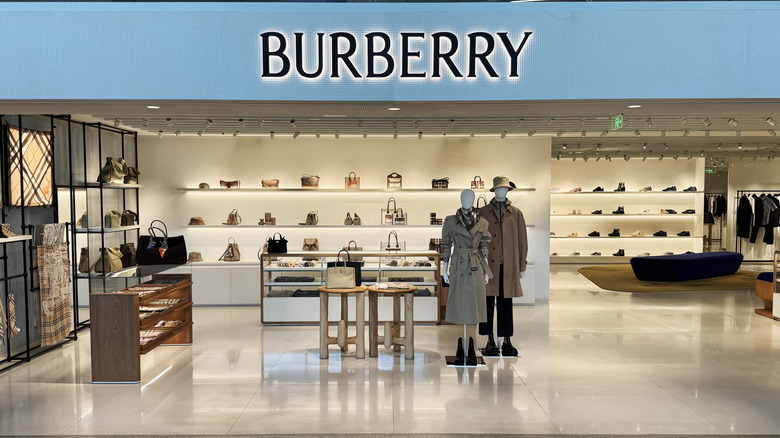
According to Kantar's Brandz rankings, in 2024, Burberry's brand value fell by $2 billion, a 42% plunge compared to 2023, per Fortune. The almost 170-year-old brand also got kicked out of FTSE 100 — Britain's most well-known stock index — during this time, as a result of a loss in sales and dwindling profits. In fact, during the two-year period from January 2023 to December 2024, which saw all major luxury brands struggle, Burberry fared the worst, per Morningstar. Stocks fell by 56%, while the company faced internal problems with top leadership on top of bad industry trends.
Burberry brought in Joshua Schulman to revive the brand from a 40% slump in profits from July 2023 to July 2024, per BBC. But probably the biggest mistake Burberry made was trying to shift upward towards the ultra-luxury segment, which ended up out-pricing its loyal customer base. This happened before the brand axed its boss, Jonathan Akeroyd, after two years of declining sales and a 21% fall in profits in the three months leading up to the decision in 2024. The brand also had to cut down on jobs and suspend dividend payments to shareholders.
Sales have been falling significantly in both China and America for the company during recent times. Nonetheless, numbers for Q3 fiscal 2026 saw some improvements with Schulman bringing the brand narrative back to British heritage. The brand had already faced severe public backlash back in 2018 for burning $28.6 million worth of clothes and accessories to maintain exclusivity and save its products from being stolen or sold cheap. In a global trend that might cut luxury players into clear winners and losers, if Burberry doesn't recover, its aspirational brand status might lose out to the ultra-rich opting for luxury brands that are actually worth the money.
3. LVMH
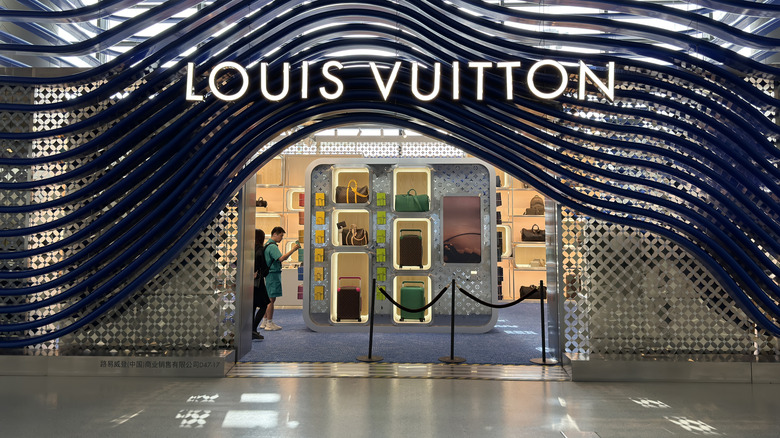
The slump in sales of Louis Vuitton, alongside brands like Dior, have resulted in a drop in LVMH stock prices and brand image ever since the pandemic. LVMH has been down in revenue as well as profits for the first six months of 2025, a 4% and 22% drop, respectively, compared to the same period in 2024, per LVMH. While Louis Vuitton retained its position as the world's most valuable fashion brand in 2025, it still faced a 4.91% loss in value, down to $48.4 billion, per Interbrand. Meanwhile, parent company, LVMH, had to succumb to Hermès in market capitalization for the first time in history.
Louis Vuitton's customers have also had to face a hike in prices as high as 30 to 50% in just a few years. Meanwhile, the brand has been guilty of following a general industry-wide trend, where bags are no longer as artistic or as durable as they used to be — allegedly focusing more on meeting production numbers than maintaining standards in quality. Feeling cheated on both fronts — price and product quality — it is no wonder that customers are feeling disgruntled and not buying anymore.
Dior, the other major luxury player in the group, suffered a 2% year-on-year decline in 2025 Q1, per Investing, with its wines and apparel suffering the most at 8% and 4% drop, respectively. This also led to a slump in shares prices. Dior was also one of the brands that took the biggest hit in terms of consumer expectations. In a survey by YouGov, the percentage of people who were willing to choose Dior over other brands while making a purchase fell from 13.4% in late 2024 to 11.1% in 2025.
4. Chanel
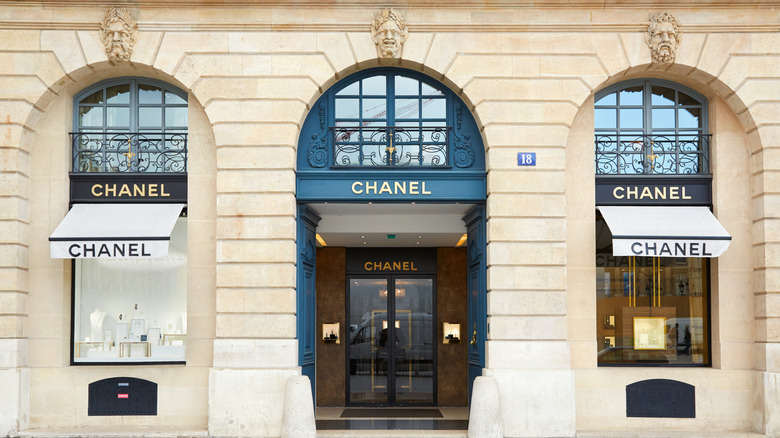
Just like other brands in the space, Chanel is losing steam amidst dwindling revenues in both China and the U.S. In 2024, the brand faced a 4.3% loss in revenue, while the operating profits slumped by 30%, per Business of Fashion. This was the first time the brand stood at net loss since 2020. Chanel's long-time customers in China, who are probably sick of luxury brands that are not worth the money, seem to have found alternatives to traverse the continuous hike in prices as well. E-commerce platforms like Dewu have sprung up that are selling Chanel products at discounted rates.
Luxury brands have long pushed down on the price-hike button to increase their prestige and exclusivity in the eyes of the customers. Trends like "bagflation" capitalized on the wealth of the most affluent consumers, who have been spending like crazy since 2019 — the cheapest Birkin bag from Hermès stands at $13,300. Privately owned by the Wertheimer brothers, Chanel has definitely been no exception to the trend. In the Eastern and Southeast Asian market, the brand constantly hiked prices from 6% to 8% on average, which saw them reach $19.7 billion in revenue in 2023, per Jing Daily. However, in an air of economic uncertainty, this strategy seems to be backfiring as consumers are growing more price-sensitive.
In the U.S, Chanel's "bagflation" was rising way faster than inflation from 2019 to 2024 — increasing at 86% compared to the 23% increase in day-to-day commodities. The fact that even salespersons of the company started struggling with justifying prices to customers, per Back Row, probably confirms the ridiculous nature of these hikes. Refusing to accept hikes alongside the accompanying decline in product quality (affirmed even by avid fans), consumers have conveyed their dissatisfaction via the recent dip in sales.
5. Salvatore Ferragamo
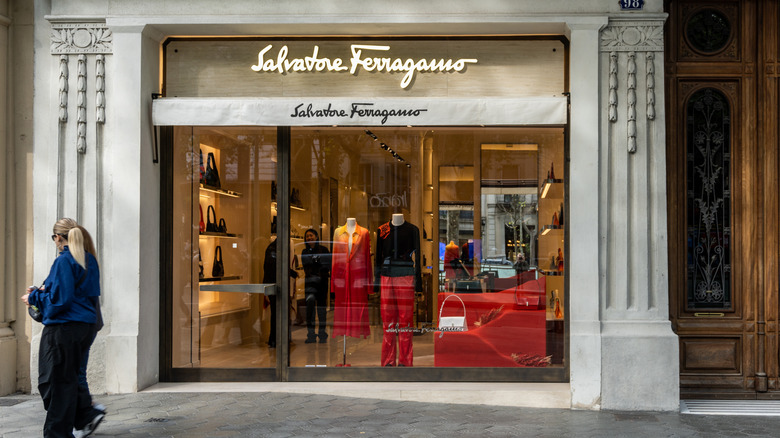
Over the course of three years from 2022 to 2025, Salvatore Ferragamo's shares have fallen by 54% while its revenue decreased by 53%, dropping at 9% per year, per Simply Wall Street. The company could not hit profits for months and reported a net loss of 68 million euros in 2024, per Reuters. Back in 2023, when the company's revenues had declined by 7.6%, per Fashion Dive, the brand was forced to channel its focus on new products, better communication strategies, and more brand awareness.
Salvatore Ferragamo is also paying the price of putting most of its eggs in one basket. With 44% of its stores catering to the Asian market — 30% of the brand's revenues in 2024 came from the Asia Pacific — Salvatore Ferragamo is among the biggest hits of the refusal of the Chinese consumers to spend, per Seeking Alpha. CEO Marco Gobbetti mentioned in a release, "Over the quarter, our performance was impacted by continued volatility in the Chinese market, as well as a persisting weakness in wholesale and travel retail, further compounded by an unfavorable comparison." Gobbetti, ultimately, had to step down in February 2025.
But the company also saw double-digit declines in Europe during the same time. As Gobbetti mentioned, loss of revenue can also be attributed to the shift in the company's strategy from wholesale to DTC, which meant that wholesale numbers declined by 22.10% in 2024, per Seeking Alpha. Nonetheless, failure to maintain consumer perception is probably the biggest factor in a brand losing value over time. When Salvatore Ferragamo decided to commercialize aggressively, it also shunned off the identity that comes with its rich, exclusive heritage.